St Nicholas Abbey, Steam Railway and Distillery
Jacobean Plantation House, Steam Railway and Rum Distillery, Barbados
CHERRY TREE HILL
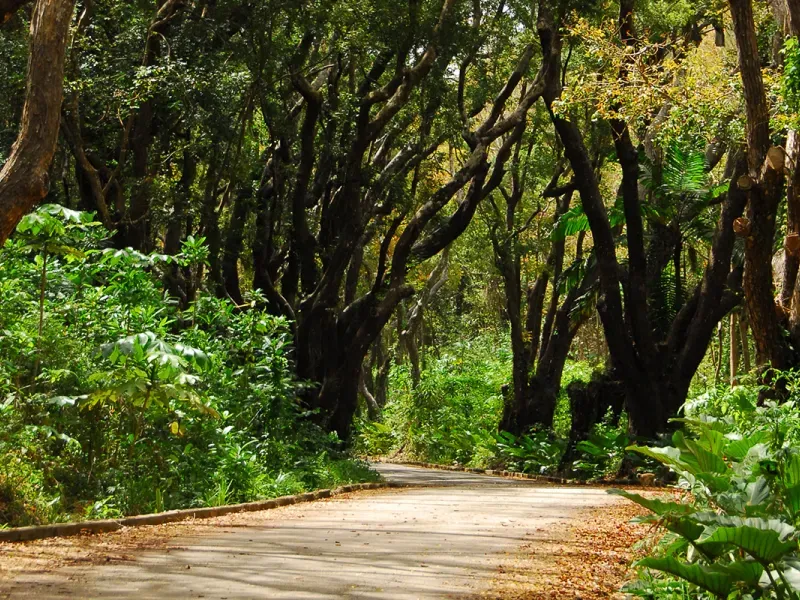
Cherry Tree Hill, located to the northeast of St Nicholas Abbey great house, offers a commanding view of Barbados’ rugged east coast shoreline, which may have given the area special meaning to the indigenous peoples of Barbados in prehistoric times.
Amerindian artifacts have been found in the limestone bedrock, indicating that the indigenous peoples of Barbados had exploited the forests and gullies around St Nicholas Abbey for centuries before the arrival of Europeans.
The natural passageway, which connects the east and west coasts of the island, was originally lined with cherry trees, but Sir John Gay Alleyne replanted the avenue with mahogany trees (Swietenia mahagoni) in 1763 to commemorate the Treaty of Paris. Many originals remain today, and over 130 new trees have been added through a reforestation program since 2008.
SUGAR CANE FIELDS
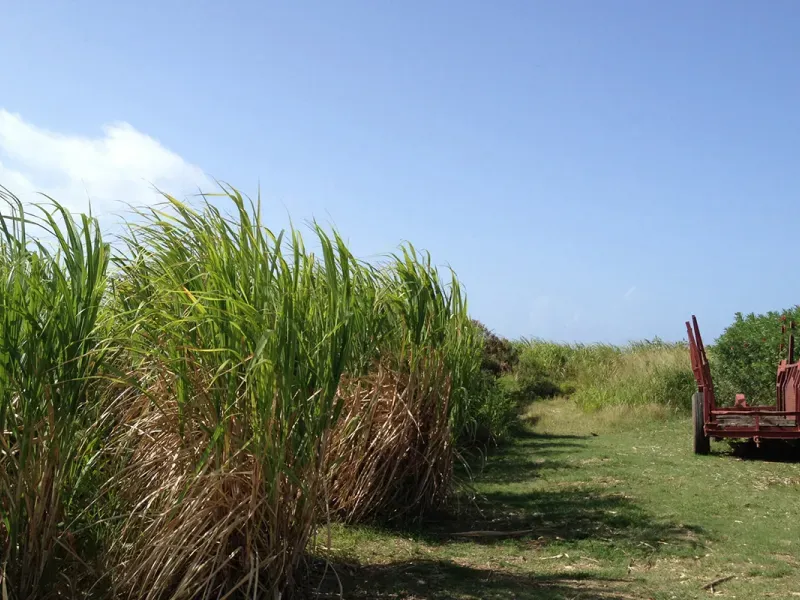
St Nicholas Abbey spans 400 acres, with over 225 acres dedicated to sugar cane. While the industry has declined, 60 acres are actively planted and harvested to supply the estate’s rum production, and specialized cane varieties are cultivated in the nursery for future use.
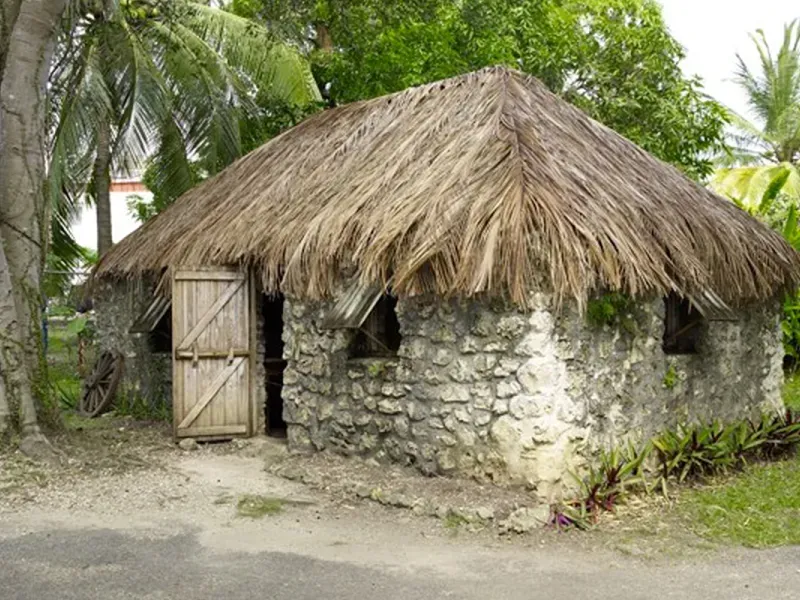
MOORE HILL HOUSE AND SLAVE VILLAGE
The historic coral rubble house at Moore Hill is one of the few surviving “slave houses” in Barbados, offering a tangible link to the island’s colonial past. Archaeological research has also identified likely locations of other enslaved worker villages across the estate. Preservation efforts continue, including repairs following damage from Tropical Storm Tomas in 2010.
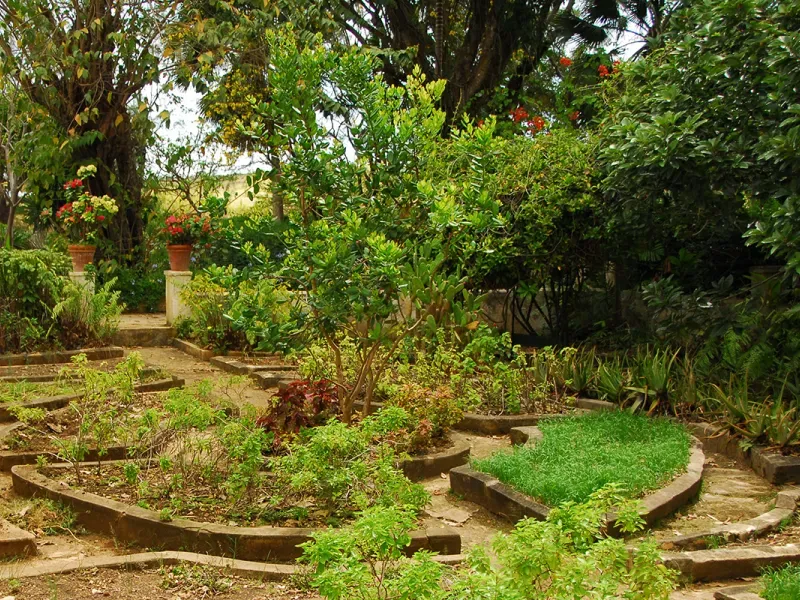
FLOWER & HERB GARDENS
Visitors can explore the gardens’ lush variety of plants, featuring hibiscus, orchids, roses, and an array of fruit trees, including citrus, mango, avocado, golden apple, and breadfruit. The gardens are also home to a traditional herb garden, following a 17th-century English pattern, with lemongrass, garlic, chives, aloe vera, bay leaf, and an assortment of peppers used to make the plantation’s own pepper jelly, served at the Terrace Café.
Down the steps at the entrance portico, there is an original coral water drip, designed to purify and cool drinking water as it passes through the coral blocks to the catchall below. Its marble lavers keep the water cool even on the hottest days.
A single ancient cherry tree on the property produces fruit that is transformed into a cherry jam, available for purchase in the St Nicholas Abbey Gift Shop, alongside other jams and preserves made from plantation-grown produce.
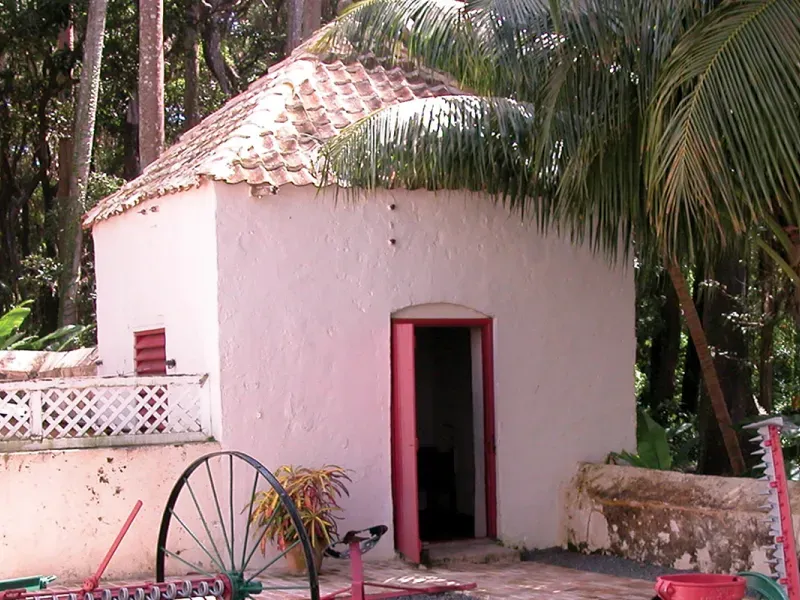
COURTYARD & LOWER GARDEN
Behind the Great House, the Sandbox Tree Courtyard features a 400-year-old Hura crepitans, known locally as “monkey-no-climb” for its spiny trunk. The courtyard also preserves historic bathhouse and outhouse structures, alongside a water cistern connected to the estate’s main well.
In the Lower Garden, visitors can meet Max and Baby, two Moluccan Cockatoos, and a pair of macaws donated to the estate.