Arlington House Museum: History of Speightstown
By Rekke Editorial
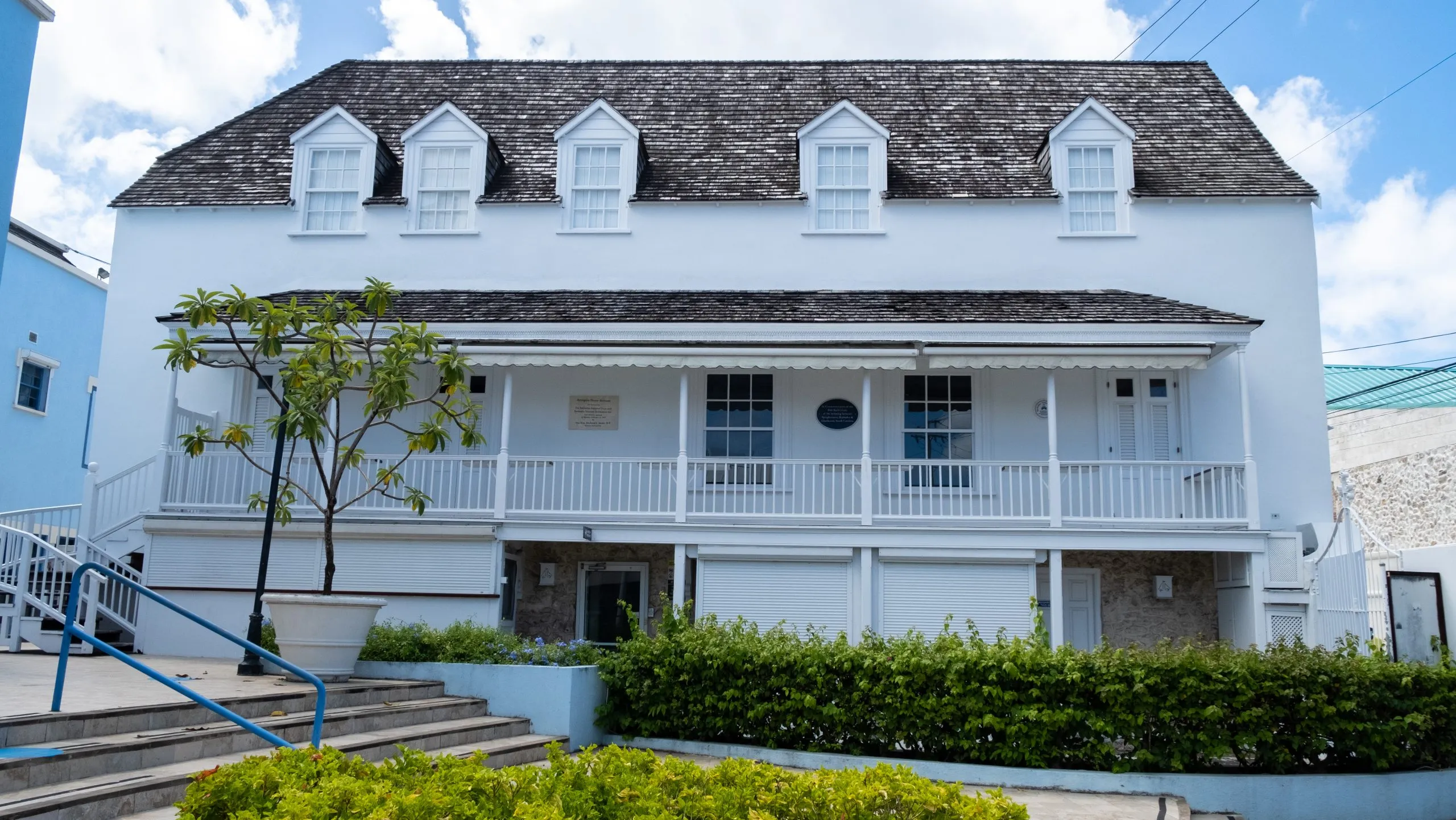
On the corner of Queen Street in Speightstown, Arlington House announces itself plainly: wide and white, with a dark shingle roof, a full-width veranda running across the middle floor on white columns, and dormer windows above. A banner stretched beneath the balcony rail gives you its name. It is by some distance the largest building on the street, with open space in front that gives it quite a commanding presence. Painstakingly restored by the Barbados National Trust from a structure that was close to crumbling entirely, Arlington House Museum, built in 1750, is one of the oldest surviving buildings in Speightstown, a three-storey merchant townhouse whose walls, floors, and very mortar have as much to tell you as the exhibits inside.
The Family
Speightstown was built on trade. For close to three centuries, its jetties loaded sugar, rum, and molasses onto schooners for the Atlantic crossing — enough traffic to earn it the name Little Bristol. Each of the town’s prominent merchant families operated their own jetty: Jordan’s, Challenor’s, Norville’s, Archer’s. And Skinner’s, also known as Manning’s Jetty, belonging to the family who owned Arlington House itself. The Skinners were ship chandlers who supplied the ropes, sails, and provisions that kept the port moving, living on the second floor above their chandlery, hailing customers from the balcony.
The Building
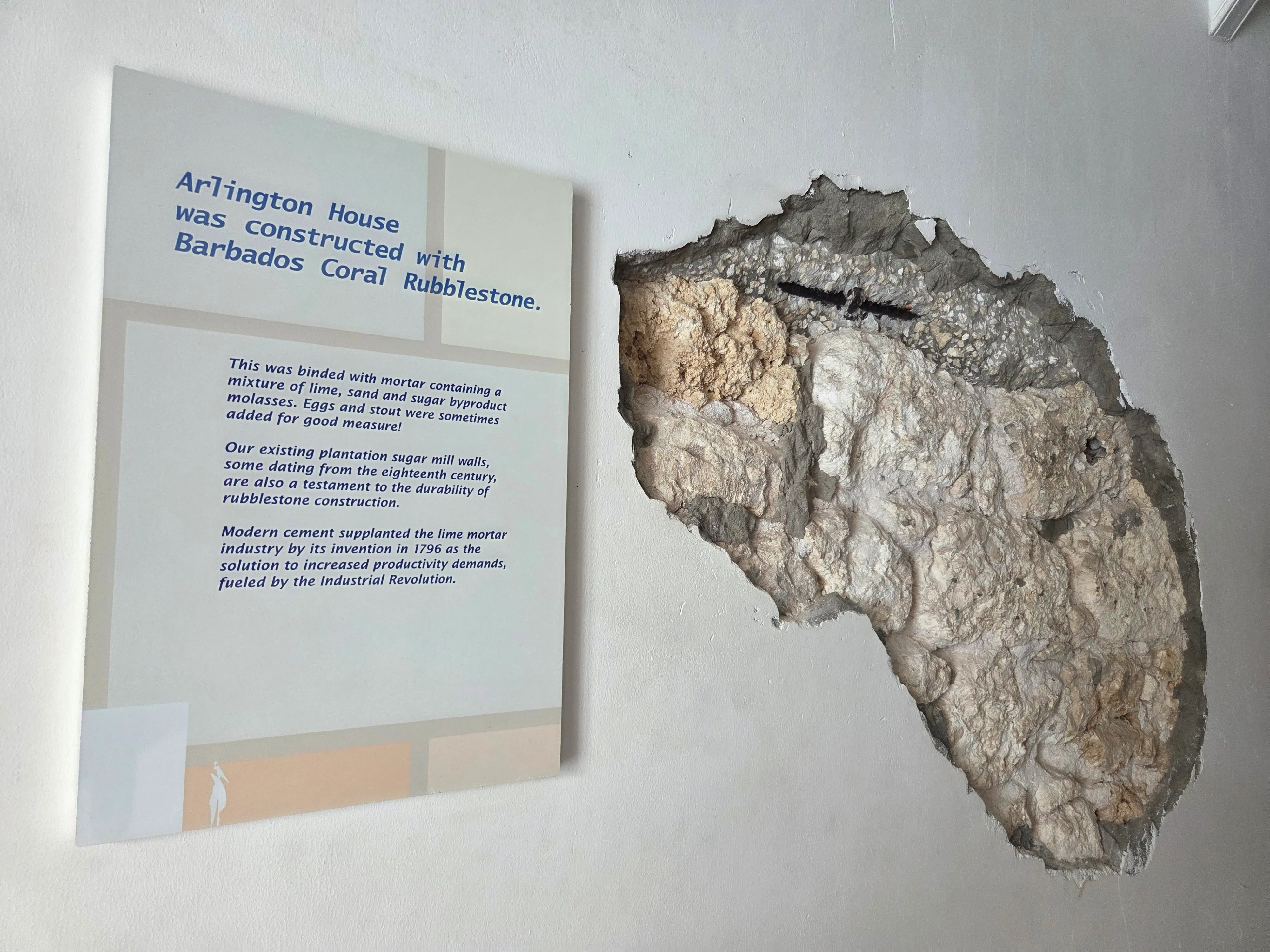
The walls are over two feet thick, built from Barbados coral rubblestone and bound with mortar hand-mixed from lime, sand, sugar-byproduct molasses, and egg whites. An exposed section on the ground floor shows you what’s behind the plaster: rough, lumpen rubblestone, porous and pale. Lina Cox, the museum’s operations administrator, has never tired of it. “I’m always amazed thinking about how they built this,” she says. “Just imagine how many eggs it took.” Look closely and you’ll find reddish-brown ballast bricks in the masonry too, carried from Britain in ships crossing the Atlantic nearly empty, left behind to make room for the cargo going back.
The building is also, by local account, haunted. “They’ve never done anything untoward,” says Lina of the creaking floorboards and the apparition on the staircase. “It’s just them letting me know they’re here.” None of this appears on any signage. Ask the staff.
Three Floors
Arlington House tells Speightstown’s story in three layers: commerce at street level, the plantation economy on the middle floor, and the sea at the top.
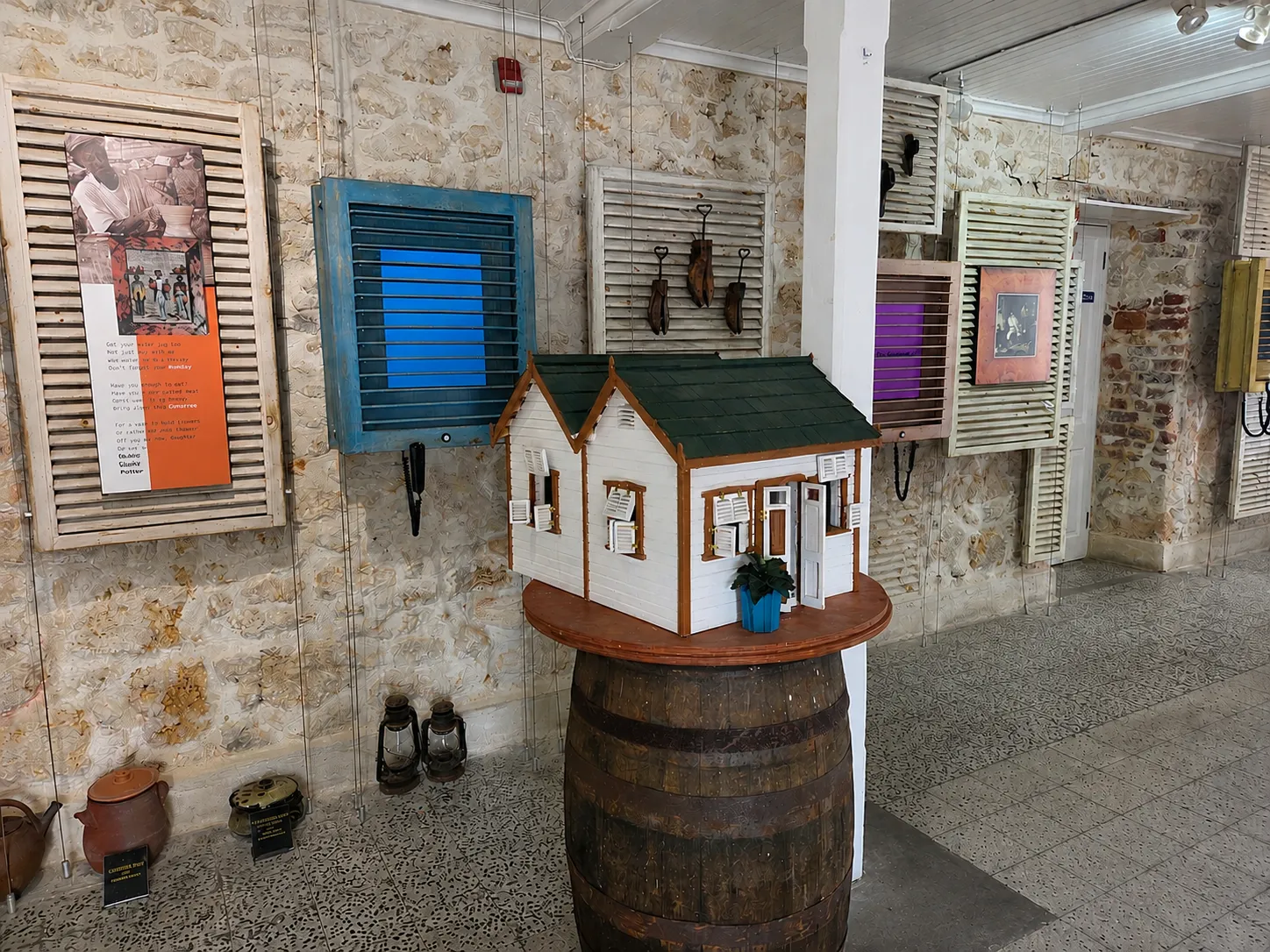
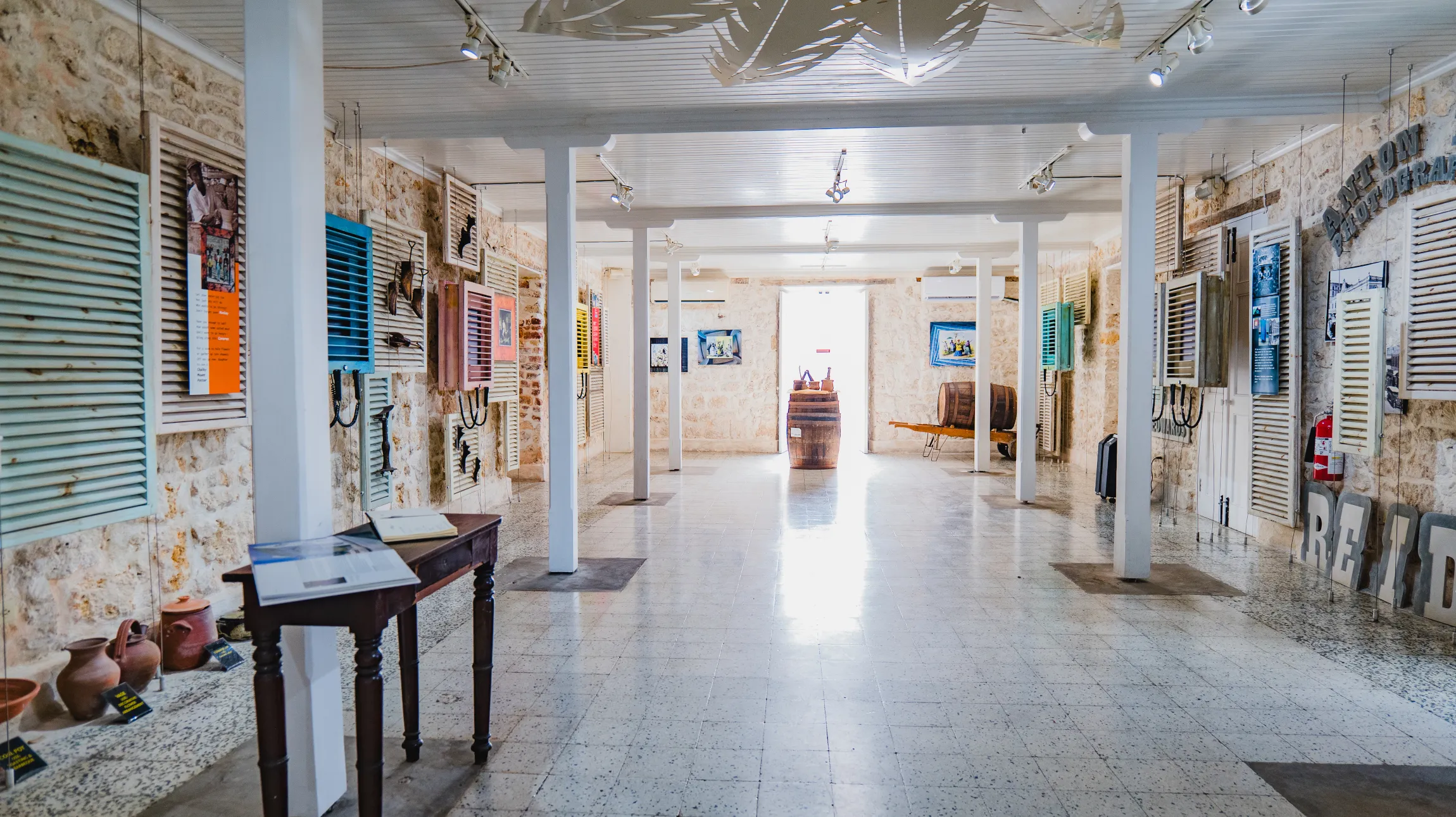
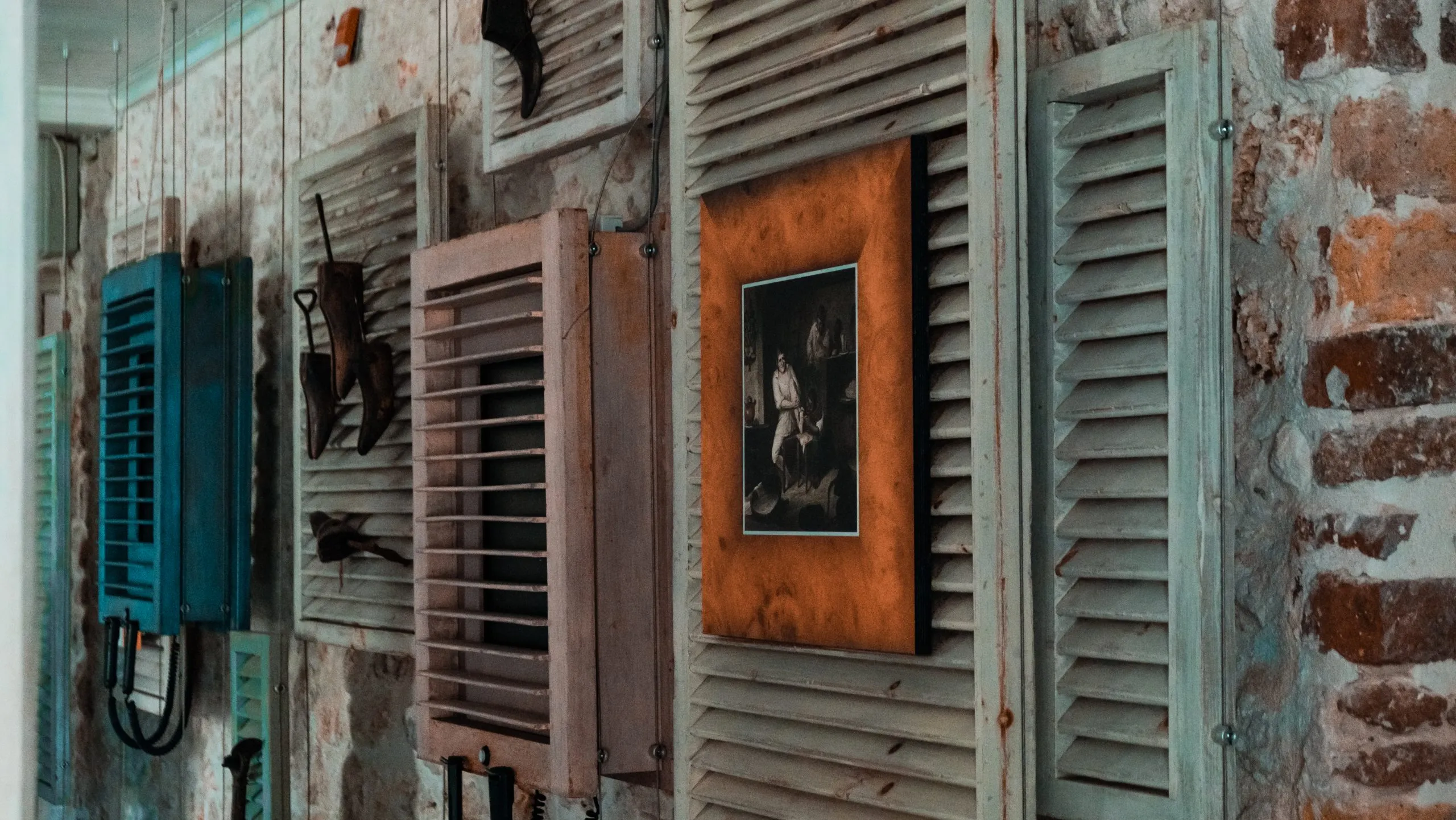
The ground floor, Speightstown Memories, is the brightest space in the building: tall ceilings, open light, coral rubblestone walls still visible behind the displays. The designers have used louvred shutters as display frames, the kind that hang on every period house in Barbados, so the architecture of the island becomes the architecture of the exhibit. Voices follow you between the interactives: Vincent Redman, shoemaker; Winston from Highland Pottery in Chalky Mount; an elderly man recalling the shops of his youth. Objects from the lives of the enslaved — monkey water jugs, coal pots, connery jars — sit alongside old lanterns and cobbler’s lasts.
Up the original wood staircase, the second floor opens with a room that stops you: the 18th century map of Barbados printed across the entire floor, plantation names spread at your feet, a suspended installation of small white panels catching the light above. Beyond it, photographs show Speightstown’s waterfront across a century: jetties running into the sea in 1919, crowds in the 1930s, near-empty by 2006. The schooners that docked there had names — the Silver Heel, the Victoria, the Bessie — running daily to Bridgetown until midway through the twentieth century.
Then you enter the next room, and the light drops.
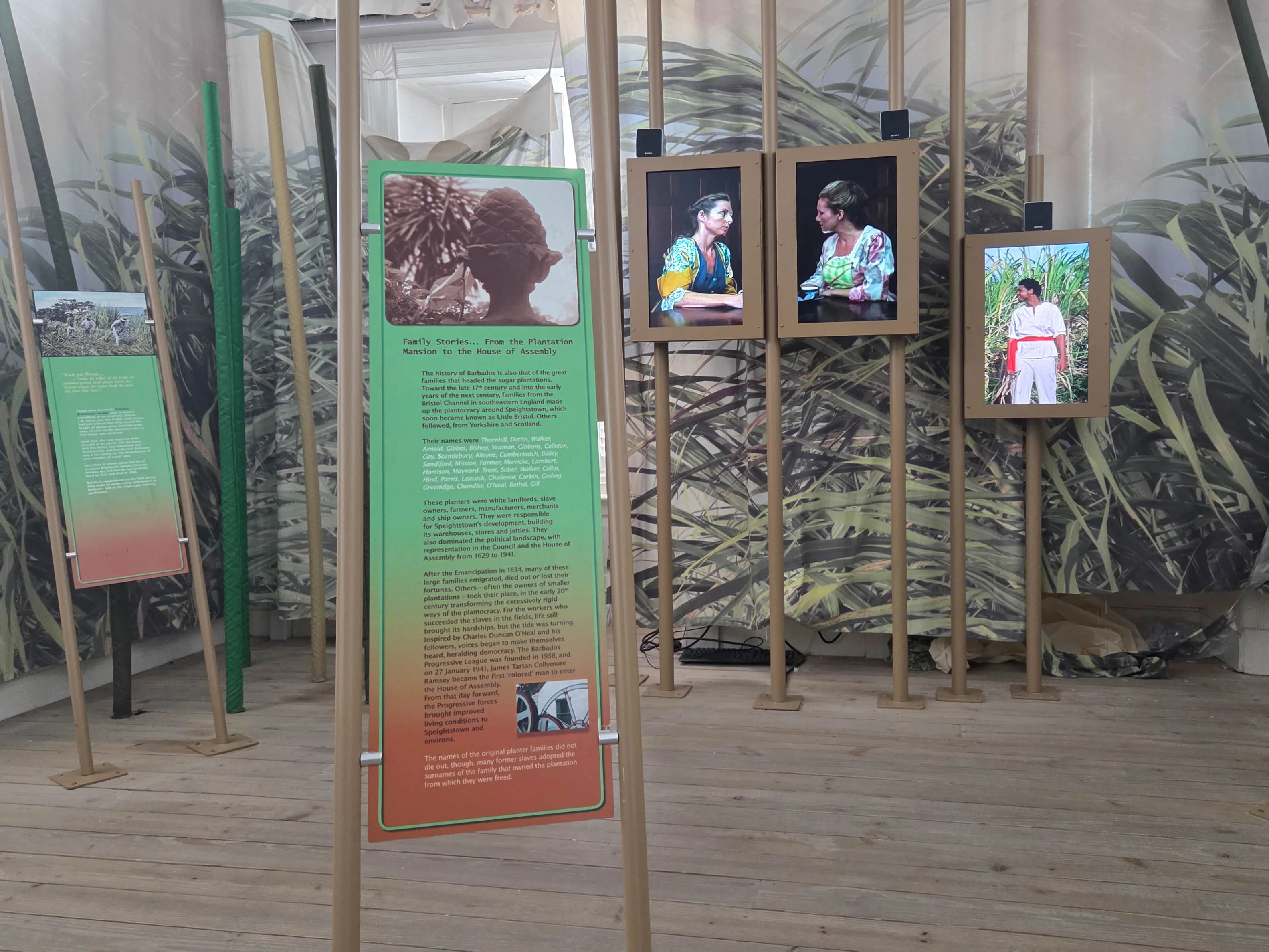
The Plantation Memories room plants you inside a cane field. Stalks rise well above your head, fabric and painted wood, but so densely installed that the space shrinks and the air feels different. Panels and audio interactives are mounted within the cane, so you read about the history of sugar and slavery from inside the thing being described. On one panel, Equiano describes his arrival in Barbados at fourteen. “There was much dread and trembling among us, and nothing but bitter cries to be heard all the night.”
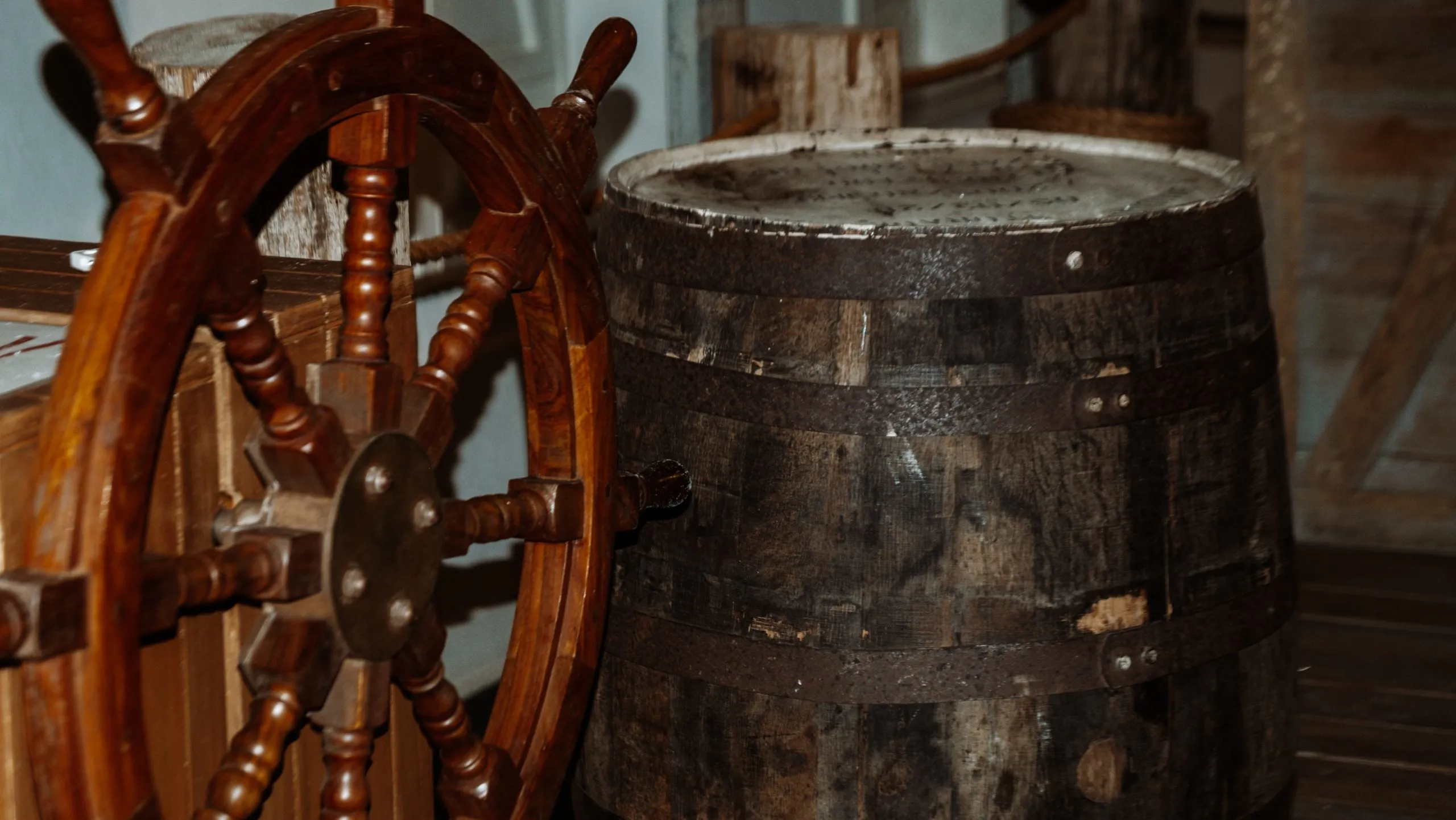
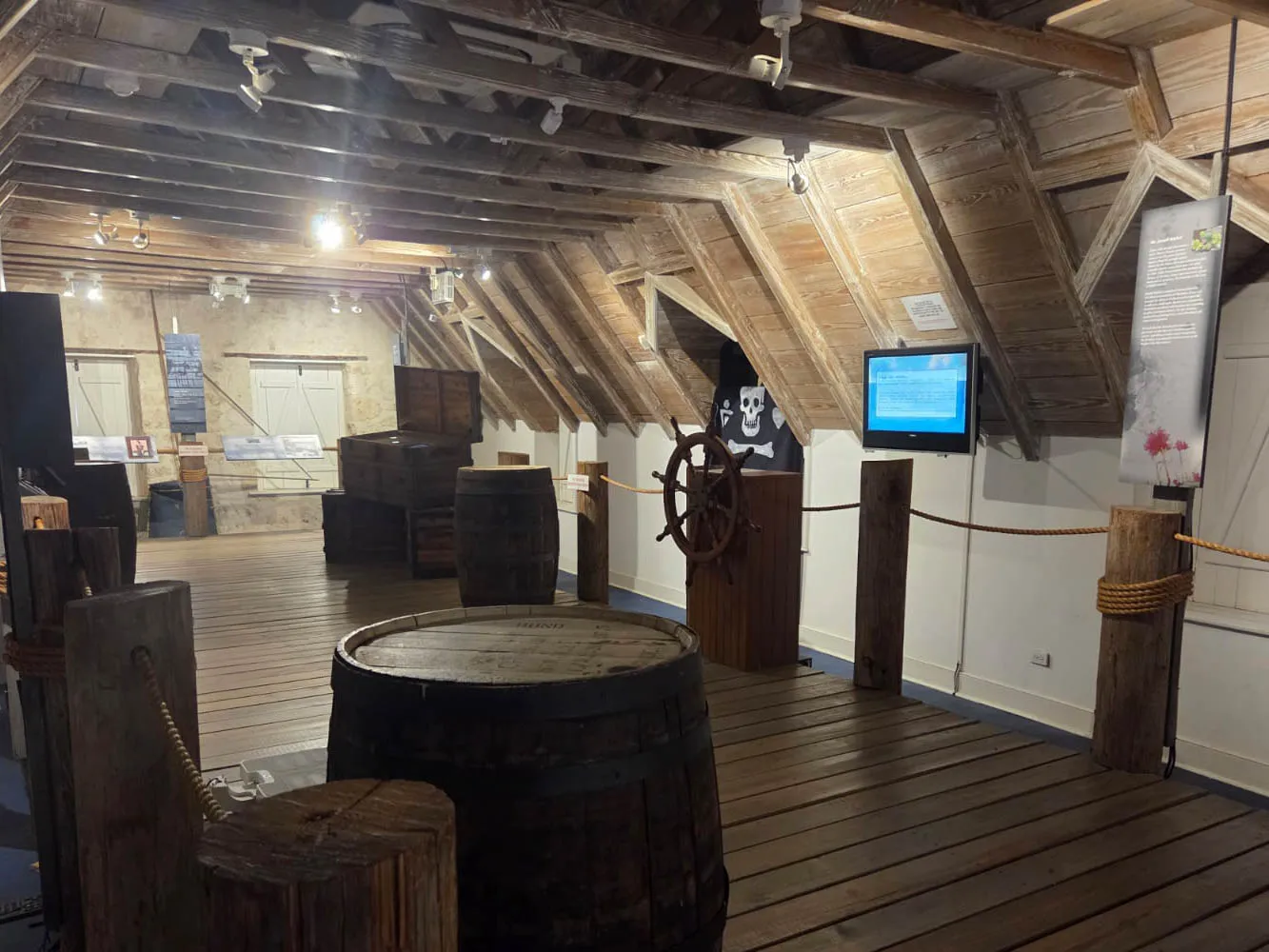
The top floor, Wharf Memories, releases you into a room built to feel like a ship’s hold: angled roof timbers, wide plank flooring, bollards strung with rope, a ship’s wheel, a Jolly Roger. It is here, in the hold of the ship, that you find the scale. It reads your weight and assigns you a monetary value as an enslaved person. Lighter bodies were worth less, less capacity for hard labor. I was valued at $20. The number is specific to you, and the connection is not accidental: this is where the pricing happened, on the boats, before the people ever reached the cane fields below. The stories here complicate what came before: among them Joseph Rachel, possibly the first Black businessman in Barbados, whose honesty and generosity gave him the freedom to trade even at the height of the slave economy. And this: between 1904 and 1909, 20,000 Barbadians left for Panama to build the canal. The money they sent home — Panama money — built whole districts of Bridgetown.
Back on Queen Street, the building looks exactly as it did when you walked in: white, commanding, catching the sun. It takes a moment to recalibrate. Barbados is very good at looking beautiful. Arlington House is where you find out what the beauty is built on.
Good to Know
Arlington House is open Monday to Saturday, 9am to 4pm, with last entry at 3:30pm. It is self-guided with a brief introduction on arrival; allow at least an hour across all three floors. Only the ground floor is wheelchair accessible. An escape room operated by The Real Escape Barbados runs separately within the building. Admission is BBD $35 for international visitors, $20 for National Trust members (ID required), $15 for children aged 5–12, and free for under-5s.
Helpful Hint
There is no car park at Arlington House, but Speightstown Public Car Park is a 2–3 minute walk and is free. Treasures Cafe and Bar is right outside the museum door for light bites and refreshments, or there is Local & Co just around the corner. Just in front on Queen Street is Gallery of Caribbean Art, which is well worth a visit too.