Highland Pottery
By Rekke Editorial
Most visitors come to Chalky Mount for one of Barbados' most well-known hikes and the views it rewards at the top. Bajans know it as something else: the home of the island's pottery, and the source of the orangey-red clay that potters here have been working for generations.
At its peak, small family operations filled Chalky Mount village, neighbors working with the same clay from the same hill to produce monkey jars (the refrigerators of their era, keeping drinking water cool long before homes had fridges), cooking pots, conerees (the traditional open-mouthed jars once used across Barbados for curing salted meat), and the everyday tableware of Barbadian households. Now just one remains. Highland Pottery is run by Winston and his wife, Prim, from a building that is part workshop, part shop, part home, and still being refurbished as they continue to rebuild what was damaged by Hurricane Elsa.
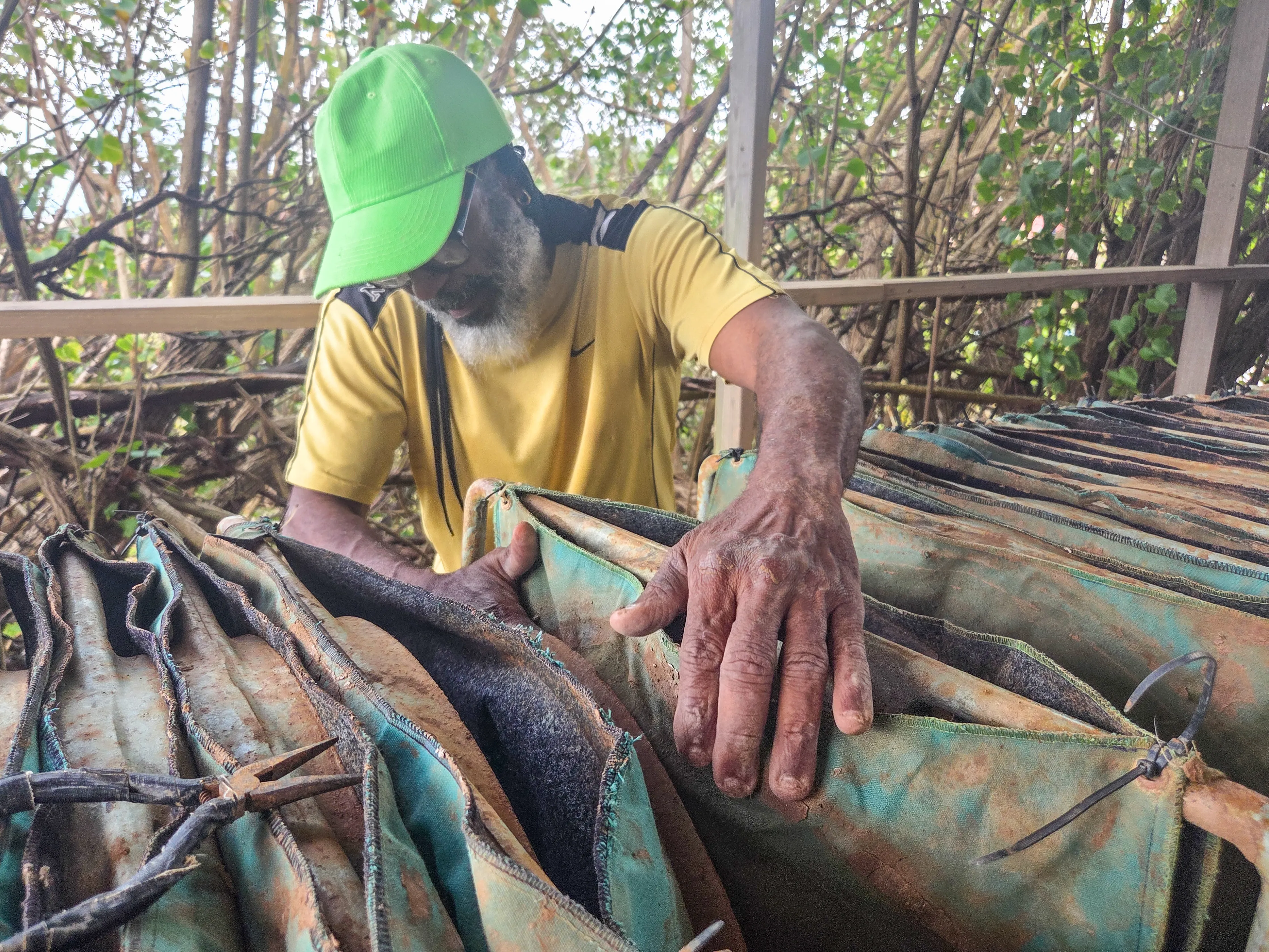
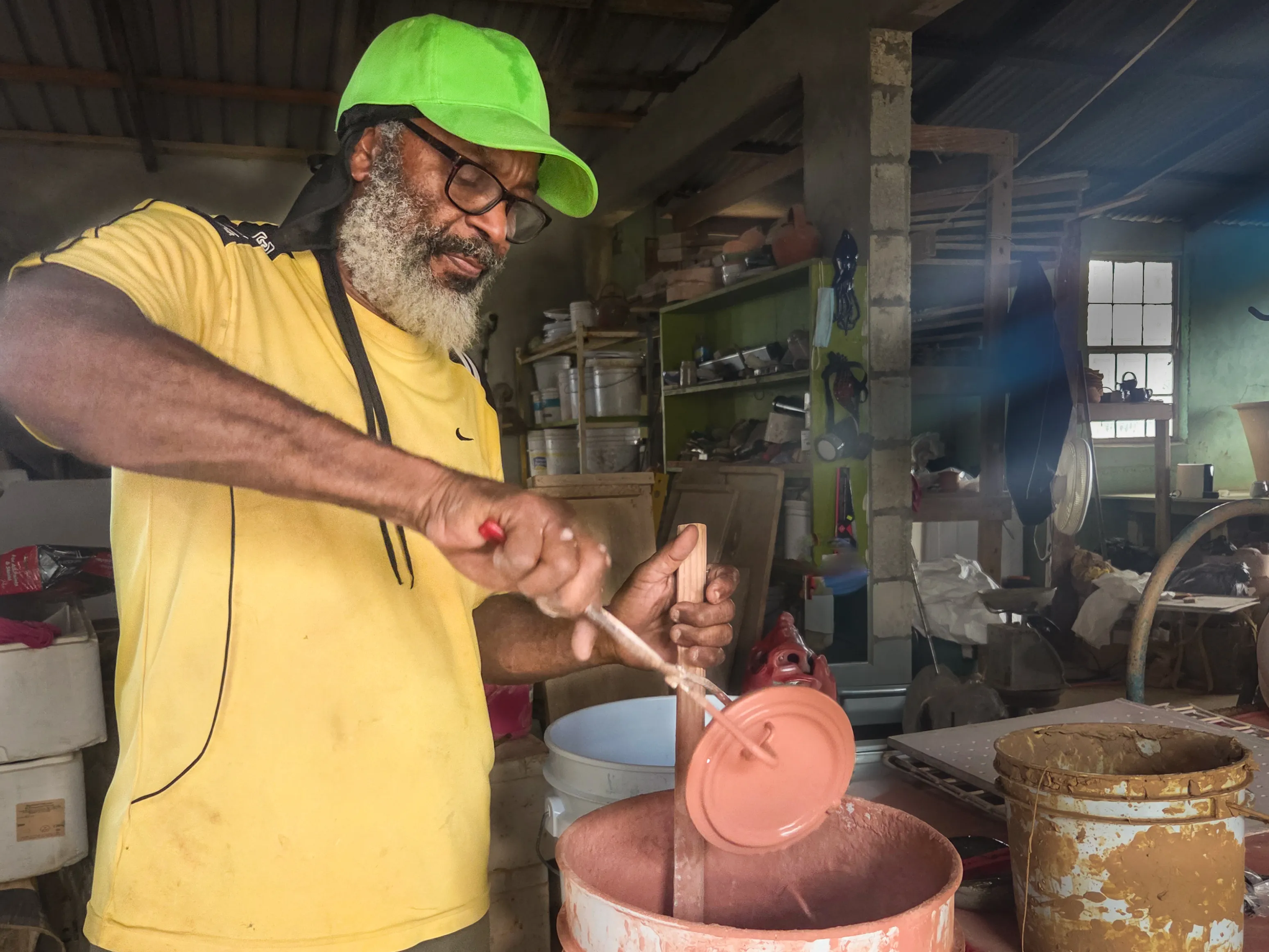
Winston has been making pottery for 42 years, and it shows in the way he can talk you through every stage, every machine, every decision while his hands are working the clay. He learned his craft from Dennis Bell, a mechanical engineer who was also one of Barbados's finest potters. It was also Dennis who taught Winston how to build and repair all of the machinery used. Today, almost everything you can see in the studio was built by Winston’s own hands. There's a filter press for turning raw clay slurry into workable material, a pug mill for removing air bubbles before the clay goes to the wheel, and two kilns: one for smaller pieces, the other for large-format work like the Spanish water jars that stand as tall as a child. Commercial equivalents would cost tens of thousands of dollars.
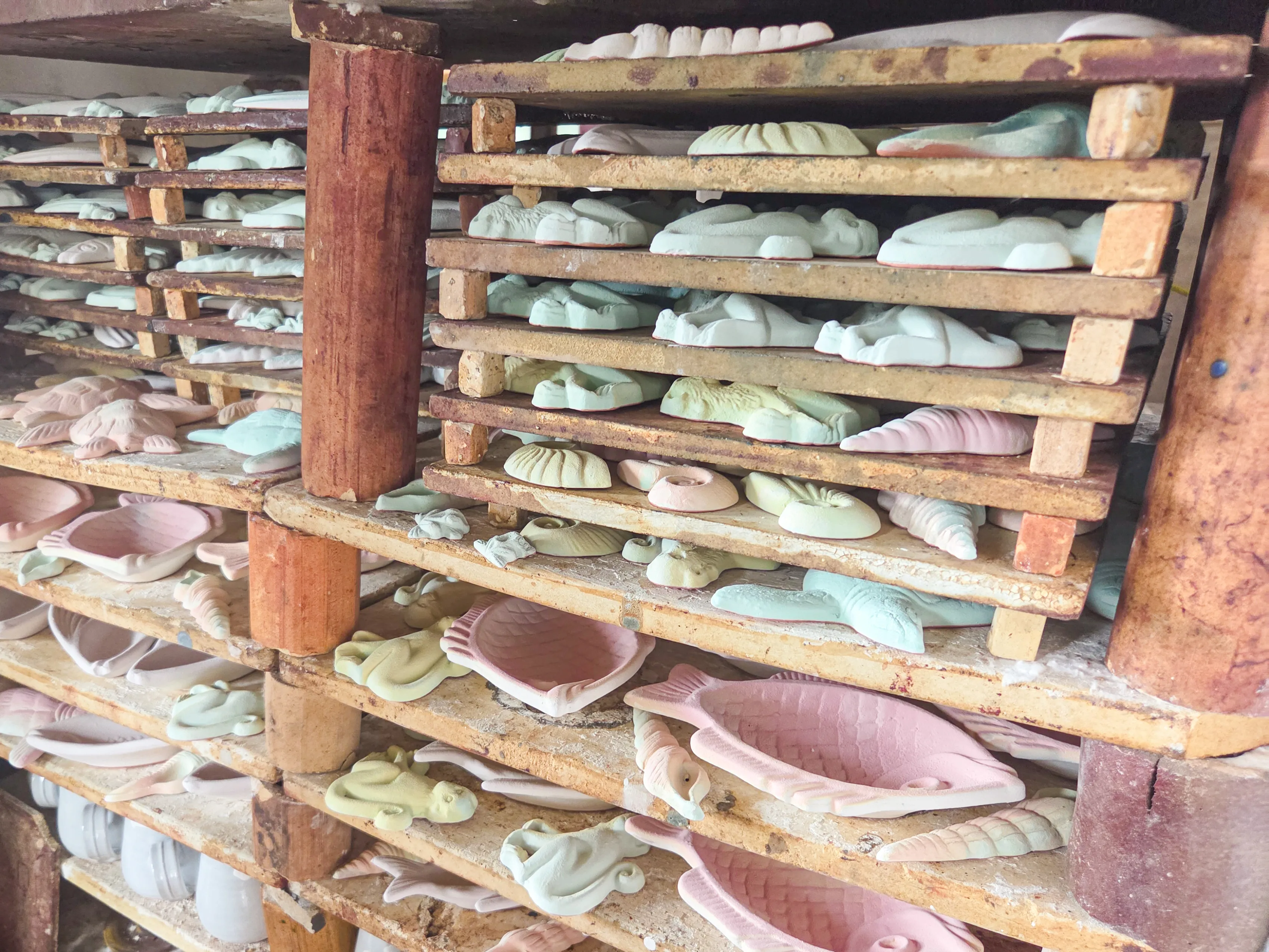
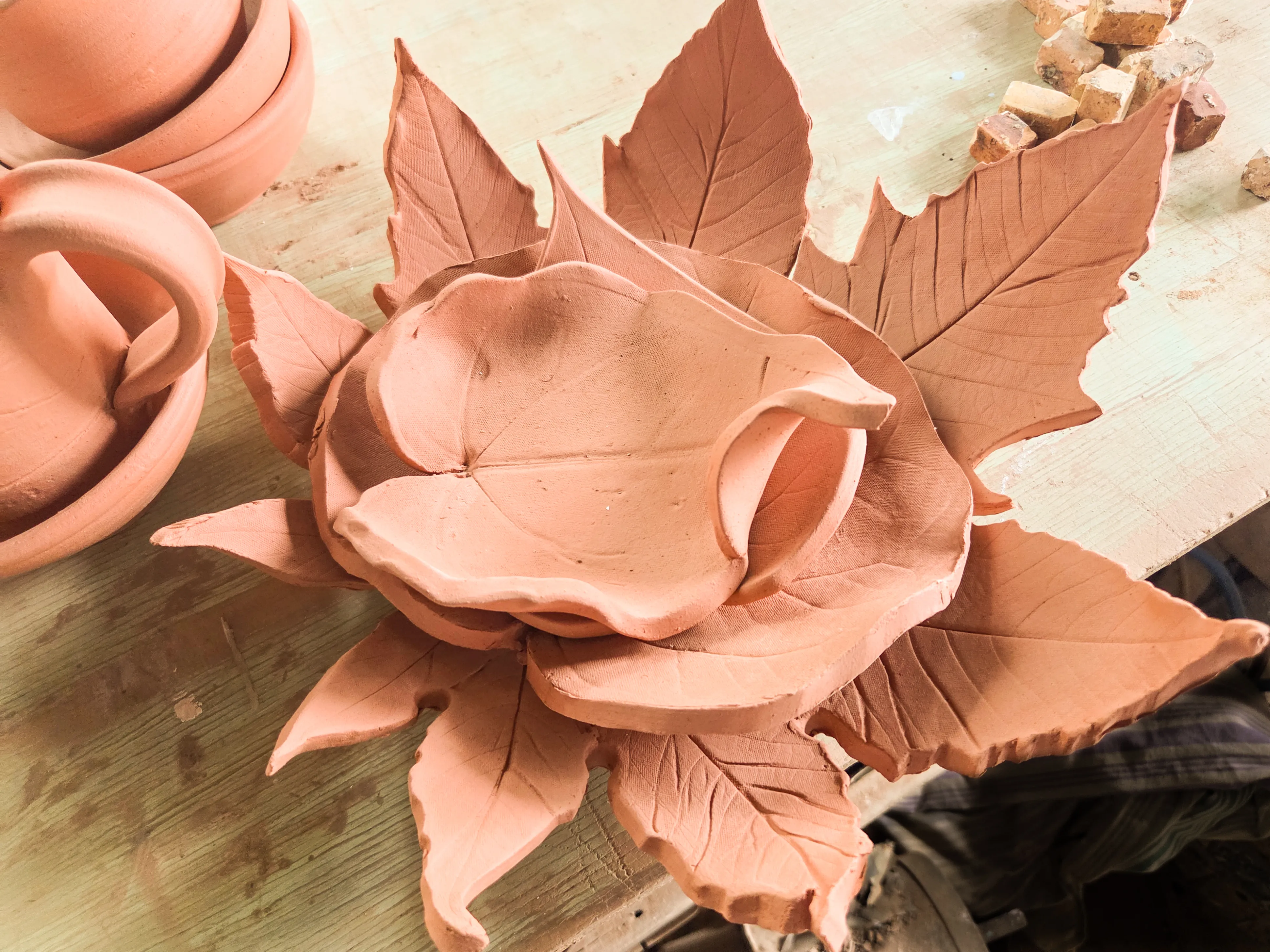
Outside, bags of raw clay are stacked on the terrace. Winston collects it by the truckload from the gully just below, processes it through the filter press, and stores it until needed. The piece you take home was, not long ago, part of the rugged Scotland District landscape surrounding the studio. Inside, the range of work is wider than most visitors expect. On the slab roller, Winston presses a real leaf against rolled-flat clay to imprint its veins, then cuts it to shape: a dish carrying the ghost of the leaf that made it. His press-molded flying fish and palm tree wall decorations, stamped from plaster molds he carved himself, are recognizably Bajan without being kitsch. The wheel-thrown mugs, in glazes Winston mixes himself from powder oxides, are in the guest rooms at Coral Reef Club.
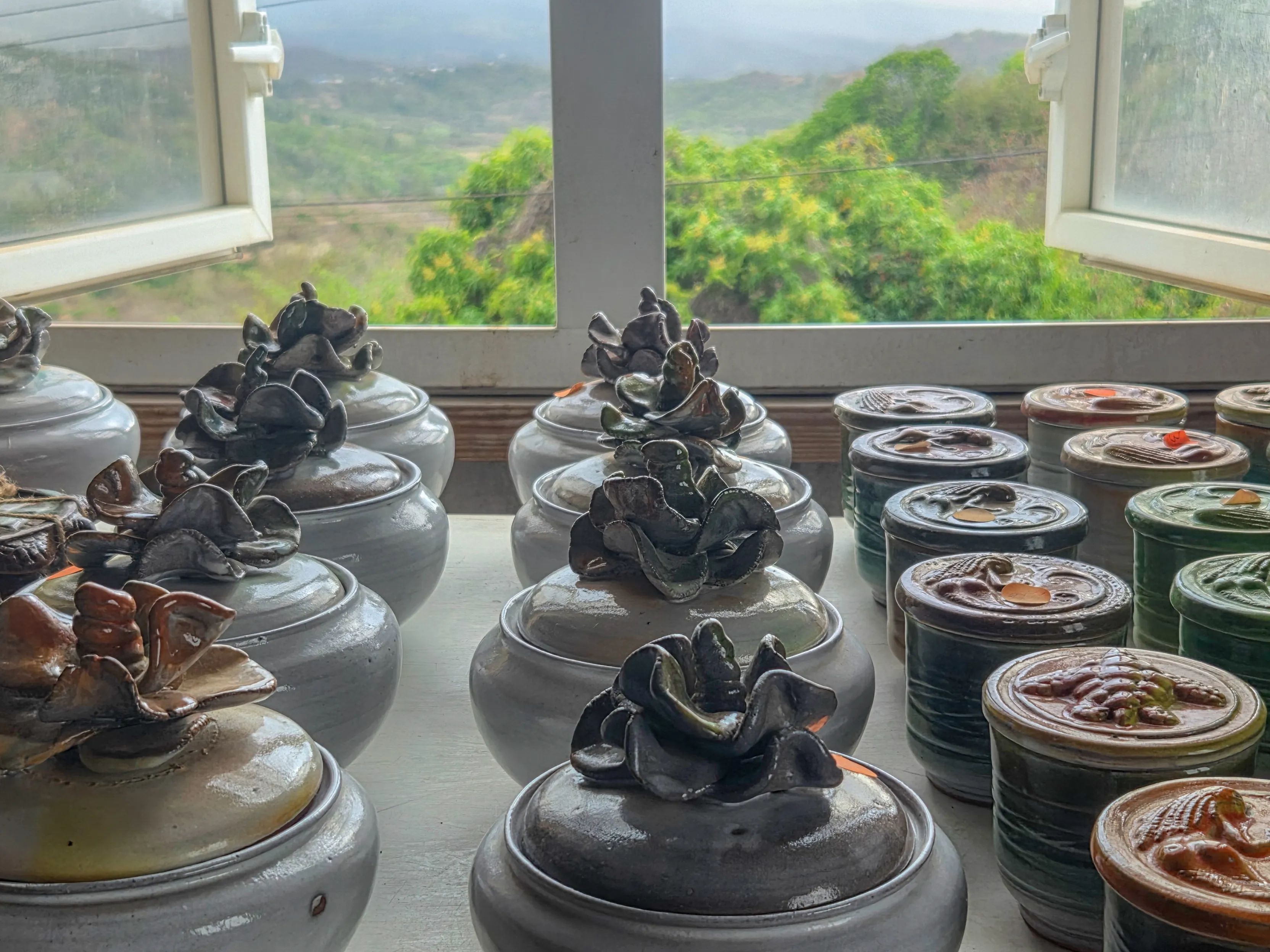
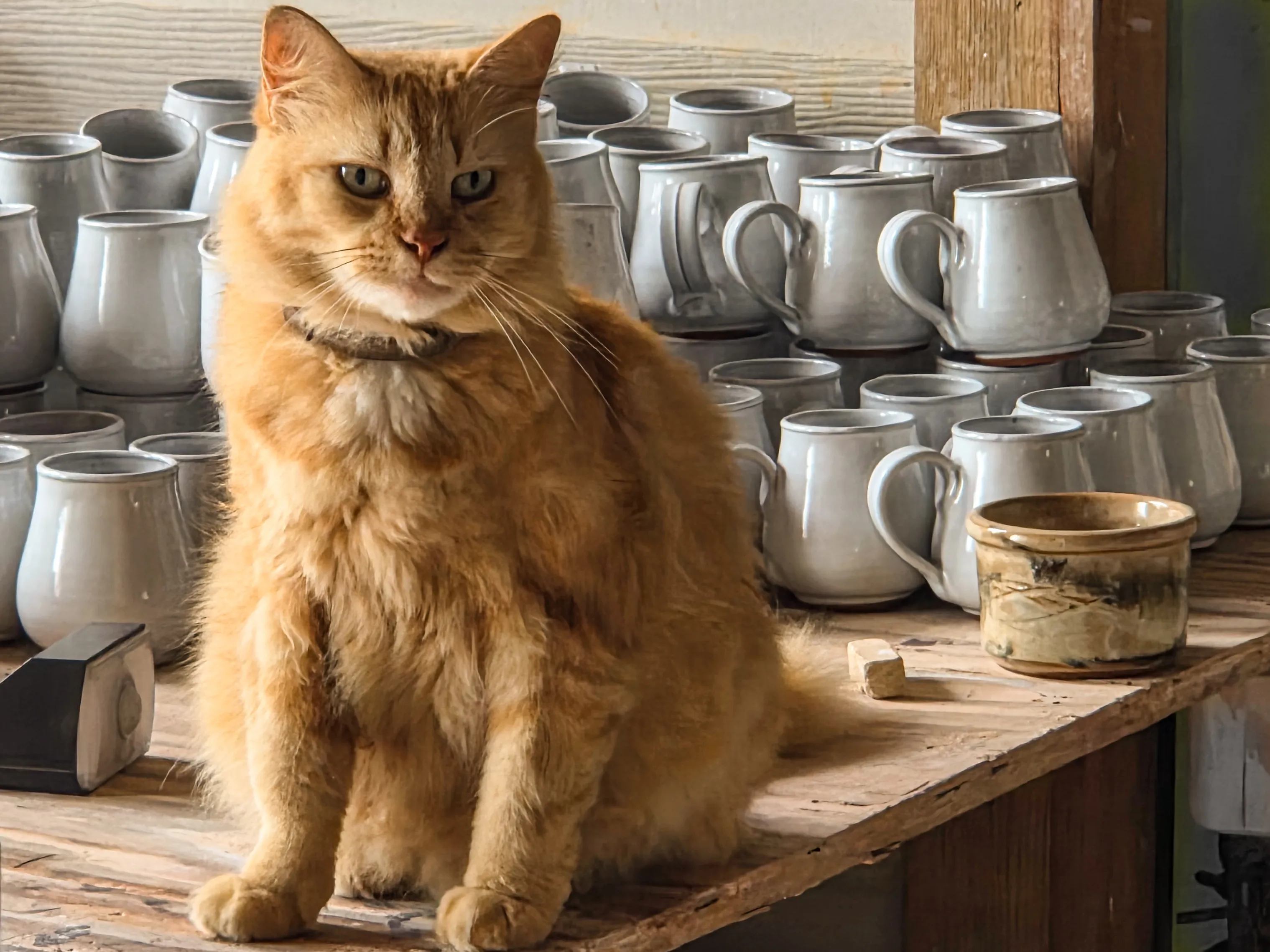
On the windowsill, turtle-shaped coasters in blues and greens sit alongside glossy dark green-glazed lidded pots with flower-sculpted handles; through the glass, the hill rolls away to the Atlantic below. Presiding over the workbench, among a battalion of white-glazed mugs fresh from the kiln, is Brown Girl, a ginger cat of considerable self-possession, named, as Winston explains it, the way things sometimes just get named.
Each piece is different, and Winston is insistent about this. He talks about pottery the way he talks about people: every piece fired in the same kiln, by the same hands, comes out with something that sets it apart from every other. The one that comes out slightly off-center is often the one someone cannot put down. He has a theory about this that draws on the Book of Genesis: the fragile wet clay as newborn, the bisque firing as adolescence, the glaze firing as the finished adult. "After God," he says, considering the act of making a pot, "it will have to be me."
You might wander in to find clay being processed, Winston at the wheel or finished pieces being glazed. Prim will show you around, although you’re free to just explore. Prices are marked on most pieces; for anything unmarked, just ask. A visit takes as long as you let it. Twenty minutes if you browse and go. Considerably longer if you stay and talk. If the mood takes you, Winston offers hour-long throwing classes for those who want to try their hand at the wheel, and short demonstrations for those who'd rather watch.
Winston is passionate about his work and has no intention of stopping. It is hard work, he says, and people do not quite realize how hard. "But we can't stop, we're the last one in Chalky that is still standing right now."
Helpful Hint
Open seven days a week, but call ahead to confirm someone is there. Classes and demonstrations require booking ahead. 15-minute demos cost BBD$5 per person, while a pottery class costs BBD$50 and includes making a piece on the wheel and taking it home after firing. Custom orders are also available; if you're commissioning something, try to order four weeks ahead as Highland Pottery does not offer shipping.
Highland Pottery pairs well with a day exploring the east coast, with Andromeda Botanic Gardens, Bathsheba, the Chalky Mount trailhead, Walkers Reserve and Morgan Lewis Windmill all nearby. For local food and drinks, Bay Lounge is about a five-minute drive away and enjoys spectacular Atlantic views.