Morgan Lewis Sugar Mill
By Rekke Editorial
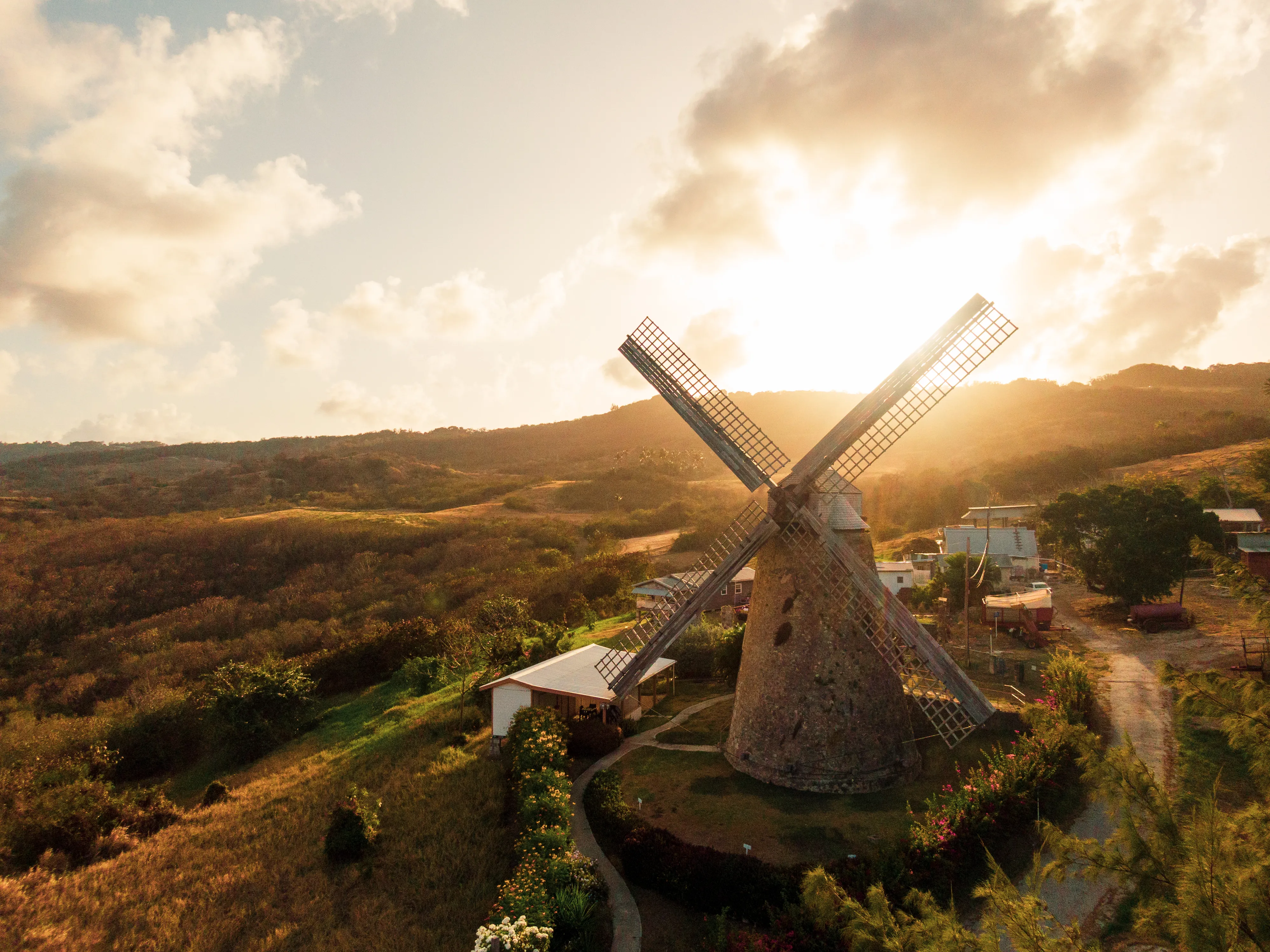
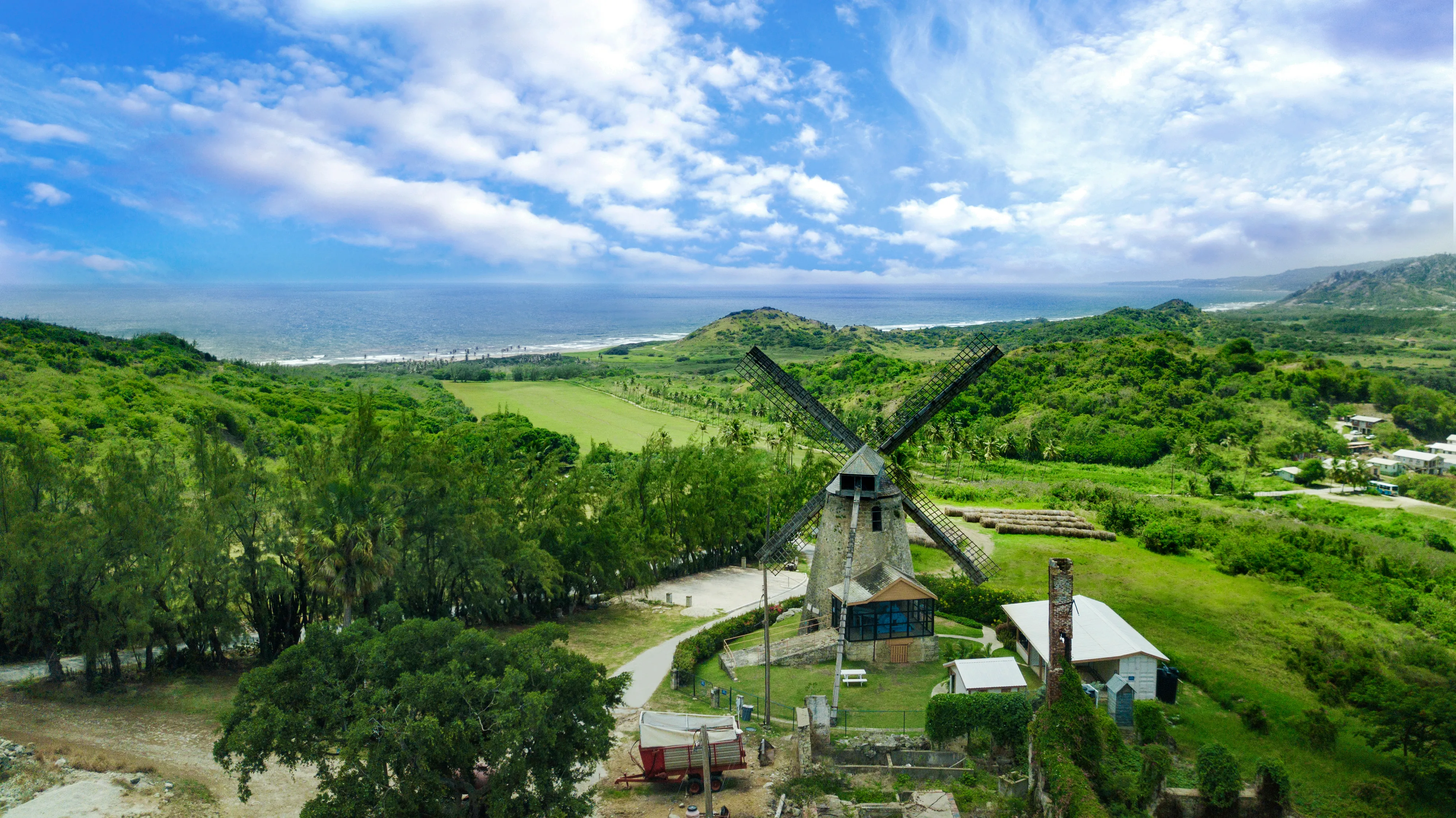
The Barbadian two-dollar note carries an image of the Morgan Lewis Sugar Mill, which means most visitors to the island have held it in their hands long before they have stopped the car and stood underneath it. The mill rises from a hillside above the wild east coast in Barbados’ most north-easterly province of St Andrew, four great arms reaching into trade winds that have blown from the east since long before anyone built anything here to catch them. It is not a ruin and not a replica; it is the real thing, still standing after almost three centuries.
The Last One Standing
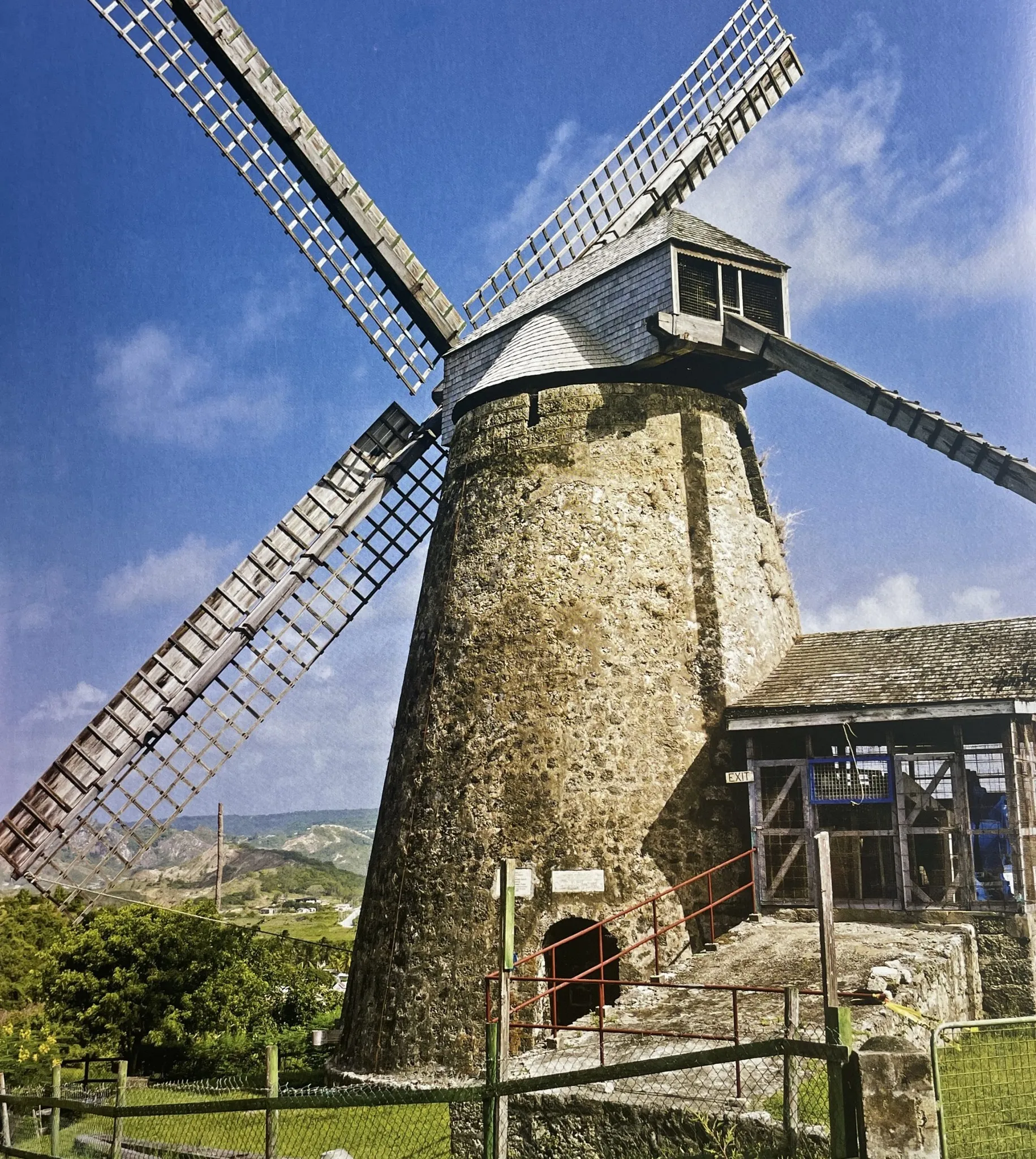
At the peak of sugar production in the early nineteenth century, Barbados had 506 windmills: more per square mile than anywhere in the world except the Netherlands. Sugar was the economy, the windmill was the engine, and the mills went up on high ground all over the island. One by one they fell to storms, hurricanes, and time, until all that remained was the hollow husks of the mill walls. Today as you drive around the island, if you look closely you’ll start to see them everywhere, often overgrown, the island's most visible reminder of what Barbados once was.
Morgan Lewis is the only one still fully intact, built in 1727 from rubble limestone bonded with a mortar of egg whites and ground limestone dust. Standing right beneath the looming tower, Cherise, who runs the mill and the café next door and leads the guided tours, asks me: "Can you imagine how many eggs it took to make this?" I ask her what they did with all the egg yolks. “Somebody was making a lot of mayonnaise” she chuckles. Local folklore has it that molasses was added too to make it sticky.
Cherise comes from a family of historians and sociologists, and her passion is apparent within minutes. Her guided tours regularly run well beyond the advertised half hour. "These are sentinels of our stories," she says, standing in front of the mill wall. "All stories: the good, the bad, and everything in between." She talks about the boilmaster, the most valued enslaved person on the plantation, whose job was to watch the syrup in the copper vessels and know by sight alone when it was about to crystallise. "He was essentially a scientist," she says. While the mill is well-signed and about eighty percent of visitors choose the self-guided option, the other twenty percent get considerably more than they bargained for.
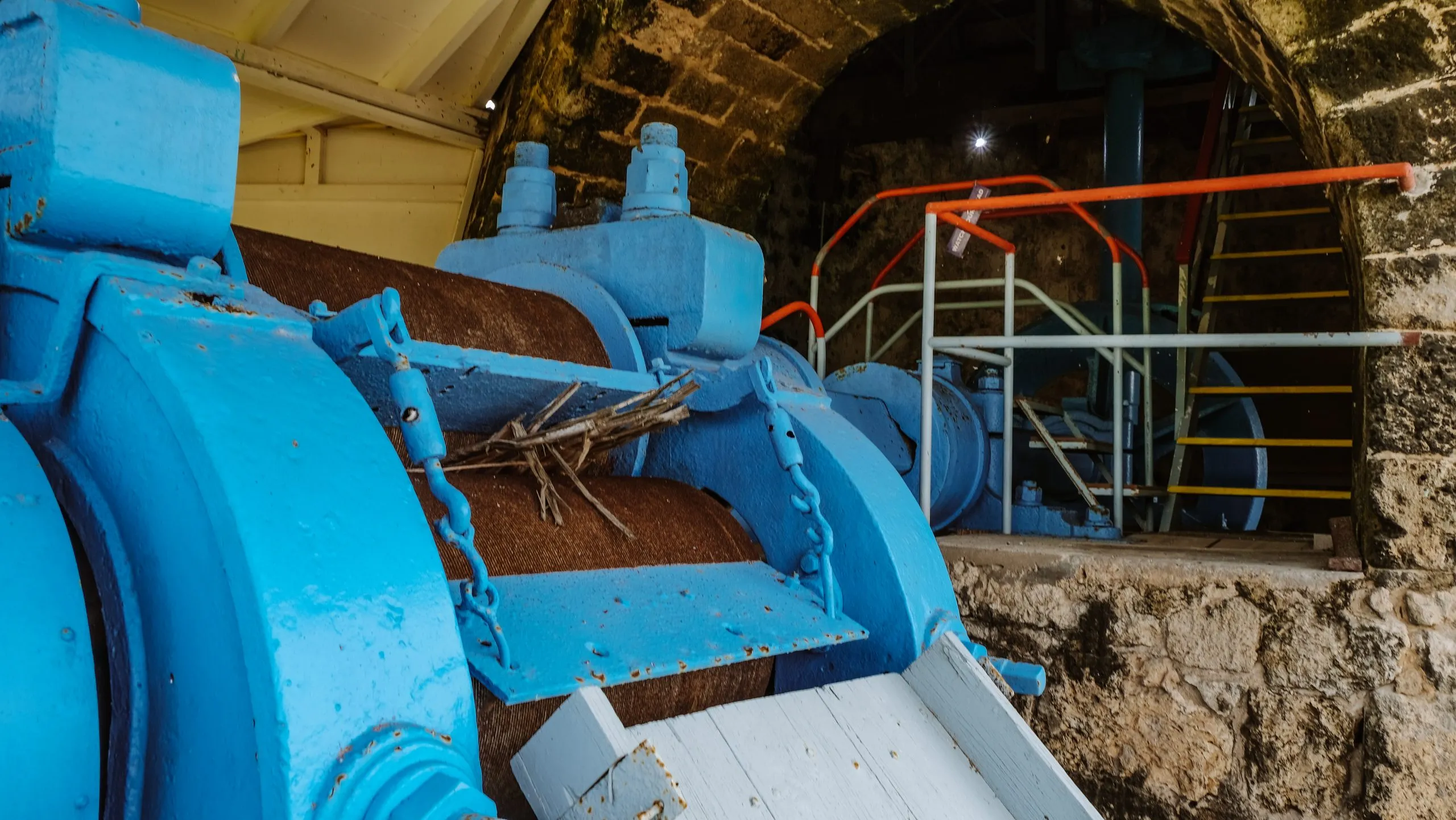
The mill's interior is cooler than the hillside outside, with a steady breeze through windows that have no glass, open to the same winds Morgan Lewis was built to catch. The walls are mossy and slightly damp to the touch, and the wood of the central spindle is so dense it does not feel as though it could have come from anything living. It came from Guyana, and still does: the particular hardwood required is not found in Barbados. The gears and rollers at the base are original nineteenth-century machinery, cast by Linton and Derby, Fletcher and Co., whose work also appears at St Nicholas Abbey and which continues today under the name Cail & Fletcher. Running the mill at full operation required a minimum of ten people working simultaneously: a mill gang feeding cane into the rollers, bagasse carriers clearing the spent stalks, a boy keeping the strainer clear, and the boatswain overseeing it all. The mill ceased commercial grinding in 1947; a lightning strike and subsequent storm damage ended its working life. Its sails are now in storage, and restoring the mill to full operation would cost approximately one million dollars; every entrance fee paid here contributes to its upkeep.
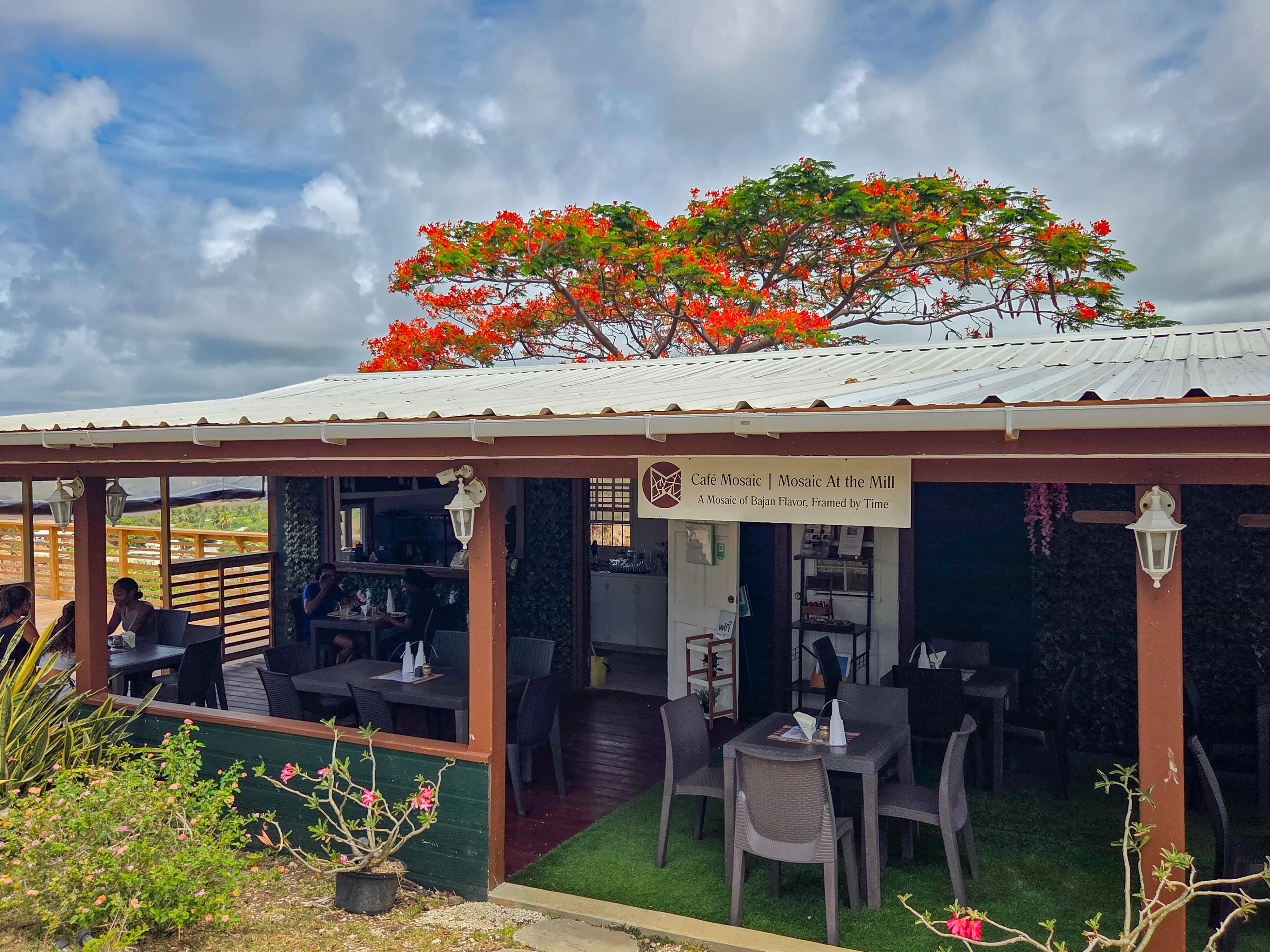
Café Mosaic
Next door to the mill is Café Mosaic, its menu thoughtfully built around the sugar that would have been processed on this very site. Cherise runs it with the same attention to Barbadian identity she brings to the tours: Bajan proverbs run alongside the food, while rum and molasses thread through the drinks. Order the Bajan Sampler of fish cakes, buljol and coconut bread, followed by a Sly Mongoose — sorrel and ginger with a hint of molasses; and don’t forget the breadfruit fries. It is, as the menu itself puts it, an eye full and a belly full.
Good to Know
The mill is open Tuesday to Saturday. Self-guided tours are BBD$15; guided tours with Cherise are available for BBD$30 on the same days with no booking required. The mill involves two sets of steep stairs and is not suitable for those with mobility difficulties or very young children.
Helpful Hint
Take the back roads to get here. The route through St Andrew, winding through the Scotland District, is as much of the experience as the mill itself. Jahworks sits minutes away if you want to start the day with a horseback ride along Morgan Lewis Beach, and Walker's Reserve is just down the hill for anyone who'd rather explore nature trails on foot. St Nicholas Abbey, Farley Hill National Park, and the Barbados Wildlife Reserve are all within easy reach too — more than enough to fill a day in the northeast.