Gallery of Caribbean Art
By Rekke Editorial
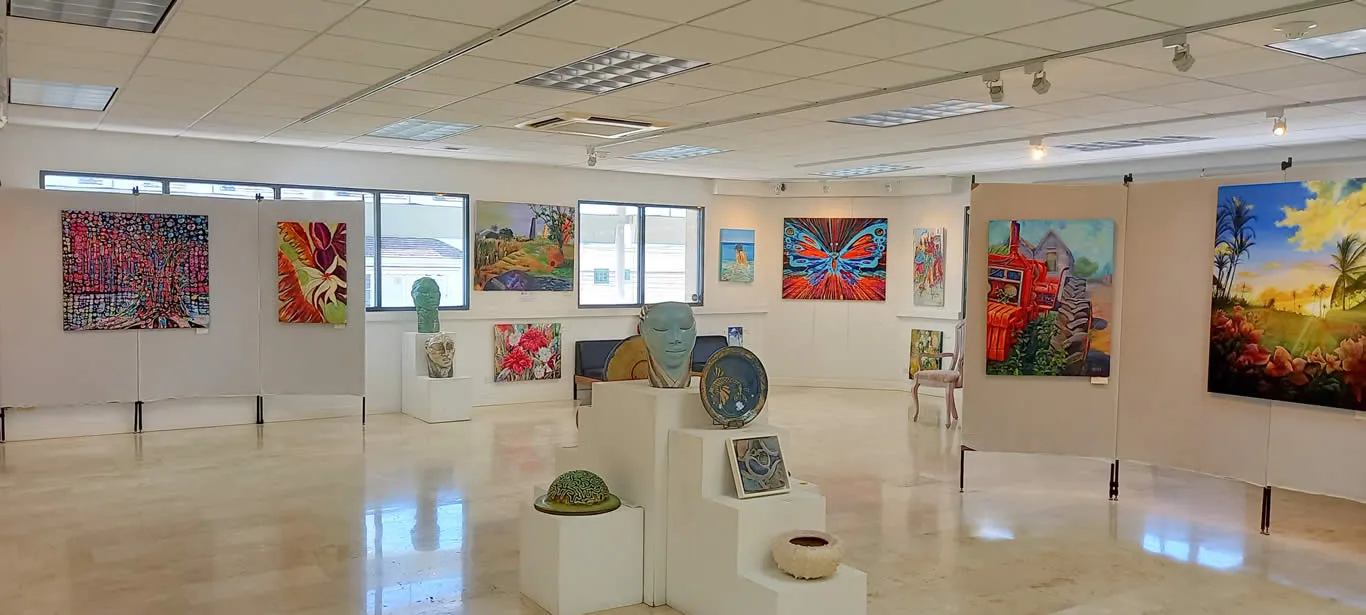
Two years ago, at lunch with her art group, Kavitha Shenoy heard that one of Speightstown's most loved galleries would be closing for good. The previous owner was retiring; emails had already gone out asking artists to collect their work. Kavitha went home that night and woke her daughter Mohita. She asked what she thought. Half asleep, Mohita didn't hesitate: it would be foolish to let it close. A second email went out before morning. That neither of them had any experience of running a gallery didn't matter.
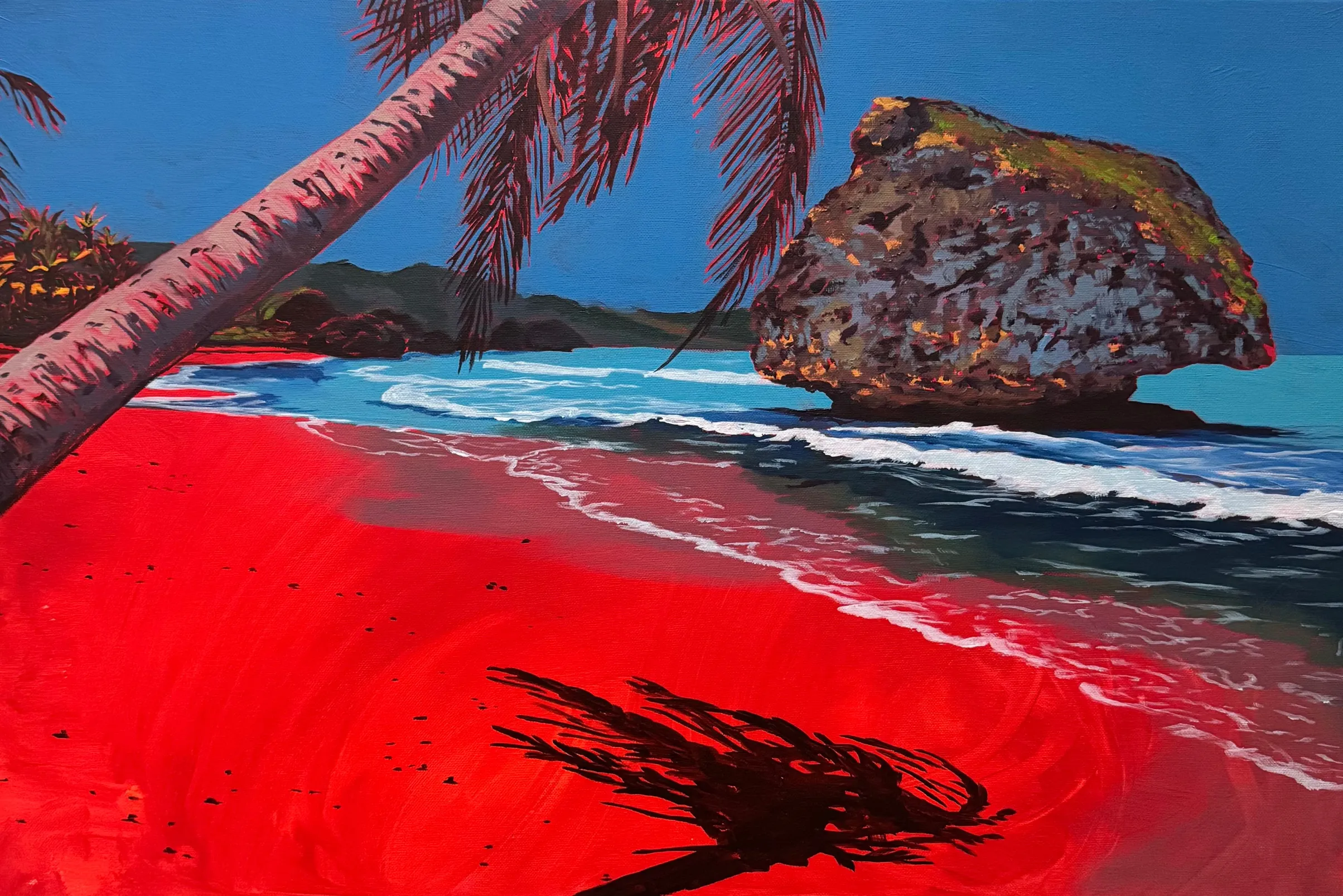
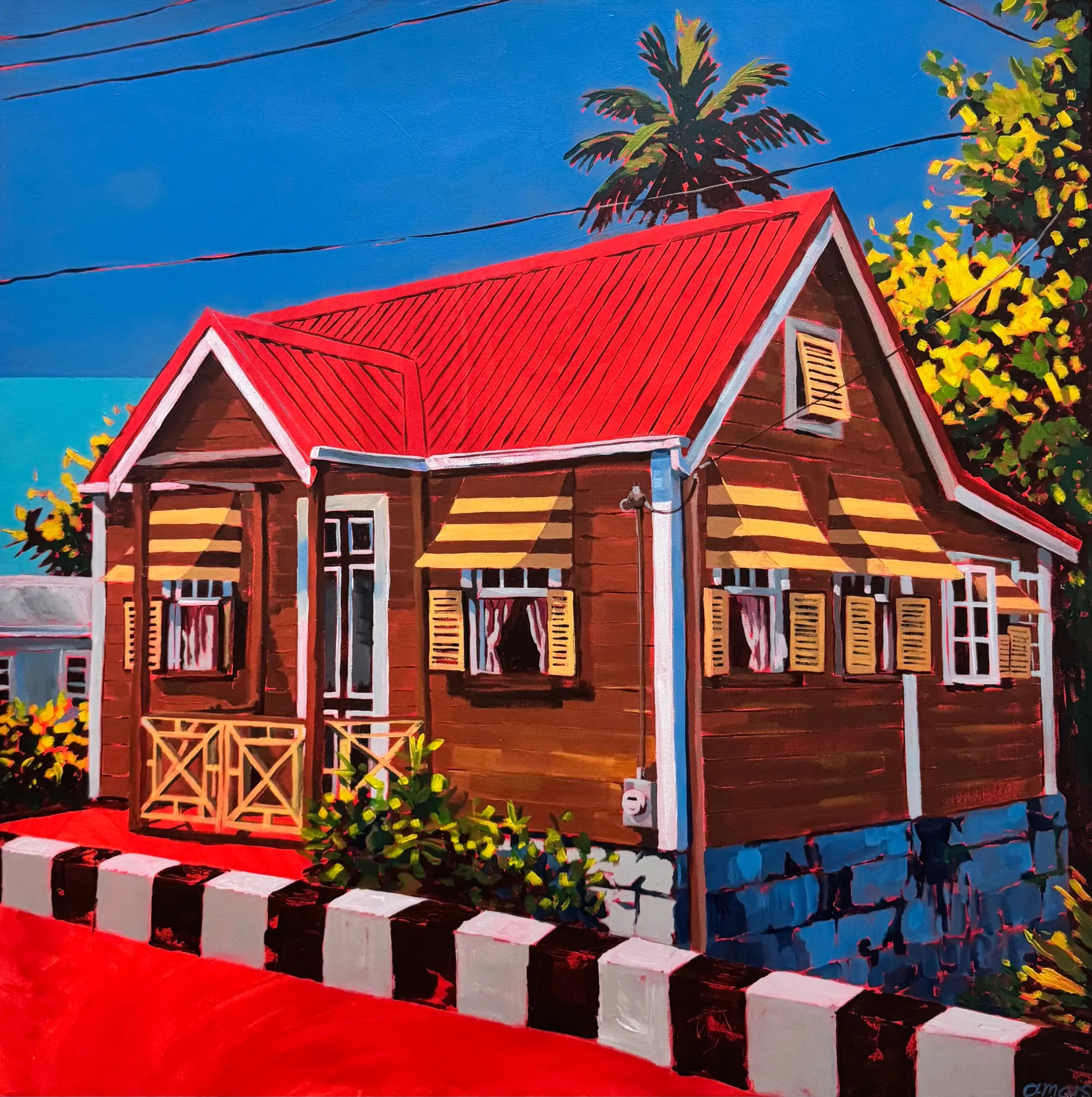
Today the gallery is not only open but thriving. As soon as you walk in color hits you: four large canvases, bold and sun-scorched, the kind of paintings that stop you mid-step before you've taken in the rest of the room. They're the opening salvo of Alex Mars's Moments in Motion series — Barbadian street scenes and coastlines in flat, hyper-saturated color. The sand is not golden but red hot red. Beside it, Bathsheba: the famous rock rising from a turquoise sea, a palm tree leaning overhead, its shadow falling sharp and black across that same vivid red sand. You don't need to read the label to feel the heat coming off the canvas.
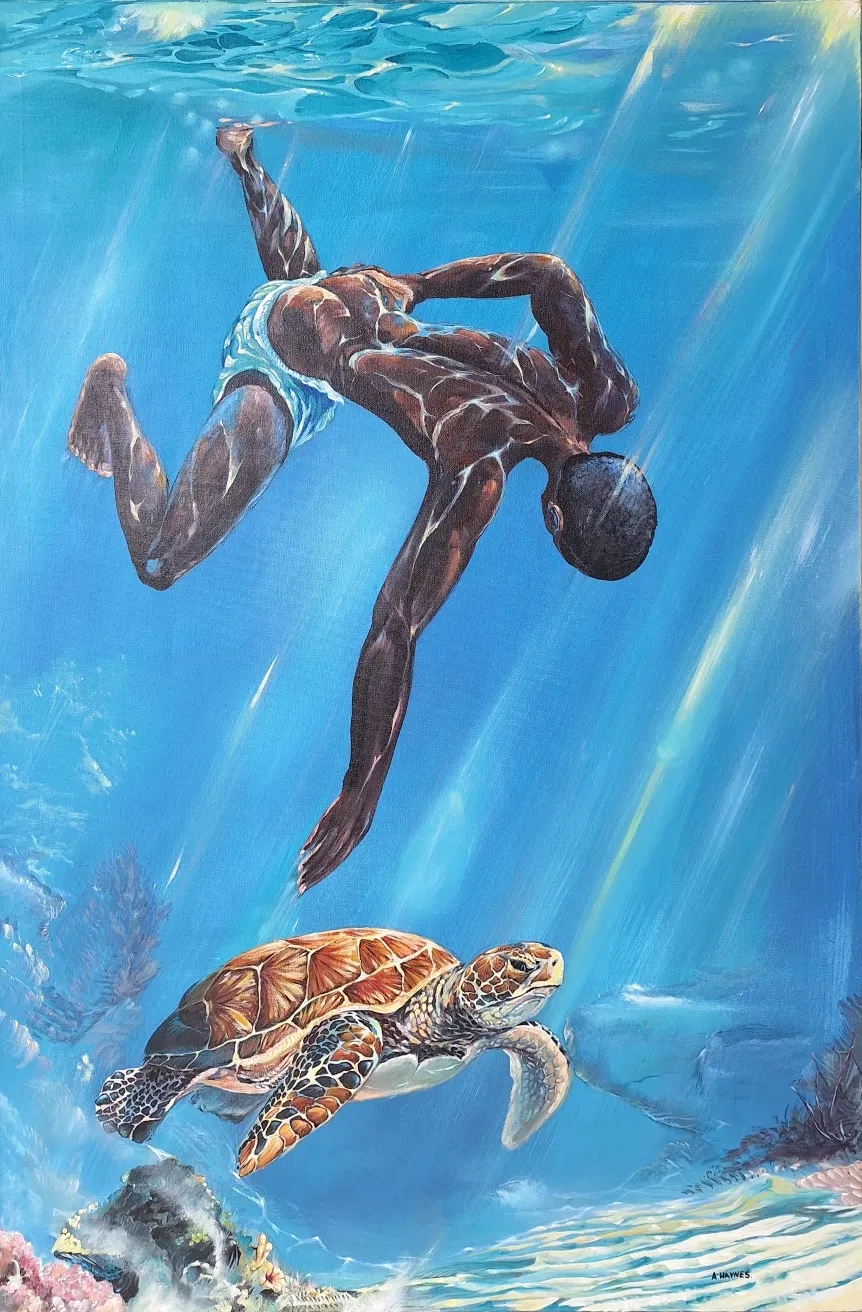
The gallery unfolds across three rooms. The first draws you in, before opening into a larger main collection room, chairs set in the center so you can sit and take your time. "A lot of people rush through art," says Mohita, now assistant director. "And not always like they mean to — it's just kind of how it is nowadays." As I sit down in one of the chairs to take it all in, another visitor steps in. We begin to talk. And then we stop. Neither of us can take our eyes off Anthony Haynes's underwater painting, Edge of the Reef — a young man diving toward a sea turtle below, sunlight streaming in long diagonal shafts through the water, light catching across his back in silver-white highlights, his body suspended between the surface and the deep. Just as I start to wish I were in that water, I look up through the gallery window at the glimmering ocean across the road and remember exactly where I am. Come in, take your time, enjoy the space. You don't have to buy anything,” Mohita says.
Many of the pieces are from Barbadian artists but the gallery hosts work from across the region, from Jamaica to Guyana and everything in between. Near the entrance, a Haitian palm tree hand-cut from recycled steel drums catches the eye, its fronds individually shaped and colored, two hummingbirds in the branches. You know where you are, but not in the way you might expect. The subjects are unmistakably Caribbean, but the work feels worlds away from conventional tourist art.
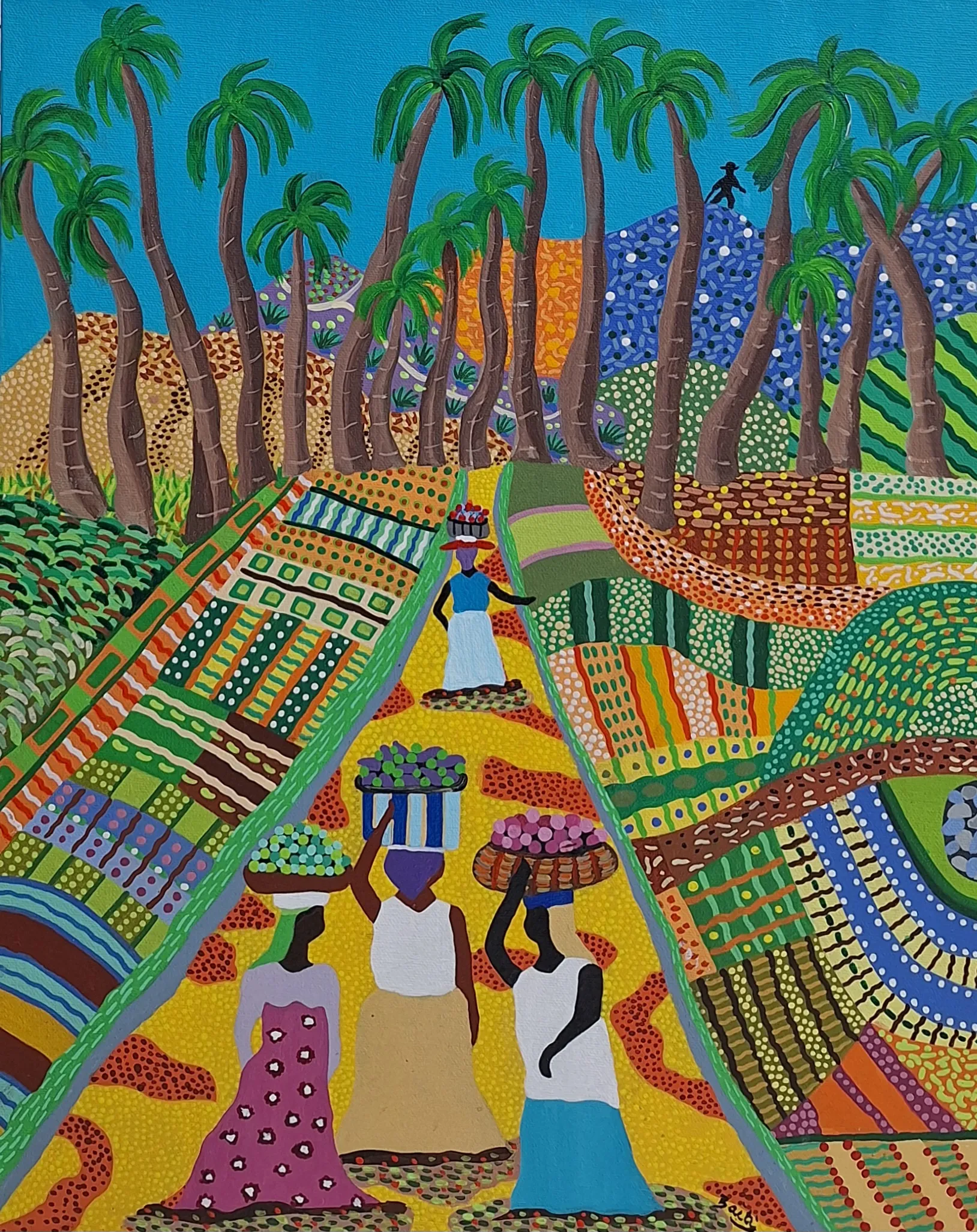
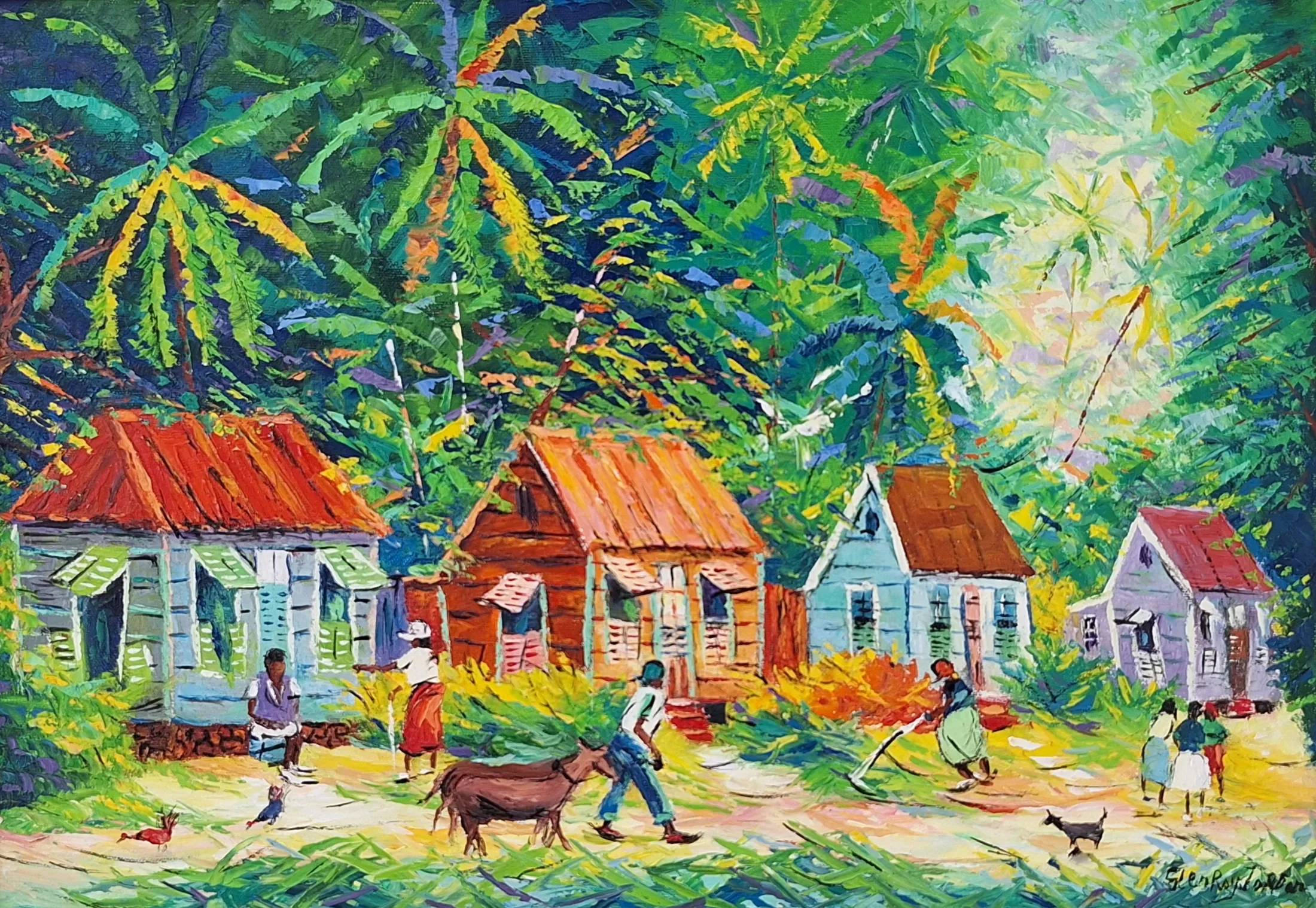
Glenroy Jordan's chattel village scene covers a wall: thick impasto, the tropical canopy pressing down over houses with red-tin roofs, daily life playing out below: a man walking two black-belly sheep, women sweeping outside their homes, a chicken pecking for worms. The paint is piled on so heavily you can almost feel the humidity coming off the vegetation. Tracy Elizabeth Stewart's patchwork landscapes stop you differently. Every inch of the canvas is filled: fields divided into dozens of small plots, each with its own distinct pattern — dots, chevrons, stripes, waves in terracotta, purple, green, orange, cobalt — like looking at a vast quilt from above. Women carry baskets of fruit through the center, their dresses vibrantly patterned too, the palm trees and distant hills treated the same way. You could spend ten minutes in one corner and not exhaust it.
The gallery holds a new exhibition every month, most running three to four weeks. Some bring together artists from across the region; others give a single artist extended time on the walls. Occasionally the gallery hosts live artist demos, a featured artist working in real time while jazz plays and conversation moves around the room.
After each show, Kavitha and Mohita take up to three days to rehang the collection, deciding which pieces move to the red feature wall, which shift to other rooms, and how work from different islands and different sensibilities sits together. The result is a gallery that rewards moving through it slowly.
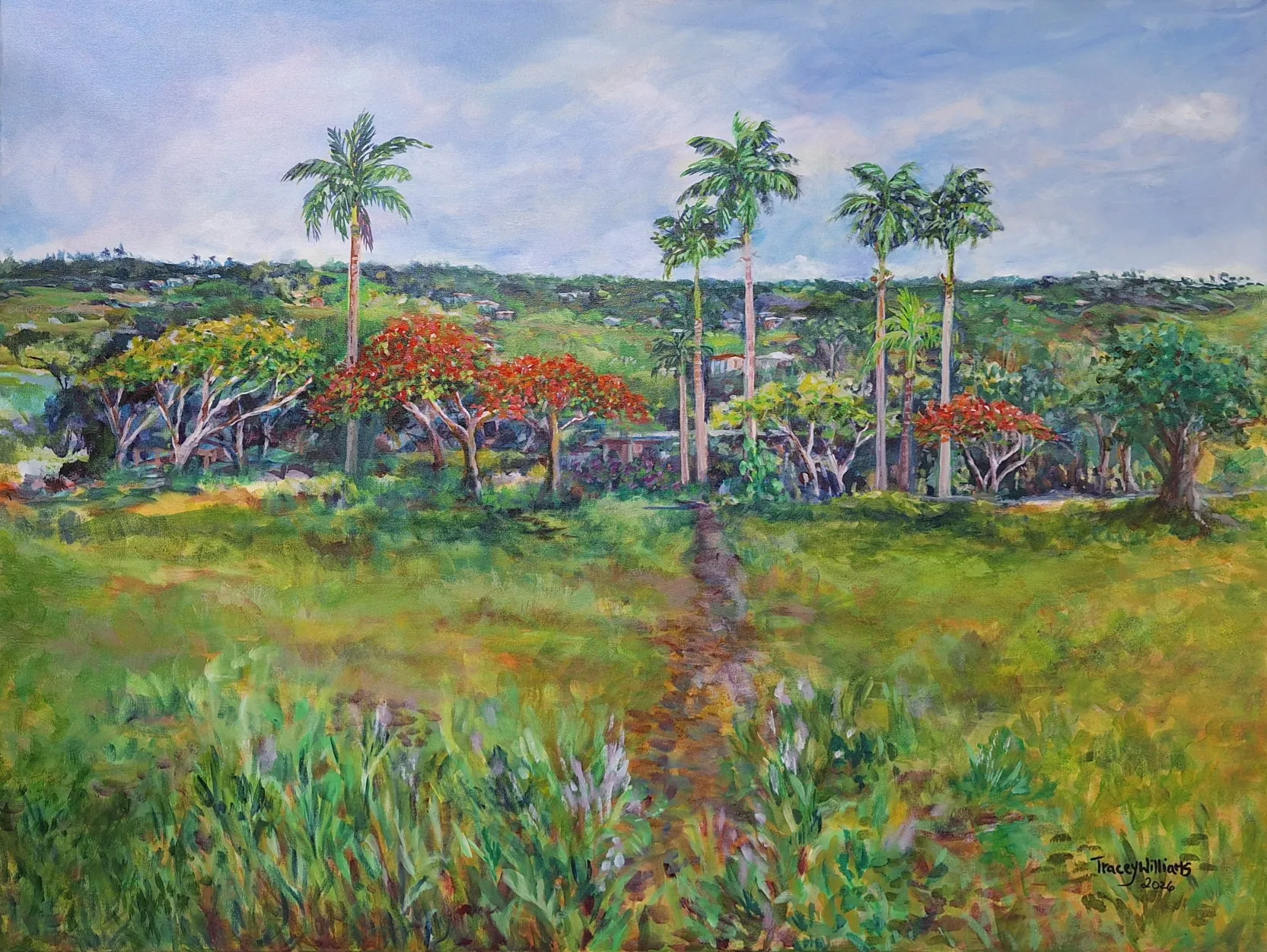
Kavitha came to Barbados from the southwest of India in 1989, her husband recruited to join the Queen Elizabeth Hospital as an oncologist. She had never painted until about twenty years ago, when she joined a class run by Tracey Williams — the same artist whose coral seascapes and Barbadian landscapes now hang in the gallery.
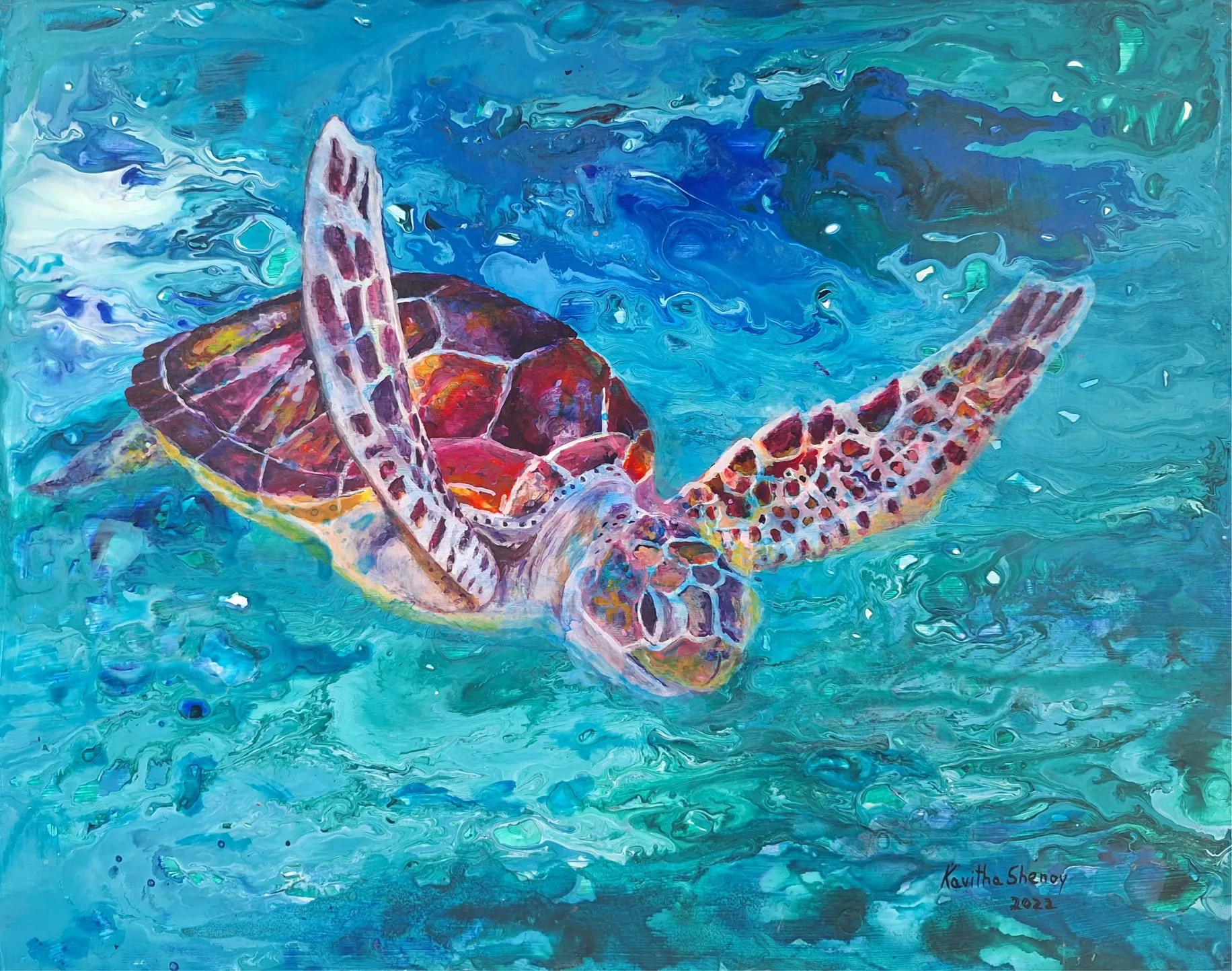
Kavitha's own work hangs alongside the other artists': her sea turtles rendered in rich burgundy and amber, shells warm and luminous against swirling turquoise water. There are pieces on the walls by artists Mohita once studied at school, among them Allison Chapman Andrews, one of Barbados's most celebrated painters, who had a show here in her final months. Three pieces sold on opening day. Mohita still sounds slightly amazed: that an artist she studied in school came to show in the gallery she now runs.
Helpful Hint
The gallery posts regularly on social media with updates on new shows and events, so it's worth checking what's on before your visit. Speightstown has good places to eat nearby: Sugar Mama and Cozy Cafe for cakes, drinks, and desserts, Fisherman's Pub and Little Bristol for traditional Bajan food, and Local & Co for a leisurely lunch and cocktails. Arlington House is just around the corner and well worth a visit.
Visit Gallery of Caribbean Art