Gun Hill Signal Station
By Rekke Editorial
Photos: Barbados National Trust
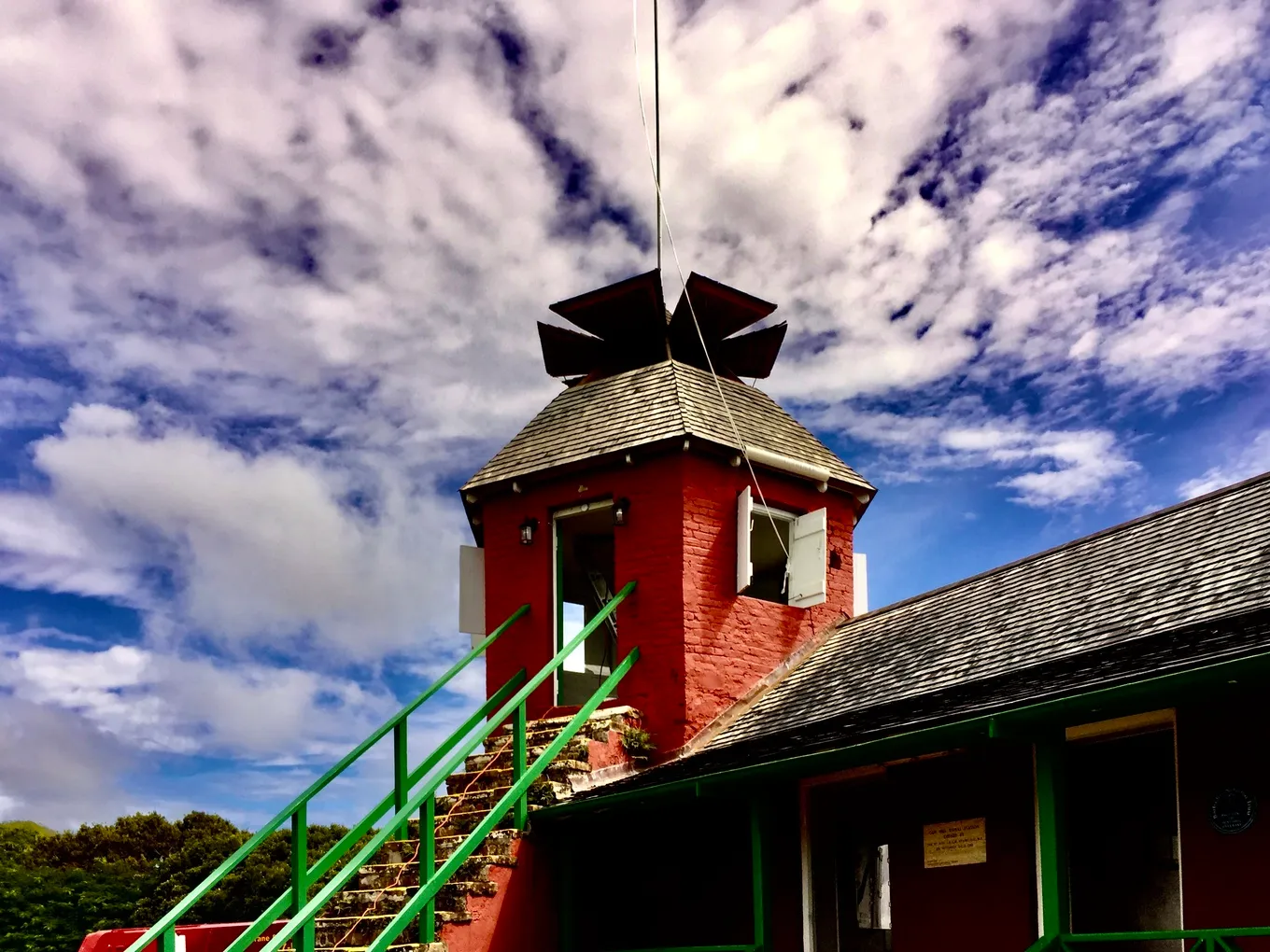
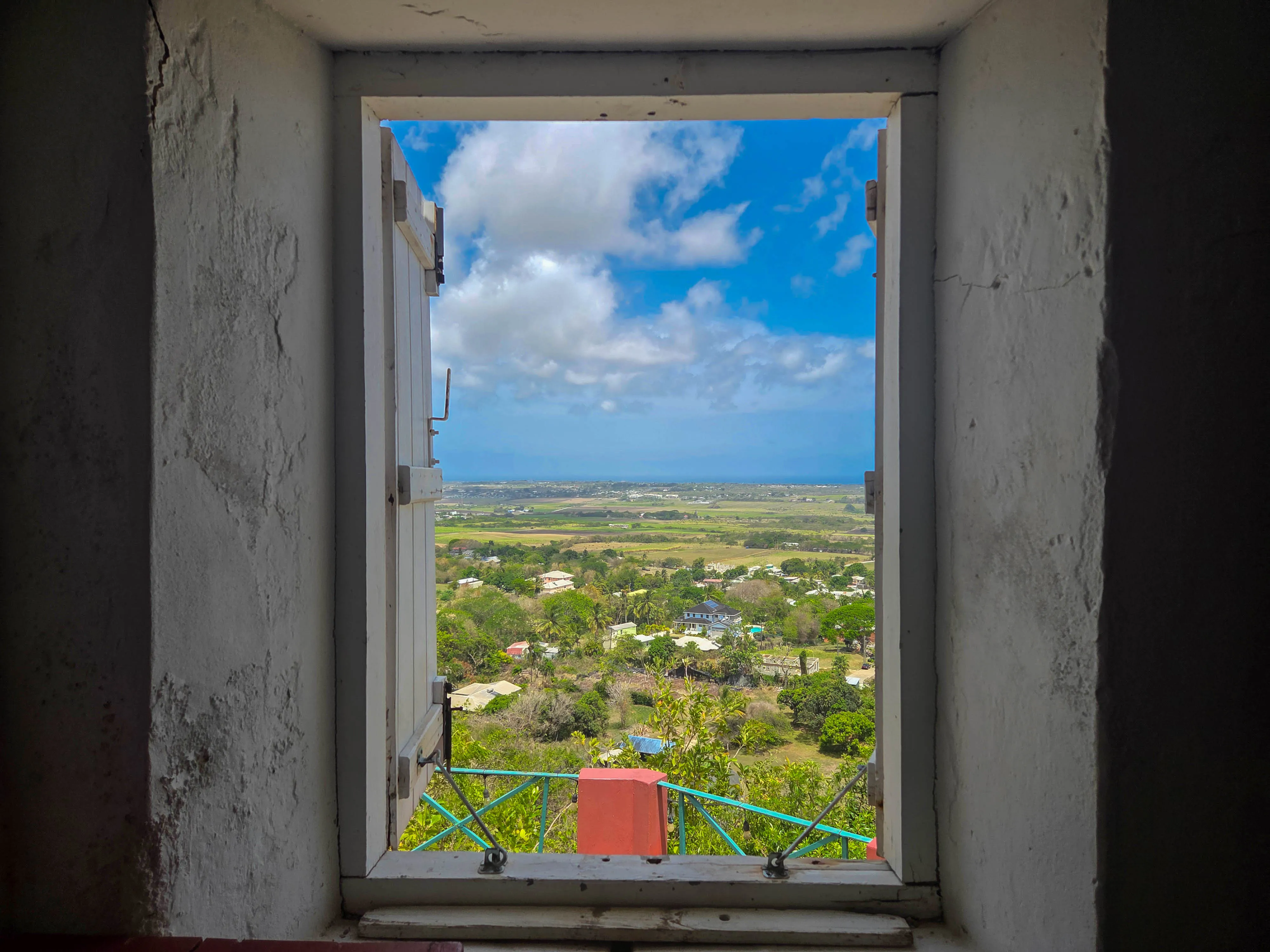
On a clear day from the top of the signal tower at Gun Hill, you can trace almost the entire arc of Barbados in a single turn: the south coast stretching east toward the Atlantic, Bridgetown’s port coming round to the west, and the green roll of the interior parishes filling everything between. Kevin, who has managed this site for over a decade, offers the same reminder to every visitor who arrives transfixed by the first view from the garden on arrival. “I know you love this,” he says. “But it gets better.”
The History
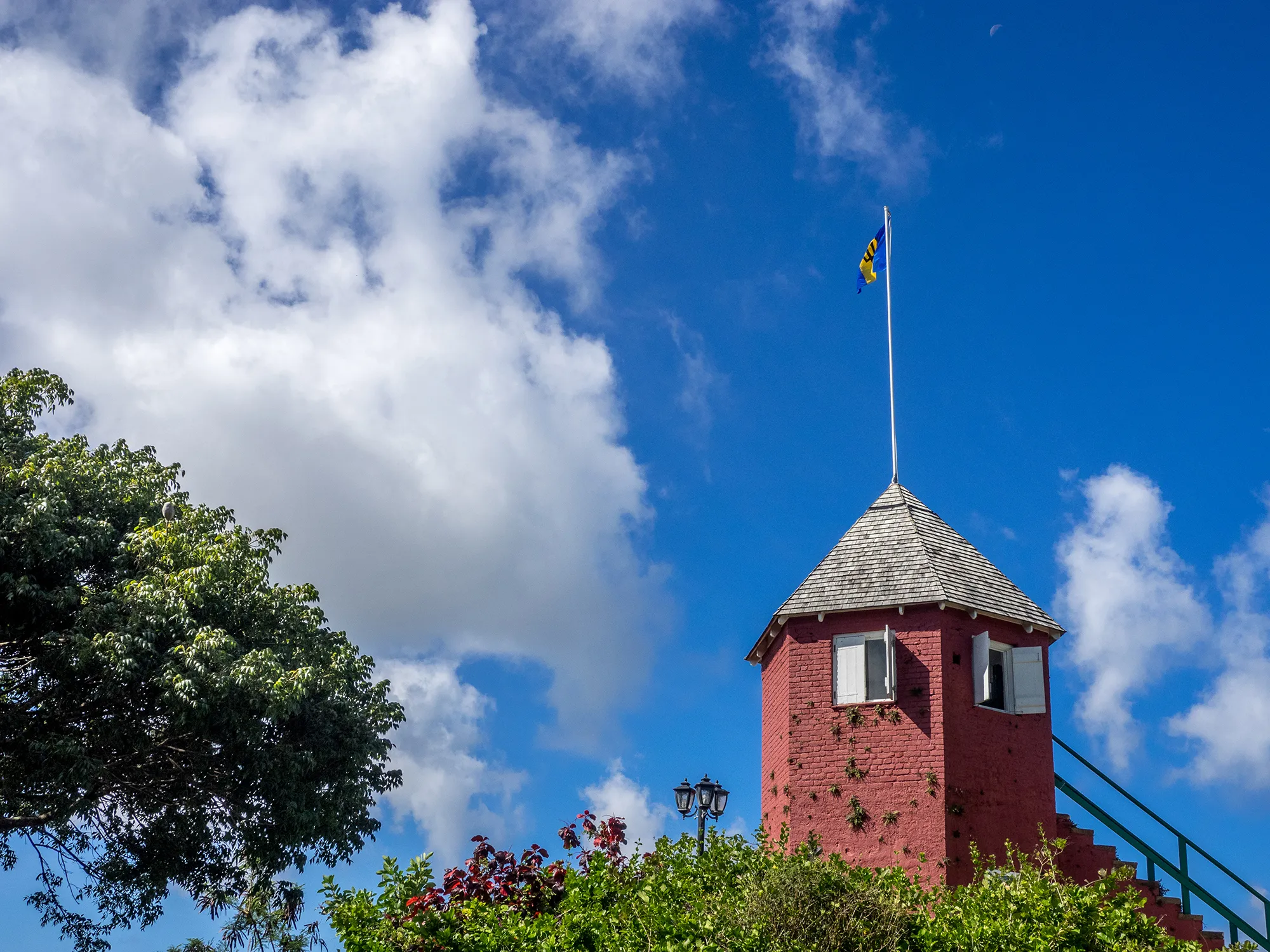
The formal signal network here was prompted not by an enemy fleet but by Bussa’s Rebellion of 1816,Barbados’ first in over a century. Sir Stapleton Cotton, Lord Combermere, arrived as Governor the following year, fresh from Wellington’s Peninsular Campaign and with a soldier’s eye for high ground. He proposed a chain of six stations across the island’s elevated parishes, within a clear line of sight of each other, and all were completed within two years. Cotton Tower, incidentally, takes its name not from the crop but from Lord Combermere’s daughter, Caroline Cotton.
The network also served as a hurricane warning system, and in 1831 the need was stark: the storm that devastated the island found the Governor sheltering in his cellar as Government House collapsed above him.
Signal and Stone
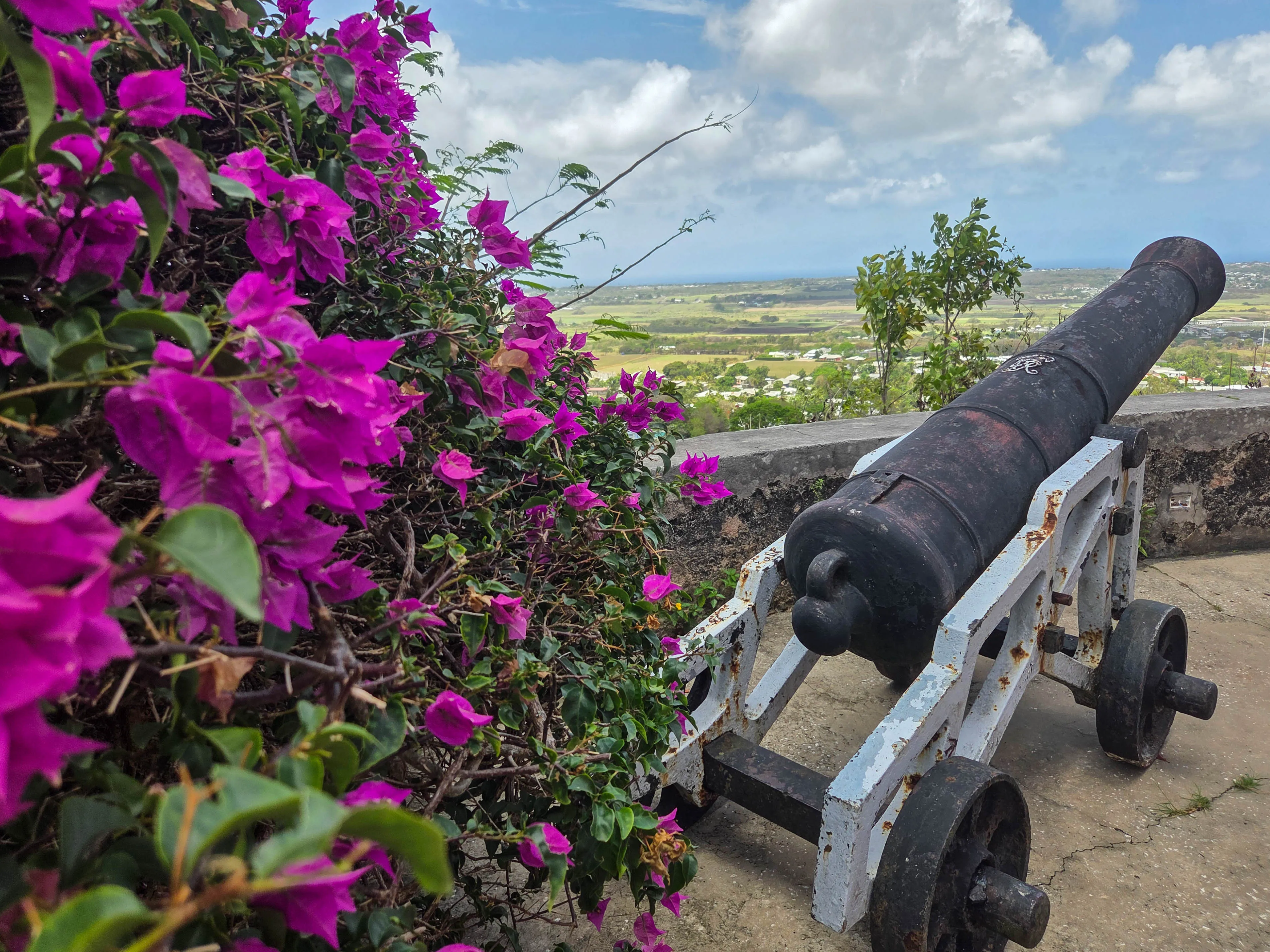
The stations communicated using a semaphore system of mechanical arms that could spell out individual letters or transmit pre-coded messages. The cannons were not weapons: fired blank, they alerted soldiers at neighboring stations to look up and read the flags. Flags of different colors, shapes and their combinations, as well as the height at which the flags were flown, indicated different messages. The hill’s altitude and constant breeze also offered an unintended advantage. Yellow fever repeatedly devastated the Bridgetown garrison and Gun Hill became a recurring refuge, troops sent up the hill to escape the epidemic on multiple occasions. The 21st Regiment of Foot (Royal Scottish Fusiliers) were stationed here in 1862 for exactly that reason. After emancipation in 1838, the network shifted from military alert to mercantile use, signaling trading ships to the merchant houses of Bridgetown. The introduction of the telephone in 1883 made it quickly obsolete.
Visiting Gun Hill
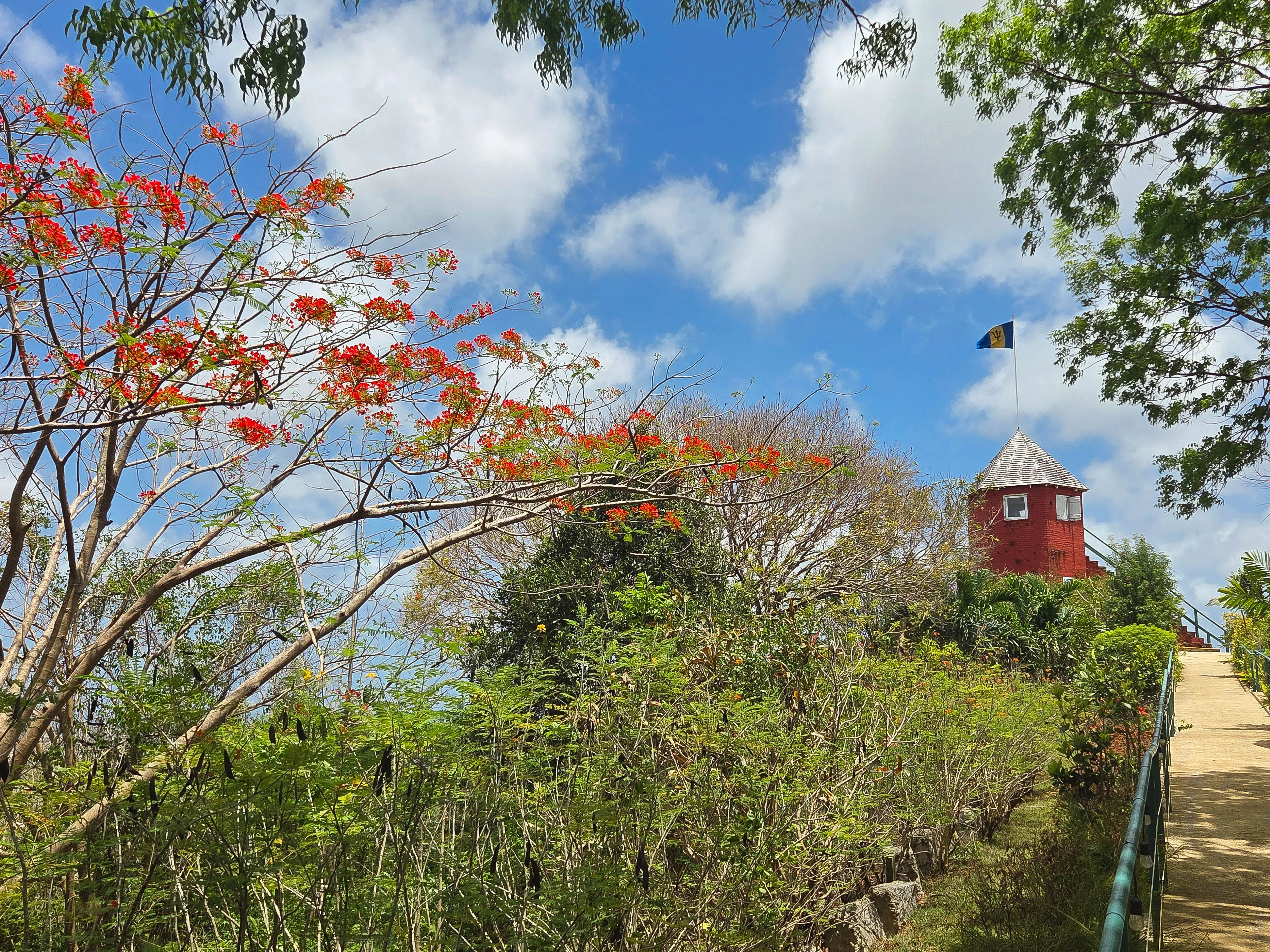
The approach is through a shaded garden of flamboyant trees and bougainvillea, past cast-iron lamp posts and wooden benches and a pummelo tree planted by Prince Edward in 1987, with the distant cry of guinea fowl drifting up from the farm below. On a hot day the canopy makes a difference, and the elevation keeps the air moving. Near the entrance, a well reportedly 220 feet deep stands in the shade; local memory holds that nobody has ever found the bottom.
The tour is self-guided. Inside the signal tower, the rooms carry three centuries of accumulated history: regimental buttons, a bayonet, cannonballs, and a reconstructed kitchen showing what soldiers stationed here would have eaten: breadfruit, callaloo, yams, hot peppers, and plantain, considerably more interesting than their usual rations. The cannons on site carry Elizabeth II’s royal cypher on the barrel; the charts explaining the semaphore system show how much meaning could be packed into a set of mechanical arms and a well-positioned flag.
The building hasn’t been over-restored — the walls show their age, and a moth or two has become part of the collection — but the faded edges feel right for a place that has genuinely been through things.
Gun Hill also has a resident cat. Lily has been here since just before COVID, and Kevin notes with mild resignation that you find more photographs of her online than of the actual views. She is, by all accounts, entirely unbothered by this. She is also not the only feline on the premises.
The Lion
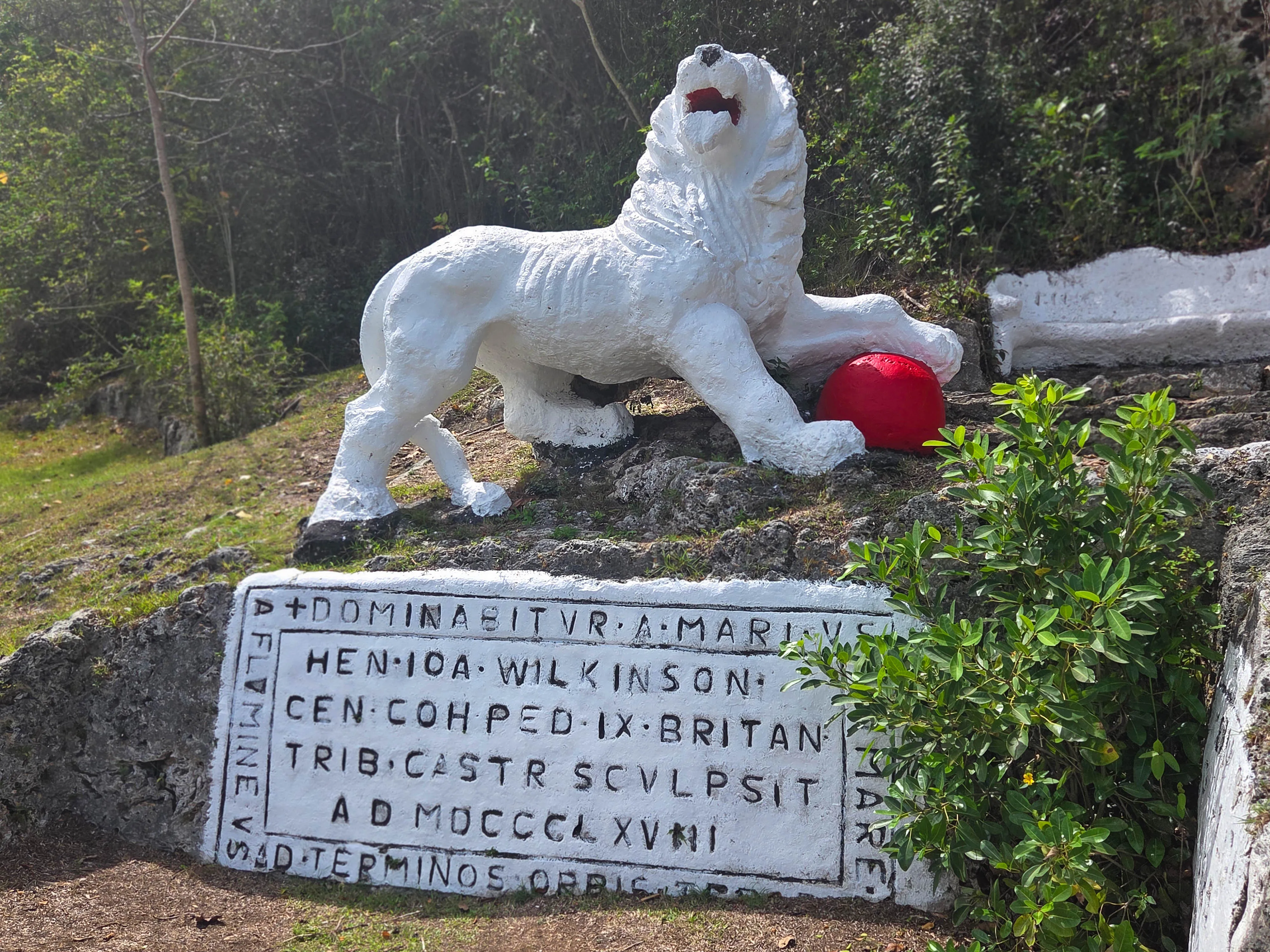
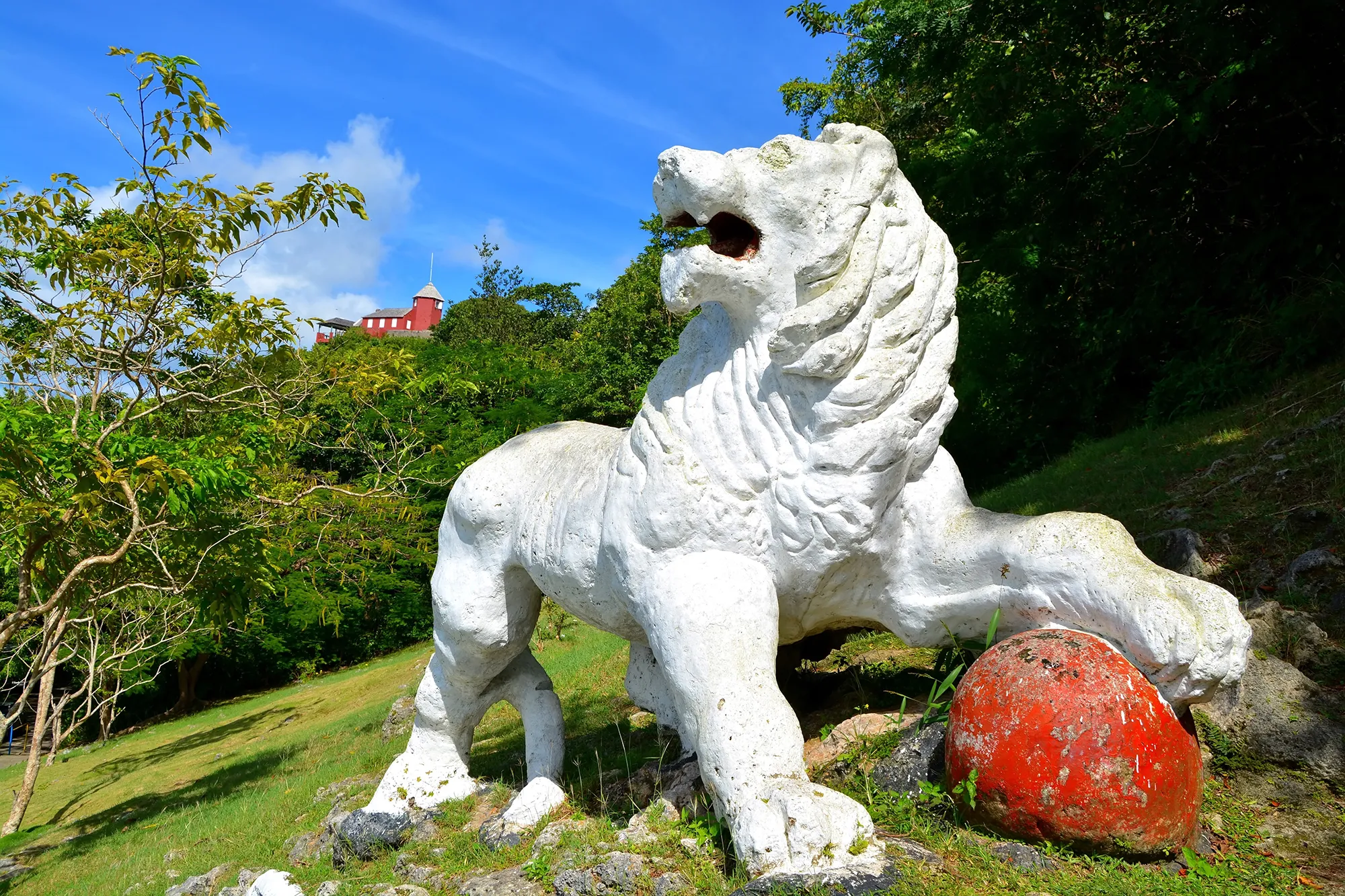
At the base of the hill, between bearded figs, and mango and flamboyant trees, stands the lion. Carved from a single piece of coral rock in 1868 by Captain Henry Wilkinson and four military laborers, it is a life-sized figure cut from the stone where it sits. The Latin inscription around the plinth translates as “He shall have dominion from sea to sea, and from the river unto the ends of the earth.” Kevin is direct: “They were making a mark,” he says. “Leaving a mark.” Most visitors just stop for a quick photograph, but the inscription is worth taking the time to ponder. Its imperial confidence sits in pointed contrast with the enslaved rebellion that first prompted the station’s construction. Gun Hill does not obscure either of them.
Good to Know
Allow 15 to 20 minutes for a quick visit, or up to an hour if you plan to linger in the garden. The signal station and lion both involve stairs and are not fully wheelchair accessible. A bus stop at the main entrance makes the site reachable without a car.
Helpful Hint
The lion is reached via a separate narrow one-way road that descends from the main entrance, and it is very easy to miss entirely. Look for a small pull-in area just before the steps and park there, as there is nowhere else to stop safely on the hill.
You might also like
Grenade Hall Forest and Signal Station – Time and Nature in Harmony
Signal stations provided more than just defence against invasion, cane fires and rebellion; they were also used as hurricane warning stations and to tell the time!