Earthworks: No Ordinary Pottery
By Rekke Editorial
You have almost certainly seen Earthworks before; you just didn't know it. The turtles on the Freights Bay boardwalk, the ceramic house-name signs across the parishes, the bowls and cups on gift shop shelves and restaurant tables around the island: the blues and greens are unmistakable, drawn directly from the sea, the sky, and the gullies of Barbados. Once you recognize it, you start to spot it everywhere.
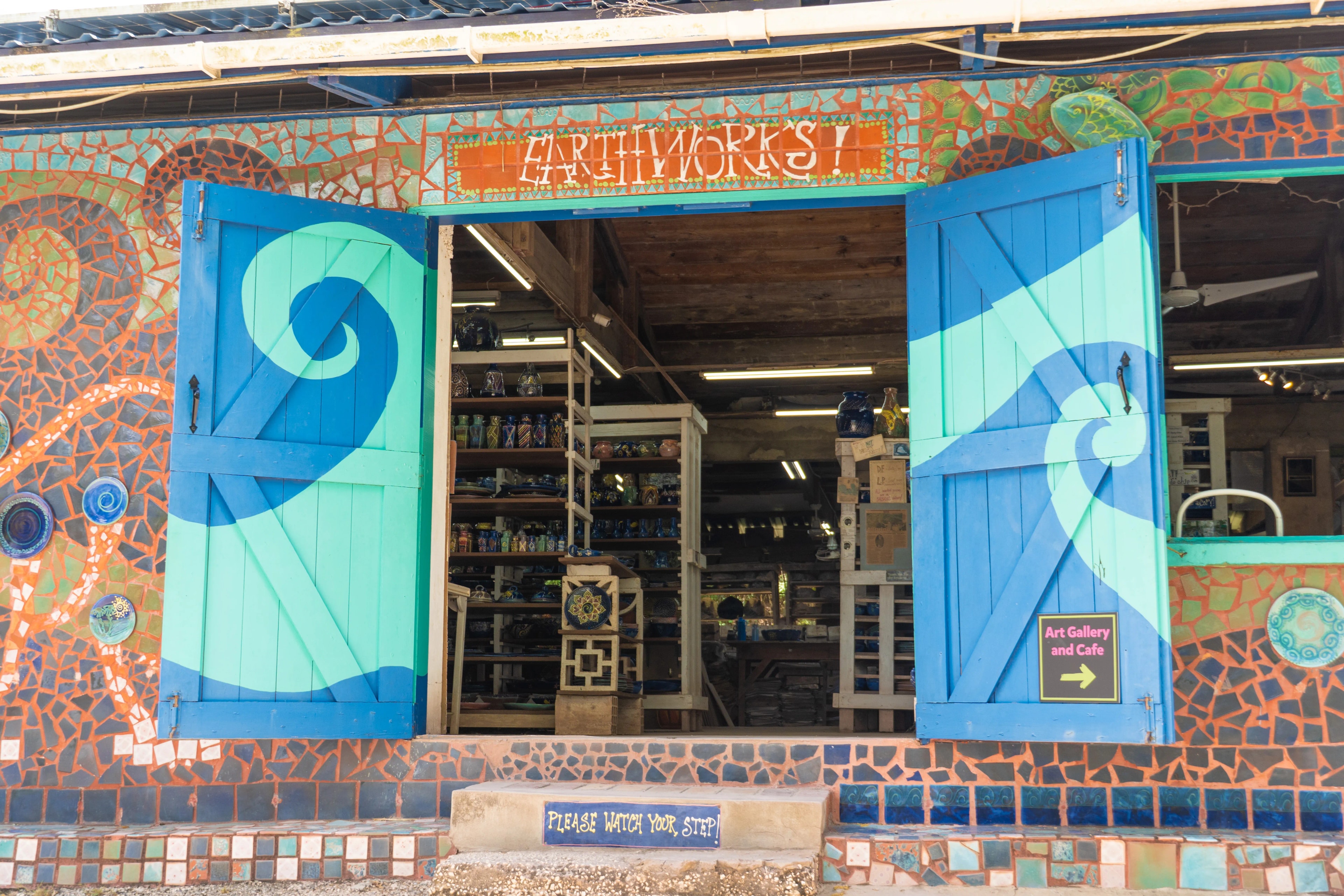
Earthworks studio sits on a breezy ridge in St Thomas that Goldie Spieler bought in 1968, drawn by the view sweeping all the way down to the distant shimmer of Barbados' south coast. The building announces itself before you reach the door: the entire facade covered in a rich mosaic of terracotta and rust tile, with waves, coral, and fish worked across the wall alongside small Earthworks plates embedded in the tilework, the stable-style doors and shutters painted in two tones of blue. The steps carry mosaic messages that set the tone: Welcome to Earthworks, established 1981. Enjoy your day.
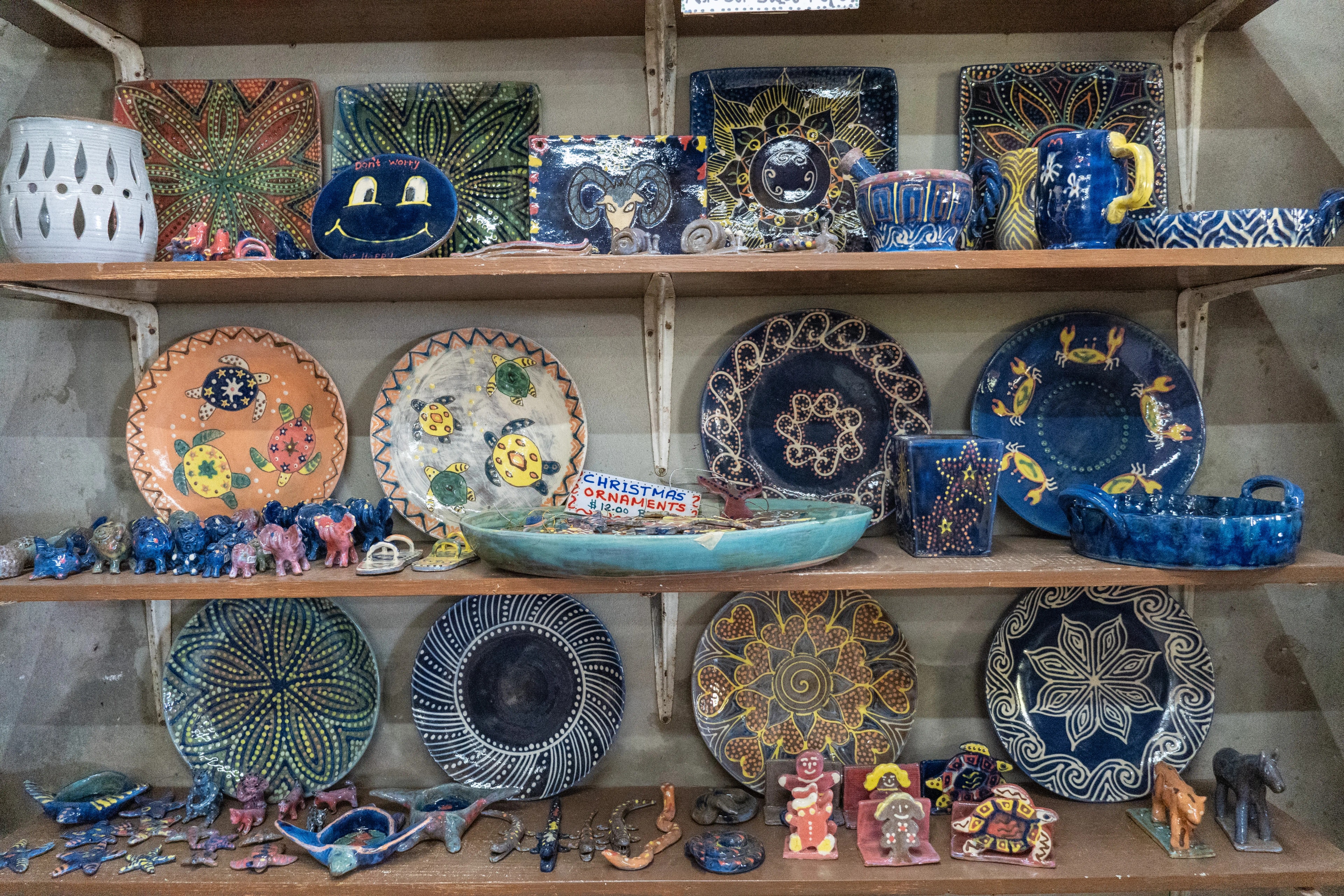
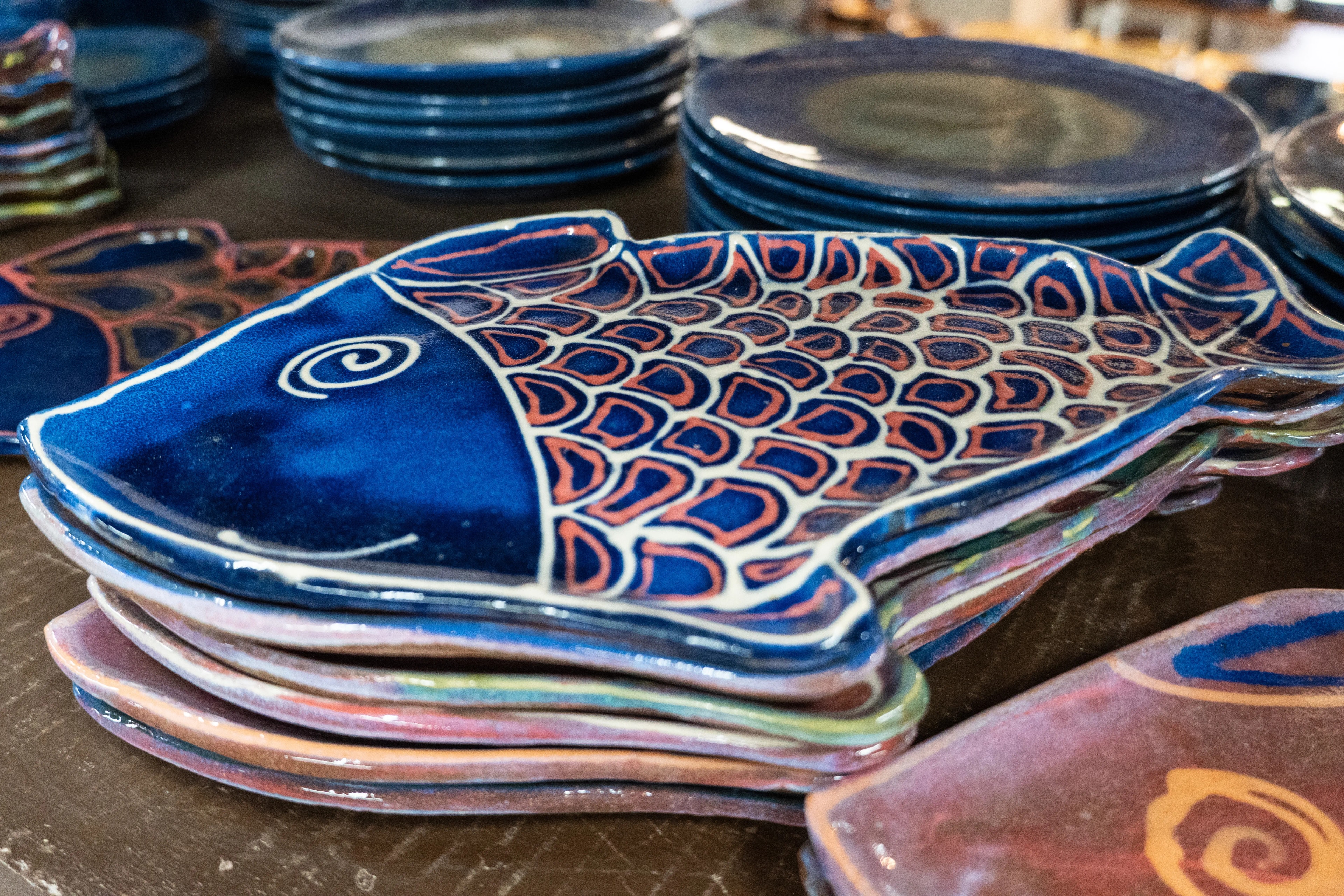
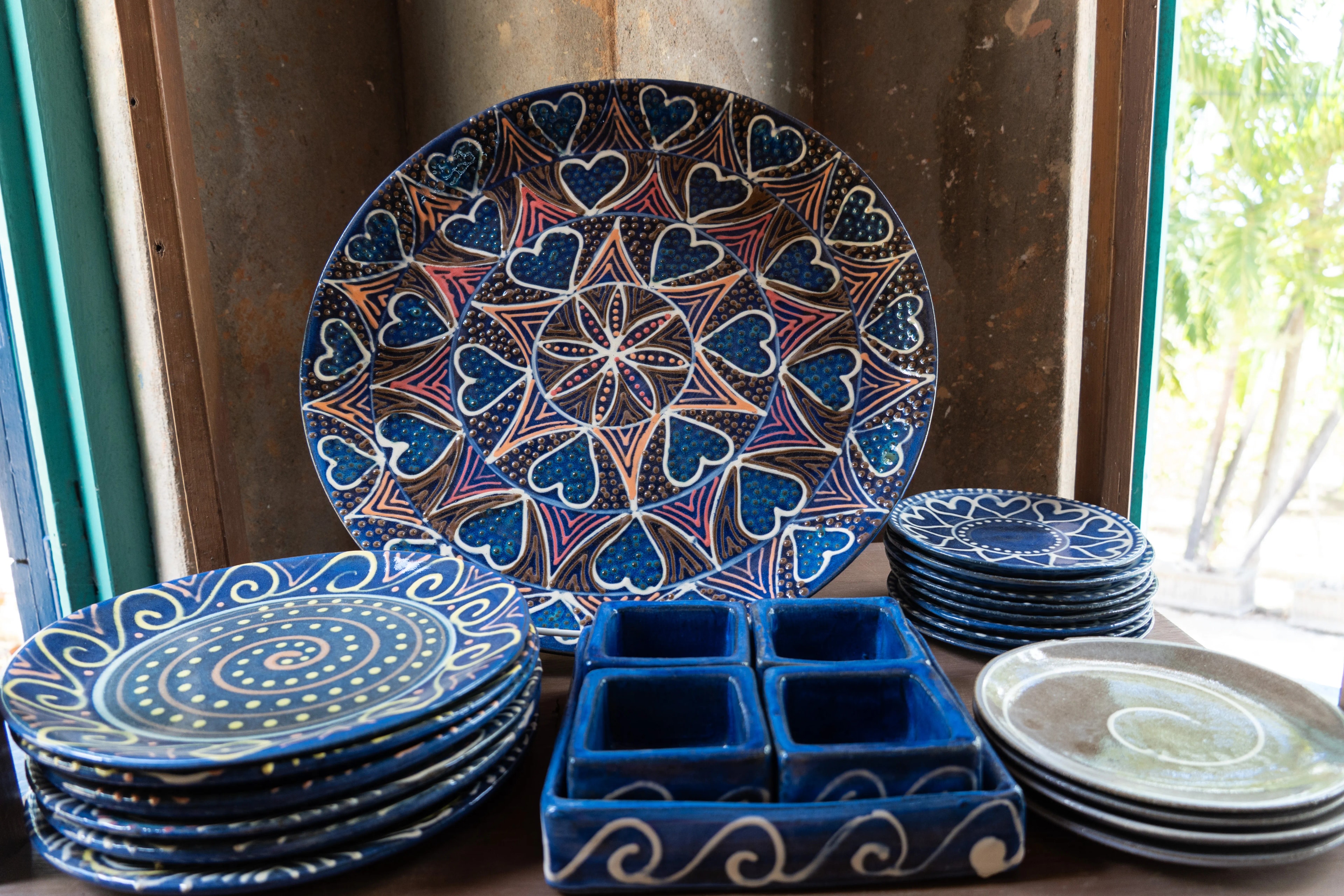
The shop comes first, its shelves stacked with the blues and greens of Barbados translated into clay: colors Goldie spent years trying to capture as a watercolor painter before she ever touched clay. Over 150 shapes across 45 patterns, every surface doing something: sun designs, the signature swirls that have defined Earthworks since the 1980s, dots that up close have the texture of a sea urchin shell. The range runs from the considered to the openly joyful: palm trees and starburst alongside colorful fish platters, turtles, smiley crabs, and bus stop signs instantly recognizable as Bajan. Her instinct was always for "happy Caribbean-based themes that people would want to take home."
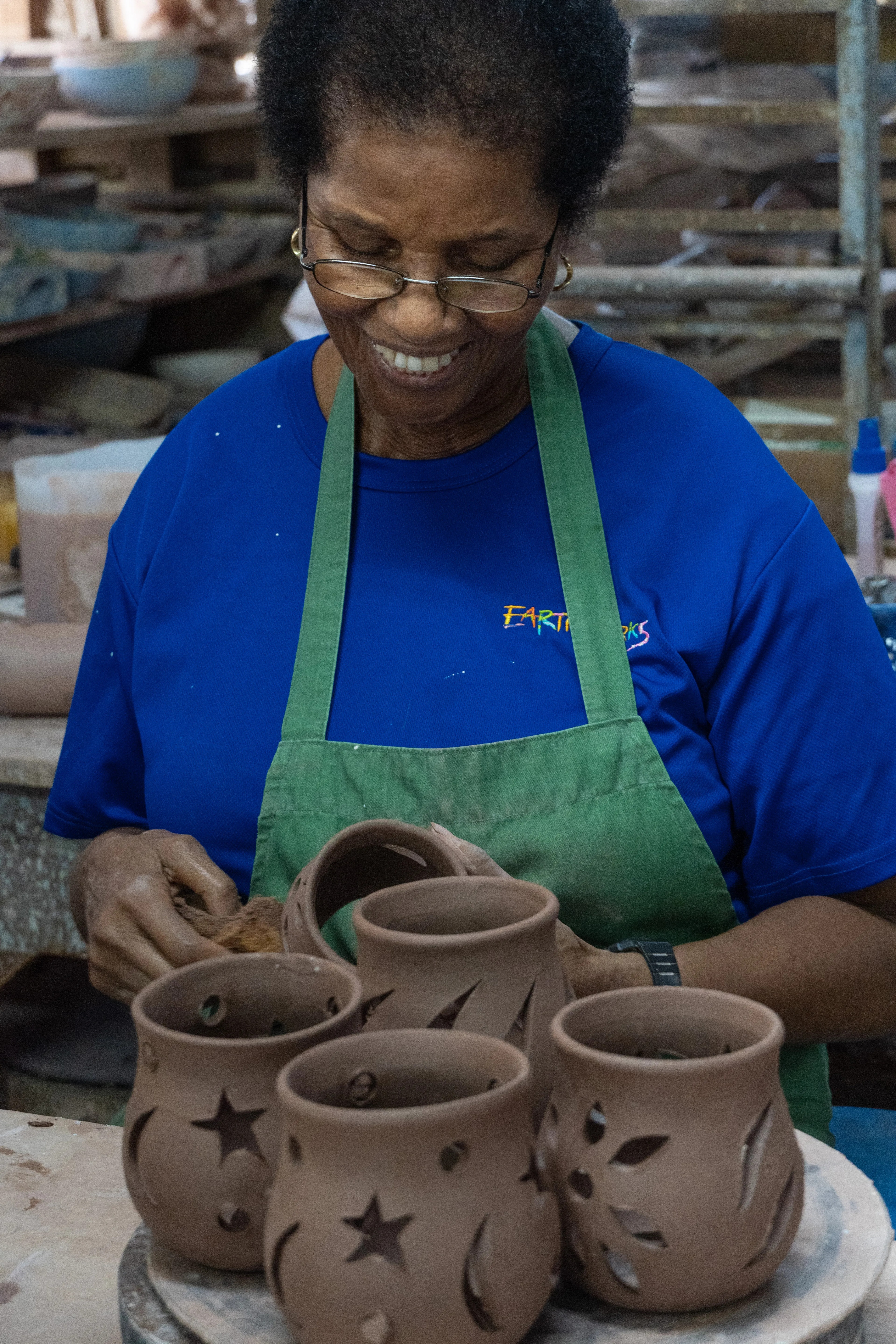
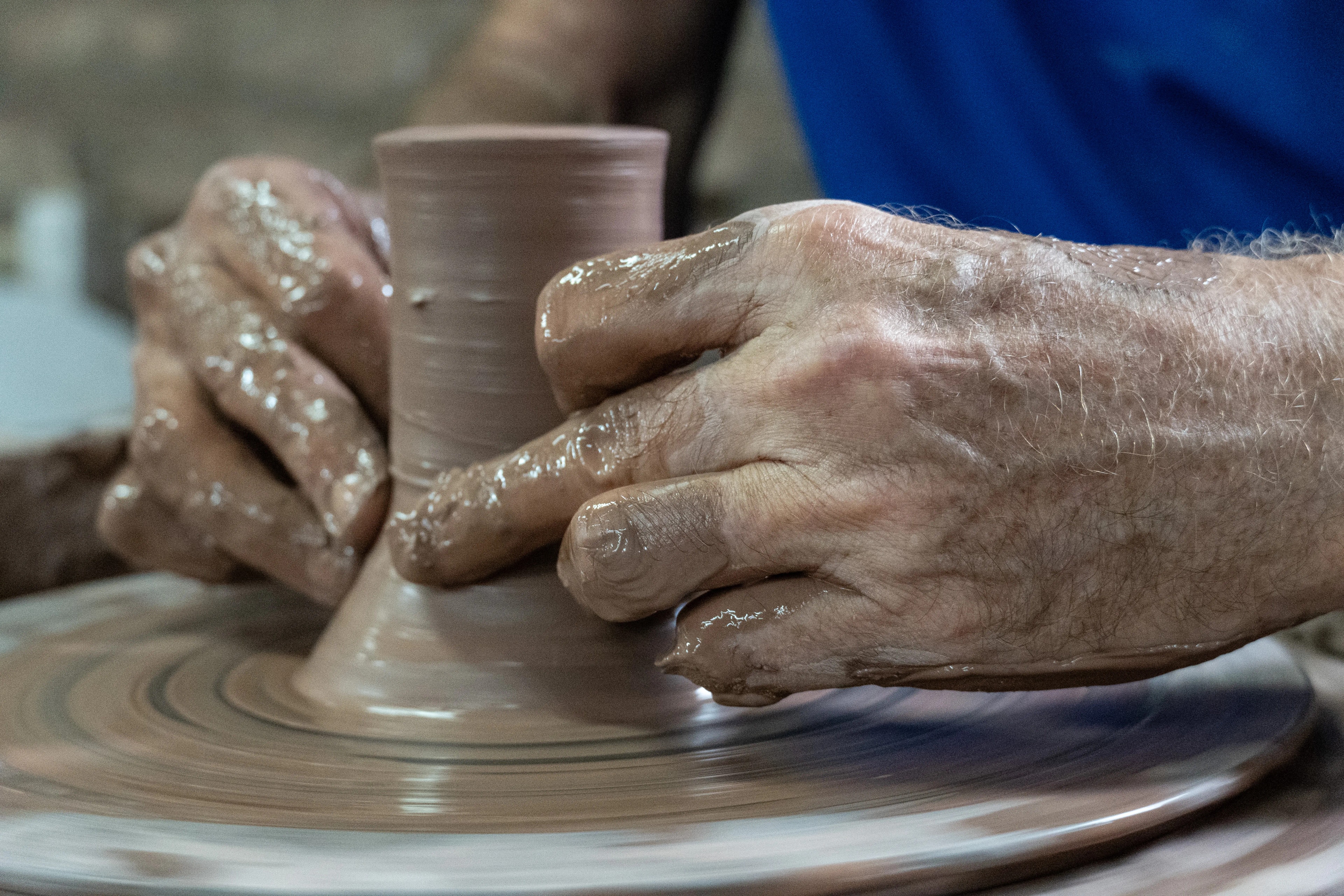
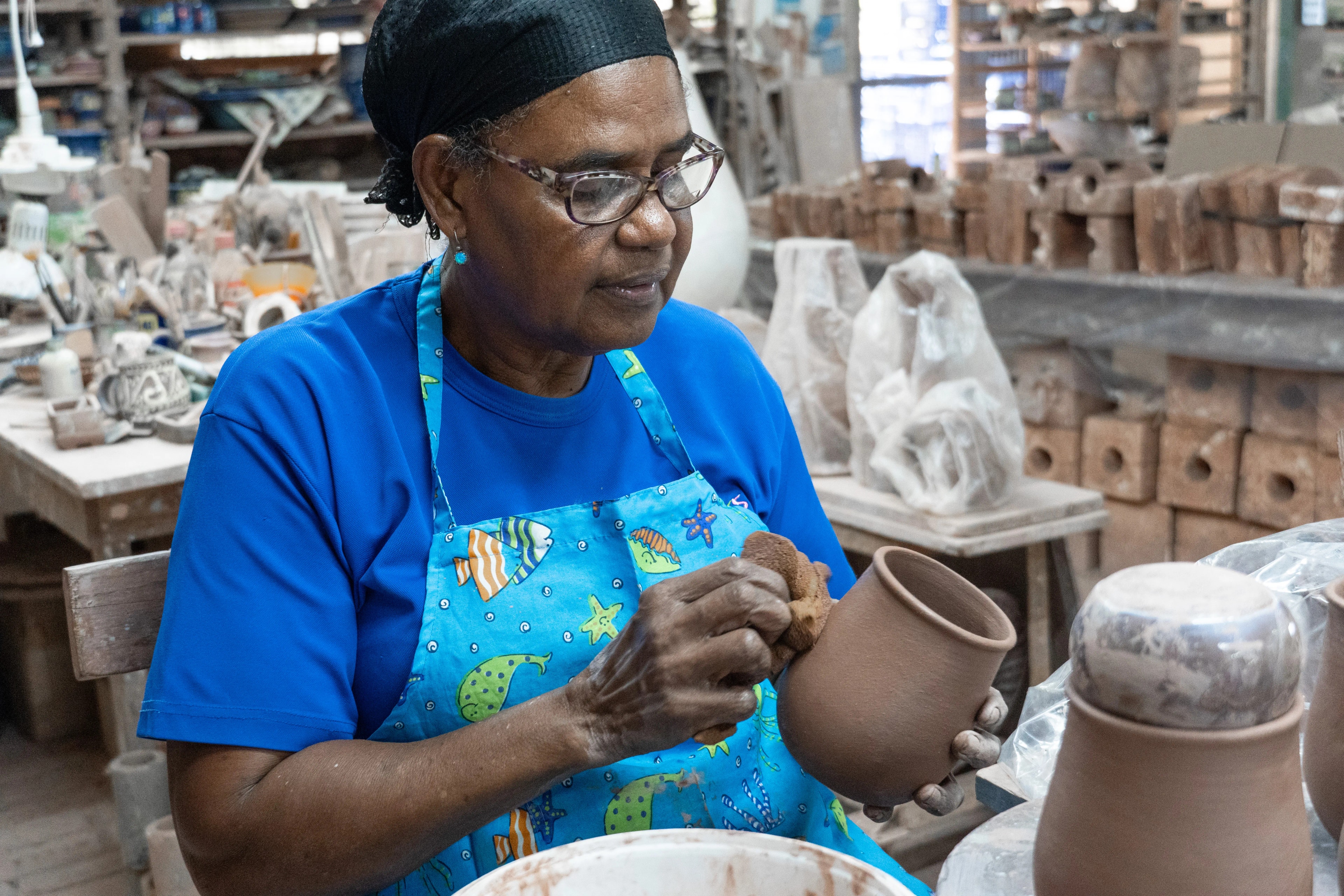
Step through and the place is at work: David at the wheel throwing custom wine goblets, the clay opening under his hands with the ease of someone who has done this for thirty-seven years; Shirley, thirty-eight years at the studio, shaping a sea cat; Pauline, thirty-five years, expertly cutting star and moon shapes on lamp fixtures for a hotel commission; at another bench, Junie and Deshawn moving between pieces, wiping off imperfections before they reach the kiln, each piece inscribed with the Earthworks name. Goldie once noted it had only one flaw: it is very long to write. The light comes in through the trees in shifting, dappled patches across the workbenches. Every piece that leaves here is hand-decorated, what David calls "a good honest creation": made for the kitchen, the dishwasher, the table with family and friends, and the years that follow.
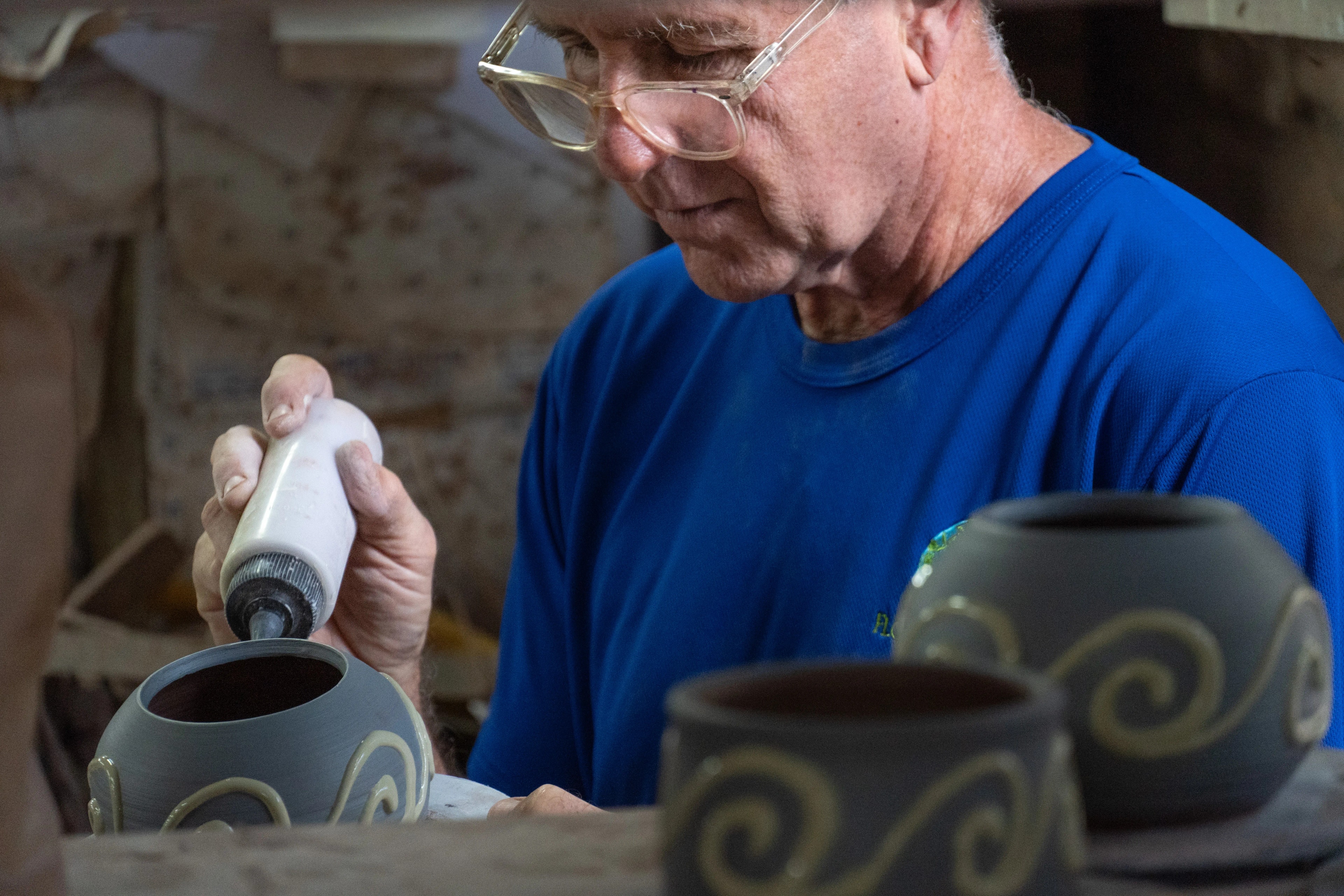
David, Goldie's son, left teaching to join Earthworks in July 1989 and has never left. He runs the studio now and also Flower Forest, the botanical gardens a short distance away, and his commitment to the island's natural world shapes much of what Earthworks does. Goldie, now in her nineties, still comes in regularly to make pinch pots: the small hand-formed pieces that were the first thing she ever made in clay, and the reason this place exists. She had arrived from Canada as a watercolor painter, obsessed with capturing the landscape: the cerulean sky, the turquoise water, and especially the palm trees, with their "long spindly trunks and feather-duster tops." On her visits to the pottery village of Chalky Mount she discovered that a craft with roots going back to the Arawak people, and later to the African slaves who brought their own traditions and kept those forms alive across generations, was quietly dying out. Goldie called her mission to revive it "the cause," and it took years of resistance, failed kilns, and persistence. The studio she built became Earthworks, and Barbados pottery today is thriving: Hamilton's, Highland Pottery, Motions of Clay, and a number of individual ceramic artists across the island. David calls his mother "the most talented designer I've ever worked with."
The murals Earthworks has produced around the island reflect the same commitments: a sustainability piece off the ABC Highway near Warrens, a Hawksbill turtle conservation mural carrying the Barbados Sea Turtle Project hotline number, and a government commission at Temple Yard in red, gold, and green with lion heads and Marcus Garvey stars worked into the Earthworks visual language. David's ambition is for the studio to become the world's first fully solar-powered pottery. "Nothing beats a try," he says, which is roughly how Earthworks got started.
Helpful Hint
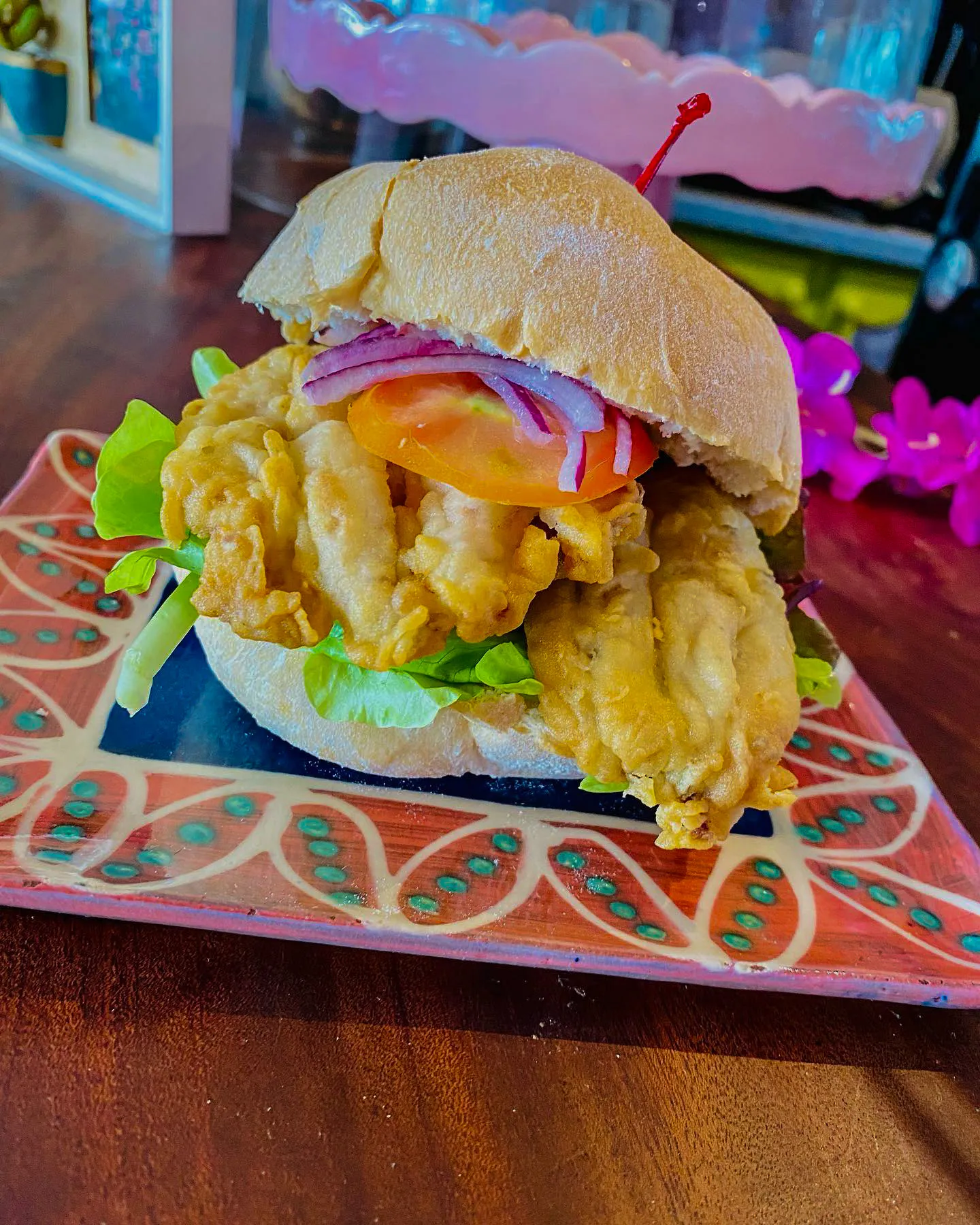
Allow an hour for a visit — enough time to browse the shop and see the staff at work. Right next door is Café Ma Cherie with fish cutters that come highly recommended; eat there and enjoy the breeze and the views over the fruit trees: hog plums, dunks, star apples, coconuts, tamarind, and Jamaican ackee. The Barbados Arts Council gallery is also next door, and worth a look; they have a selection of Bajan art as well as hand-painted fridge magnets. If time allows, the area has plenty to explore: Harrison’s Cave and Welchman Hall Gully are both a short drive into St Thomas' interior. For a longer day, the drive east toward the Scotland District and the Atlantic coast makes for a scenic route, with Flower Forest — run by David — a natural stop along the way.