Barbados Synagogue Historic District
By Rekke Editorial
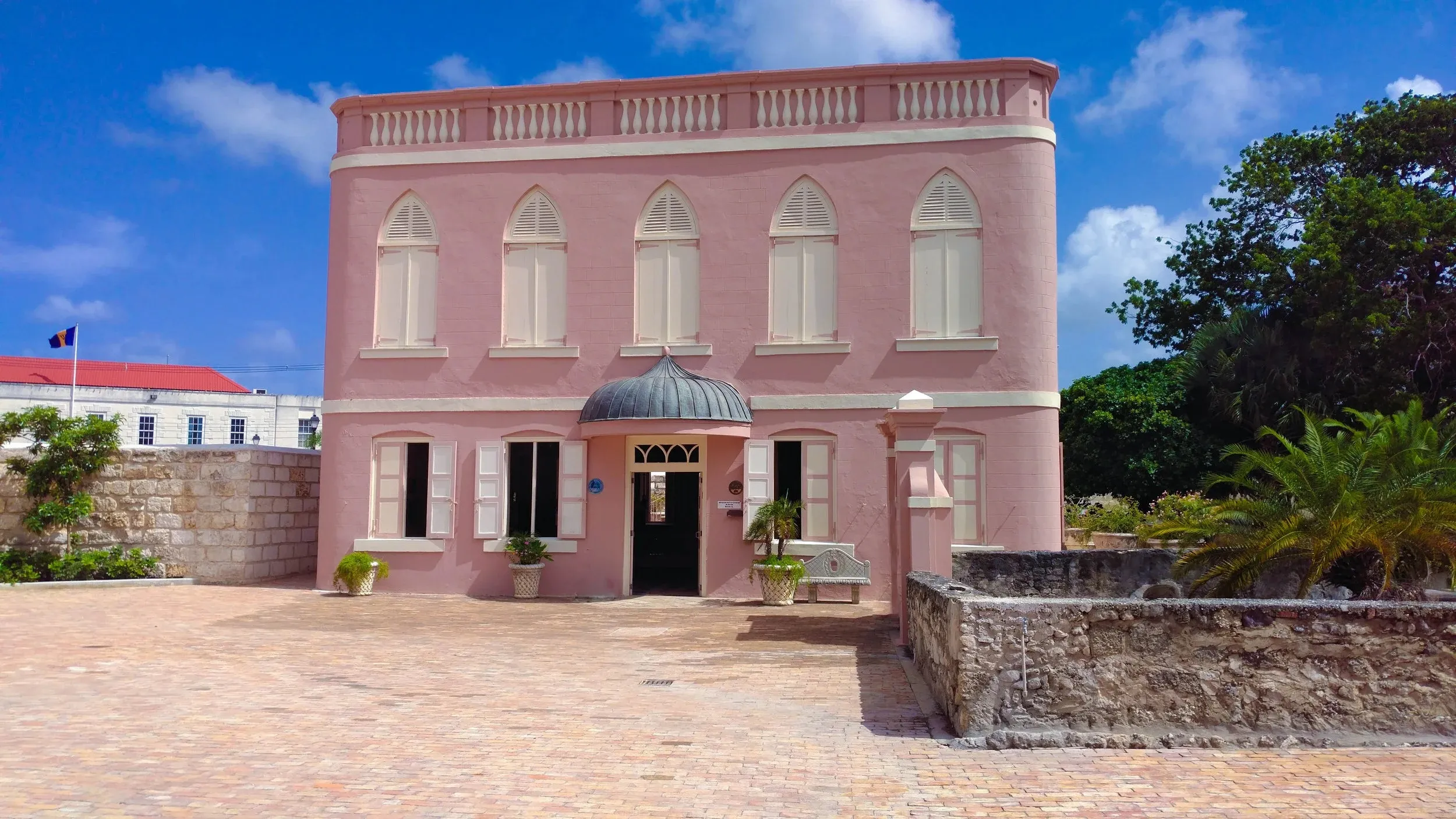
Nidhe Israel Synagogue - UNESCO World Heritage Site
The Synagogue Historic District is located within the heart of Bridgetown, the capital city of Barbados, which was designated a UNESCO World Heritage Site along with the Garrison in 2011. This Historic District covers an entire city block, over 2 acres of the capital city’s urban core, that features numerous heritage buildings that boast a rich history dating back to the mid-17th century. Since its official opening in April 2017, after comprehensive restoration, the Synagogue Historic District represents a significant heritage tourism attraction for the island of Barbados.
History
The buildings and sites that make up the Synagogue Historic District in Bridgetown give us a glimpse into the history of the island’s early settlers from the Old World and their practices.
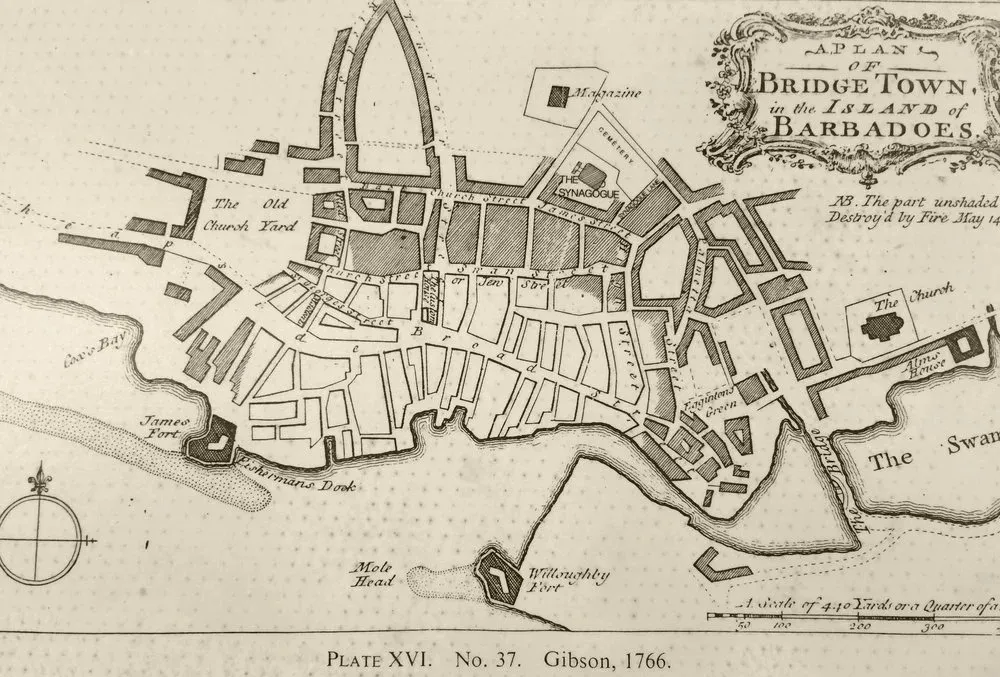
“The links between Barbados and the British North American colonies are many and varied. The two principal variables here are economic and demographic. Sugar in the latter half of the seventeenth century made Barbados very wealthy and attracted many settlers, including Sephardic refugees from Recife in Brazil and from Holland as well. Oliver Cromwell opened Barbados to permanent Jewish settlement before the ban on Jewish settlement in England was lifted. The Nidhe Israel Synagogue therefore is of considerable antiquity, dating from circa 1654. In some respects, it can be seen as the parent synagogue of several synagogues in the USA. The records of the Mahamad of Nidhe Israel show requests for financial assistance coming from a number of Jewish communities in America wishing to establish synagogues of their own. Among these were Touro, Newport, South Carolina, New York, and Philadelphia.”
— Karl Watson, local historian, 2016
The Jews were first recorded in Barbados in 1628, one year after the English settled the island. They were Sephardic Jews that came primarily from Recife in northwest Brazil. Their clan had originally fled Spain and Portugal during the Inquisition period, seeking refuge in Brazil, which was under Dutch rule for a brief period. When Portugal reclaimed Brazil as their colony, they expelled the Dutch, resulting in some Jews fleeing to Barbados and beyond in the early 17th century.
By the mid 17th century, there is further documented evidence of the presence of a Jewish community in Barbados including those from the 1654 and 1655 Minutes of the Council of Barbados.
in 1655, Oliver Cromwell issued a pass to Dr. Abraham de Mercado to go to Barbados to practice his profession. He was accompanied by his son, David Raphael de Mercado, who subsequently invented a new type of sugar mill for use in Barbados; it was also introduced to other islands in the Caribbean. Note that the oldest tombstone in the burial ground by the Synagogue bears the name David de Mercado, 1658.
By the 1660’s, the Jews had established a monopoly in the Barbados sugar industry, thus incurring the jealousy of non-Jewish planters. Non-Jewish merchants and traders on the island discriminated against them. Jewish success was based on their business acumen and profound knowledge of the industry.
Although the early Jewish settlers had to struggle under unfair practices, they nevertheless prospered; but their prosperity was met by a number of sanctions. They were not allowed to retail any goods, and were forbidden from trading with the coloured population of the island. Additionally, local authorities imposed a tax on all sugar manufactured by them.
By 1679, there were about 300 Jews living in Barbados. Their numbers peaked in the 1700’s to 800 people.
For 112 years the Jews in Barbados continued to live and work under discrimination of one kind or another. Not until 1831 were they granted permanent and practical freedom in both civil and political matters. Noteworthy is the fact that this liberty was granted to them two years before it was given to Jews in the UK.
The Jews of Barbados developed two synagogues on the island: one in Bridgetown in 1654, the Nidhe Israel Synagogue, and a smaller one in the north in Speightstown, which no longer exists. In 1831, a hurricane destroyed the Nidhe Israel Synagogue. Ninety worshippers at that time raised funds for its reconstruction, which was completed in 1833. It measured 2,000 sq.ft. with a 300 person capacity.
The natural disaster in 1831 curtailed business opportunities on the island, causing the majority of the Jewish community to migrate to the UK and USA where they made substantial contributions. For example, they helped start Rhode Island’s oldest Jewish congregation. Also, it was a Barbadian Jew that pioneered the cultivation of tobacco in Virginia.
In 1873, the remaining Jews in Barbados petitioned for tax relief, which was granted in 1874, so the synagogue and other Jewish property were exempted from parochial and other taxes.
By the early 20th century, there were only 2 practicing members of the Jewish community in Barbados. They continued to maintain the synagogue and cemetery until 1929. The synagogue was then sold and subsequently used as commercial offices and a law library. It is noteworthy that descendants of the Sephardic community remain on the island today. A new influx of Ashkenazi Jews arrived in Barbados in 1932 from Europe, and relatives of this group currently reside on the island.
In 1979, the Barbados Cabinet made the decision to demolish the Synagogue building and use the site for the development of a new Supreme Court, but members of the Jewish community and the Barbados National Trust convinced Government to protect the building and the site. Hence in 1983, the Government acquired the Synagogue building, thereby halting plans for demolition. They then agreed to vest the building in the Barbados National Trust in 1985.
By 1986, the Synagogue Restoration Project was initiated. Funds were raised both locally and internationally. The original design of the early synagogue was recreated through the use of old photographs obtained from the Barbados Museum. The site remains a symbol of the Jewish community of Barbados, their contribution to Barbadian society, and their link with the past.
Today
There are so many interesting items to discover at the Nidhe Israel Synagogue, all of which are fully restored and preserved, allowing you to take your time and immerse yourself in the history and legacy of the Jewish community, and its impact on Barbadian society as it is today.
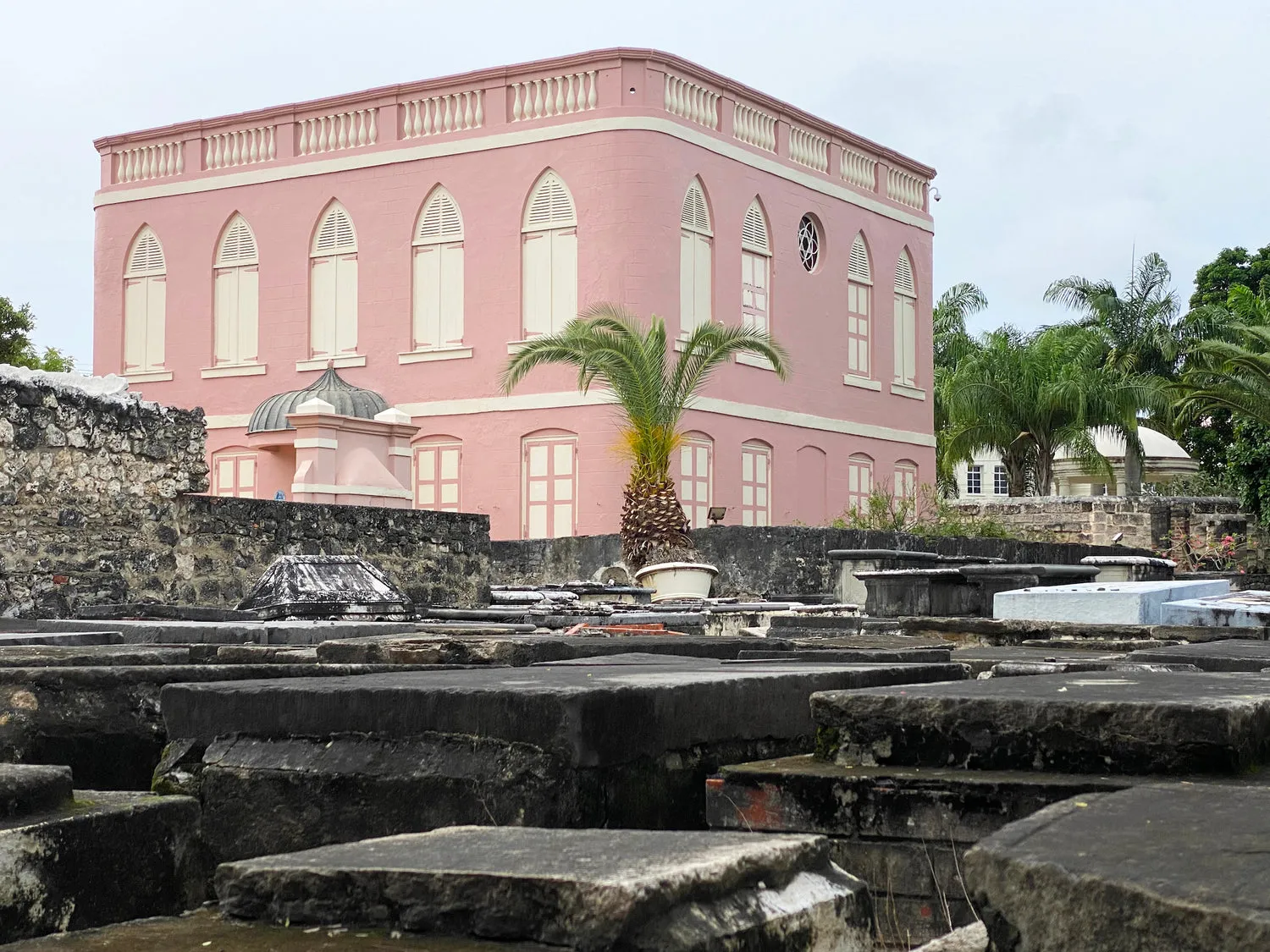
Nidhe Israel Synagogue
Nidhe Israel Synagogue, the ‘Synagogue of the Scattered of Israel’, is one of the oldest synagogues in the Western Hemisphere. It was developed by Sephardic Jewish settlers that arrived in Barbados from Recife, Brazil around 1628, soon after English settlement of the island in 1627. The building originally covered an area of approximately 2,000 square feet and held about 300 people. The synagogue was damaged in the 1831 hurricane, but subsequently was rebuilt on the same site in 1833.
The Sephardic community was orthodox. The men worshipped separately on the lower level and the women used the upstairs gallery.
After the synagogue was rebuilt by 1834, the number of Jewish residents in Barbados began to dwindle. Many of them migrated to the United States and the United Kingdom where they started other Jewish communities, especially in New England.
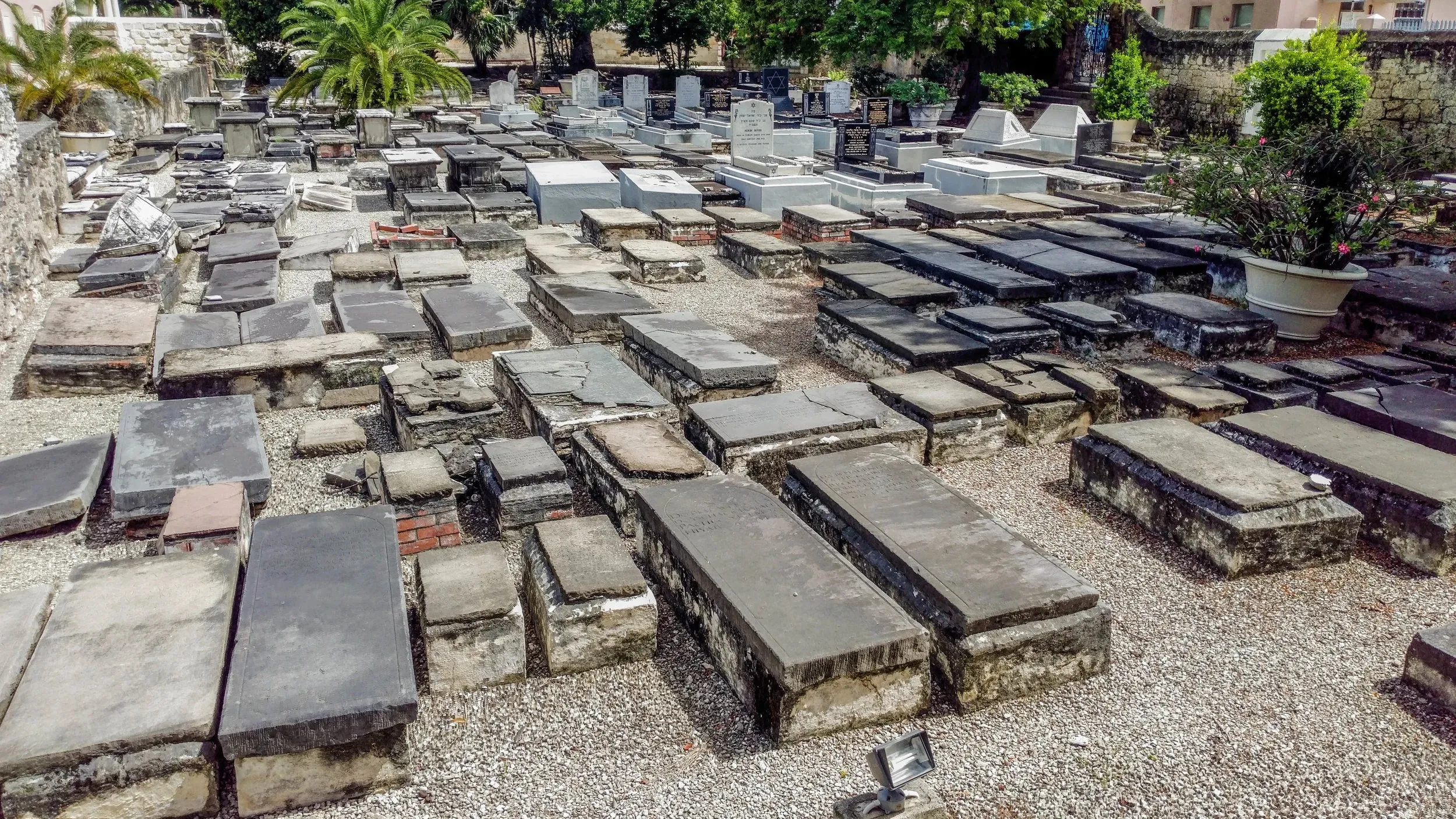
The Cemetery
The Jewish cemetery is located next to the Nidhe Israel Synagogue 1654 and dates back to the same period. It was originally divided into four separate walled cemeteries, with an additional cemetery in Whites Alley on the block bounded by James and Swan Streets. The oldest tombstone is dated 1658. It currently has about 400 graves. The older grave ledgers are flat and made of marble or granite, as is customary in Separdic graveyards. There are also Ashkenazi graves from the more modern Jewish community of the 20th and 21st centuries, who still bury their members there.
Between 1999 and 2003, the cemetery was restored by consultants from the UK. In order to find the original ground level, it entailed the removal of considerable sediment, and litter that was dumped by local residents over the years. Tombstones were cleaned and repositioned. Many of them have epitaphs written in Hebrew, Spanish/Portuguese or Ladino, and English. A number have beautiful iconography, such as winged angels and the severed tree of life.
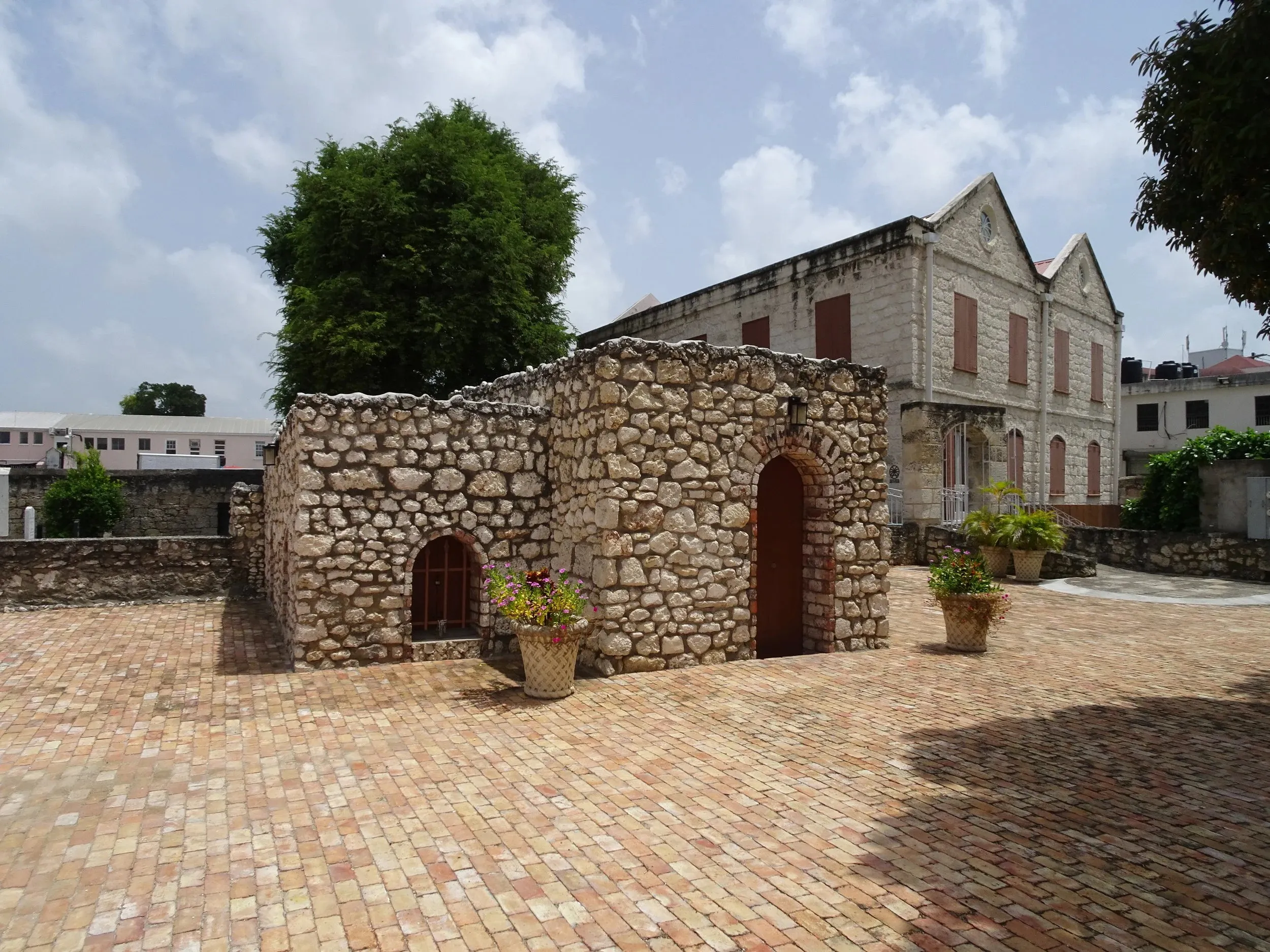
Mikvah Ritual bath (circa 1654)
The Mikvah, or ritual bath for purifying the body, was developed by the original Sephardic Jews that built the Nidhe Israel Synagogue in 1654. The bath is located near the Synagogue and dates back to the same period. It was unearthed during an archeological investigation in 2008 that was searching for the original Rabbi’s House.
During the dig, a staircase of original marble was exposed, leading down to a pool of water, which turned out to be the 17th century ritual bath. Measuring approximately 8 ft. x 4 ft., the bath has a granite tile floor with coral stone walls featuring alcoves where lamps would have been placed. The bath is fed by an active underground spring.
Thousands of artifacts were unearthed during the excavation, including pieces of Staffordshire slipware, a shoe buckle, old smoker’s pipes, and a jeweler’s stone mold. Many have been identified, categorized and some are on display in the Nidhe Israel Museum.
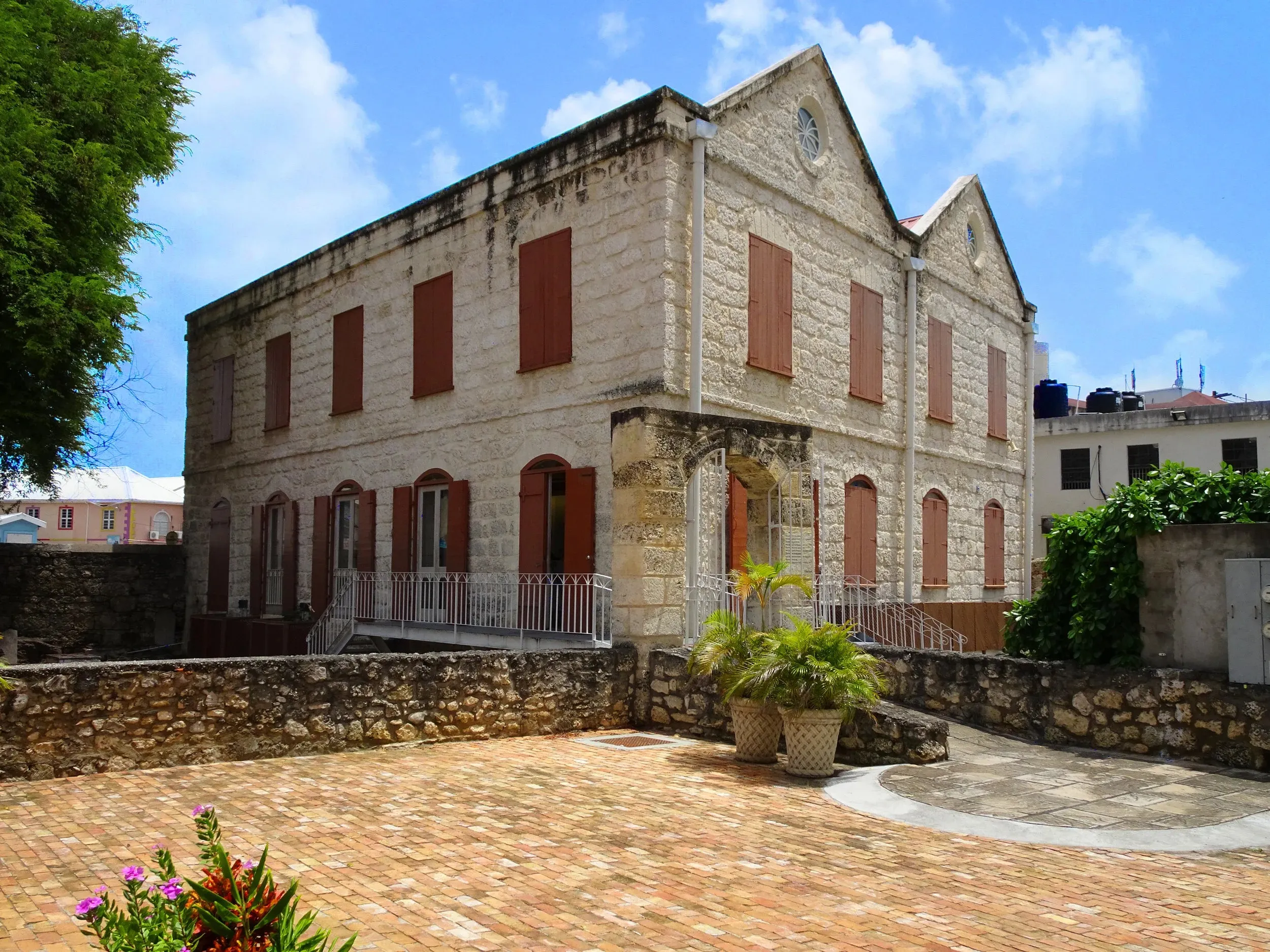
Nidhe Israel Museum
The Museum showcases interactive and multimedia displays that interprets the Jewish settlement and life on the island from a historic perspective. It was developed in 2008 in an existing historic building on site dating from around 1700. It consists of two storeys: the museum display on the lower level and the upper level housing an archaeological laboratory, audio-visual room, and small apartment. Many of the artifacts discovered during the 2008 excavation of the site are on display in the museum.
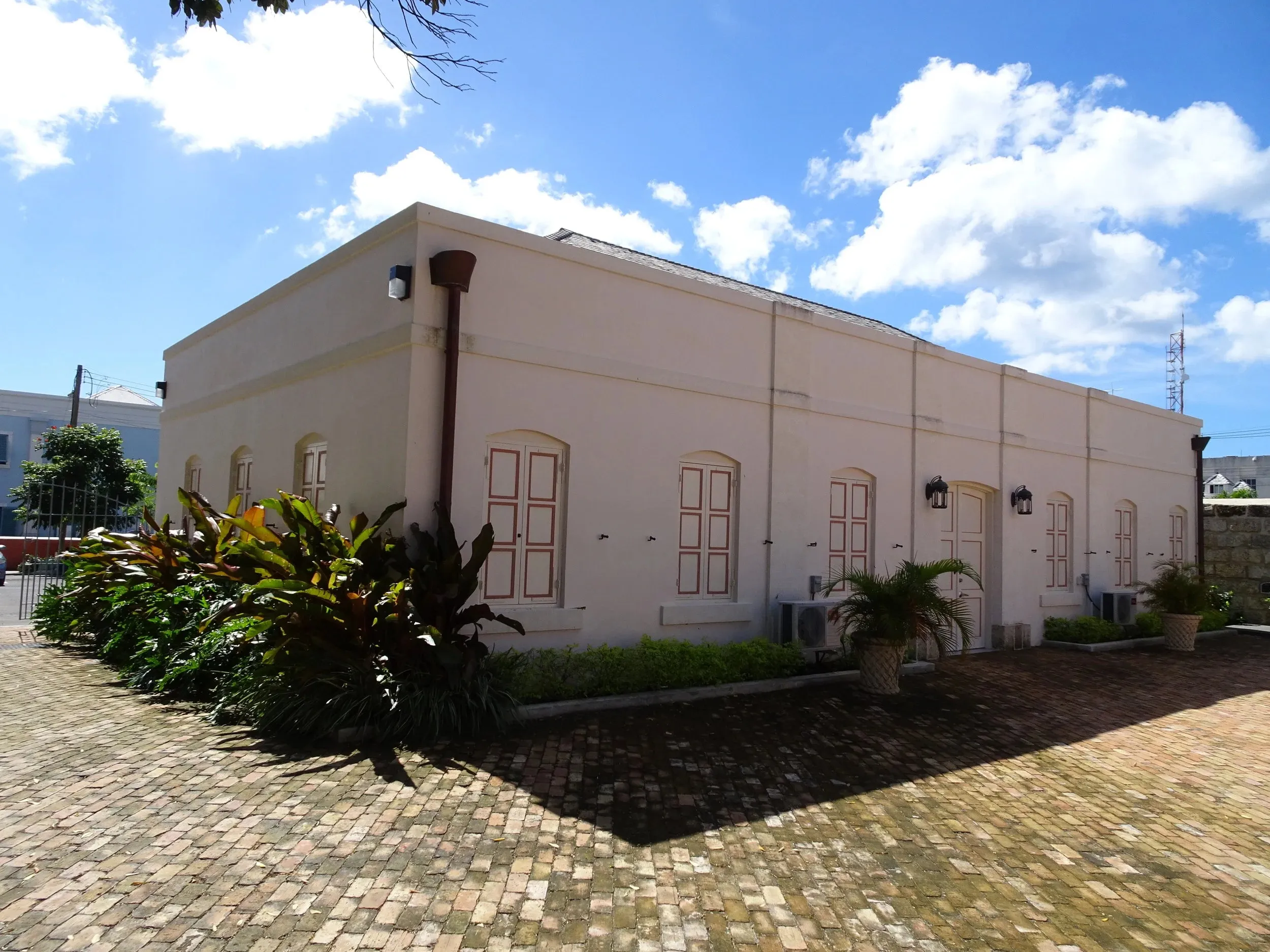
Social Hall
In close proximity to the Synagogue, a new Social Hall was built to facilitate the hosting of Weddings, Bar Mitzvahs, Meetings, and other Events associated with the Synagogue. The total area of this new building is approximately 1,740 square feet. An office space and kitchen area designed for catering of events has been included in the new design.
The building is dedicated to the memory of Eustace Maxwell Shilstone, a Barbadian lawyer and pioneer in shaping the island’s collective memory. In 1933, he helped found the Barbados Museum & Historical Society. In the 1930’s, he transcribed all the tombstone inscriptions in the Jewish Cemetery and published a book in 1958 entitled Monumental Inscriptions in the Jewish Synagogue at Bridgetown, Barbados. Neither Jewish nor a historian, Mr. Shilstone was fascinated by heritage conservation. Today the library of the Barbados Museum & Historical Society bears his name.
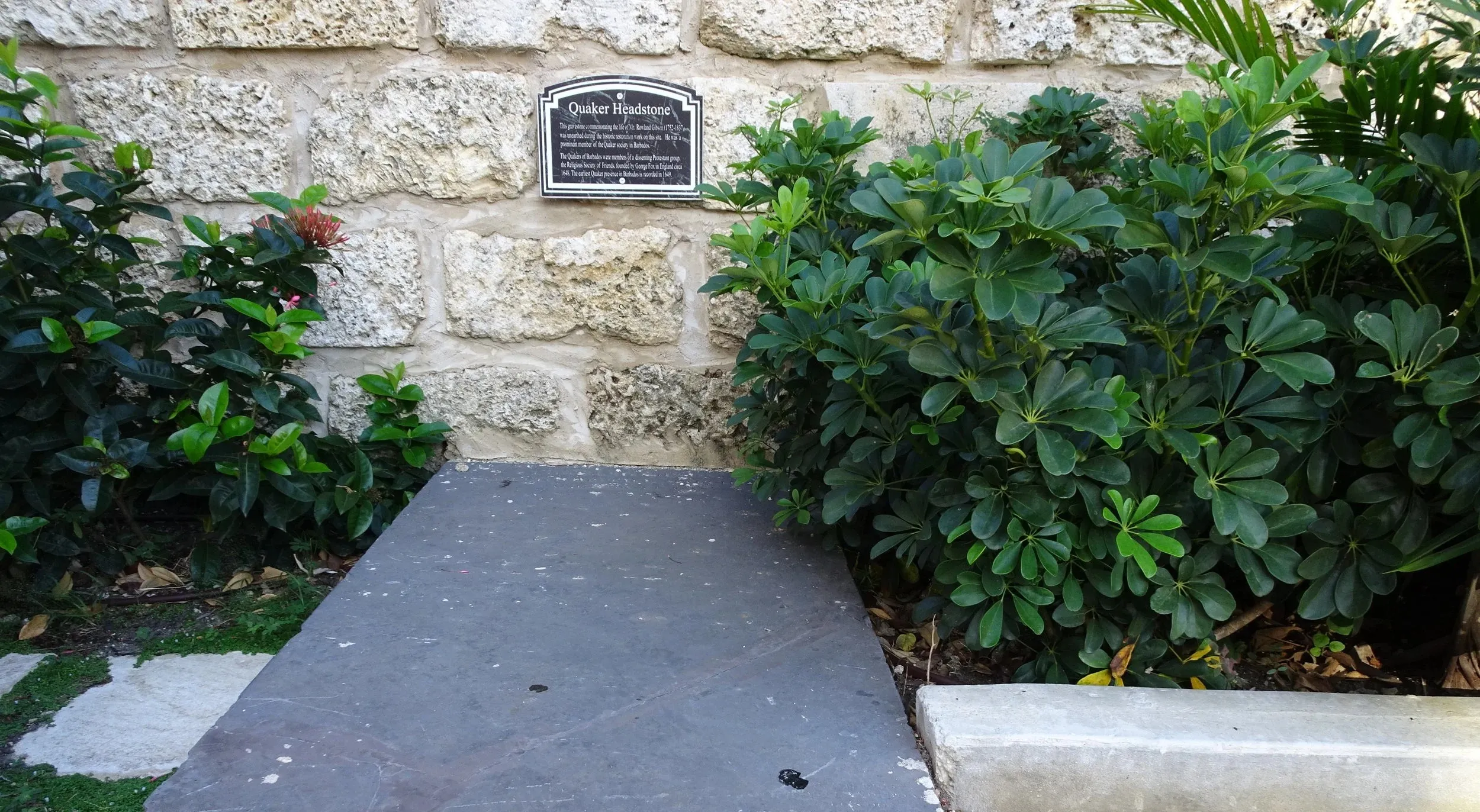
Quakers
Quakers began arriving in Barbados in the mid-1650’s. There were more than
1,000 Quakers in Barbados by 1680. It is noteworthy that prior to their large-
scale migration to Pennsylvania, Barbados had more Quakers than any other
English colony. A Quaker Burial Ground is demarcated on the 1806 survey plan of the
Synagogue block area. Subsequently, an asphalt parking area was constructed
over much of that burial ground. During site excavations in 2016, one Quaker
tombstone was unearthed and preserved. It is located in proximity to the
entrance of Shilstone Hall.
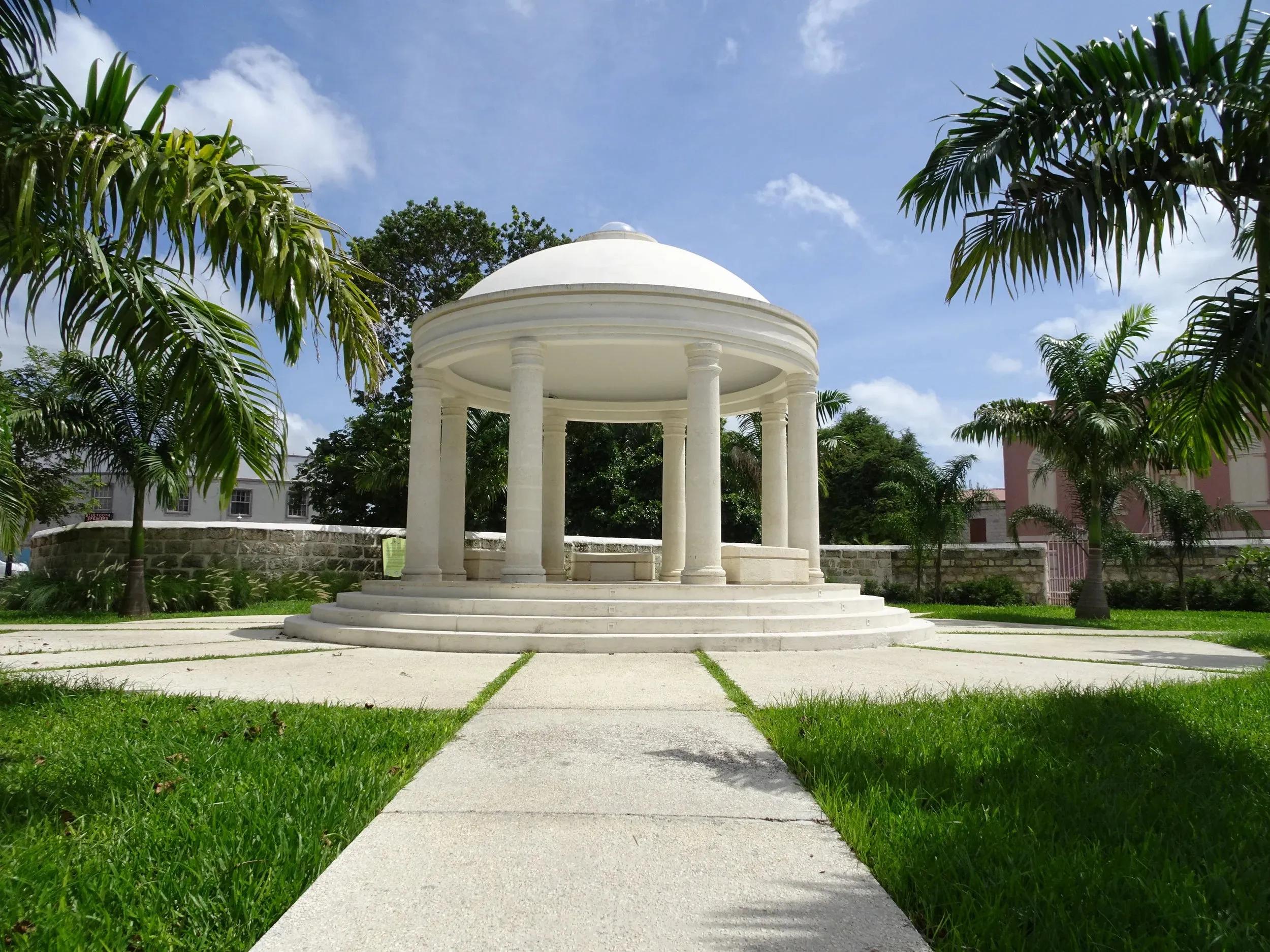
Emancipation Monument
William T. Codd, a local businessman, bought two houses from the Jews along Coleridge Street in Bridgetown: the first one in 1827 and the second in 1837. Government rented the larger house from 1837 until 1849 for use as their new “Town Hall” or Parliament to relieve the pressure of space in the Town Hall opposite. Both chambers met here from 1837 to 1848 when they returned to the old Town Hall.
At ‘Codd’s House’, several historic events occurred: one was the Act of May 1838 terminating the Apprenticeship System - the final act proclaiming Emancipation was passed by Government in 1834; the other was the statute of 1840 that created Bridgetown as the 12th constituency, leading to the election in 1843 of the first person of colour, Samuel Jackman Prescod, to the House of Assembly for the City of Bridgetown.
In 1847 an Act was passed establishing a Public Library in Bridgetown (which in fact was 3 years before the first Public Libraries Act was passed in Britain). The Public Library was actually started in Codd’s House before it was moved in 1874 to the Public Buildings.
Mr. Codd’s house finally served as the Water Works Headquarters until 1972. Codd’s House was then demolished in 1985 and the site became a parking area that covered an early Quaker cemetery.
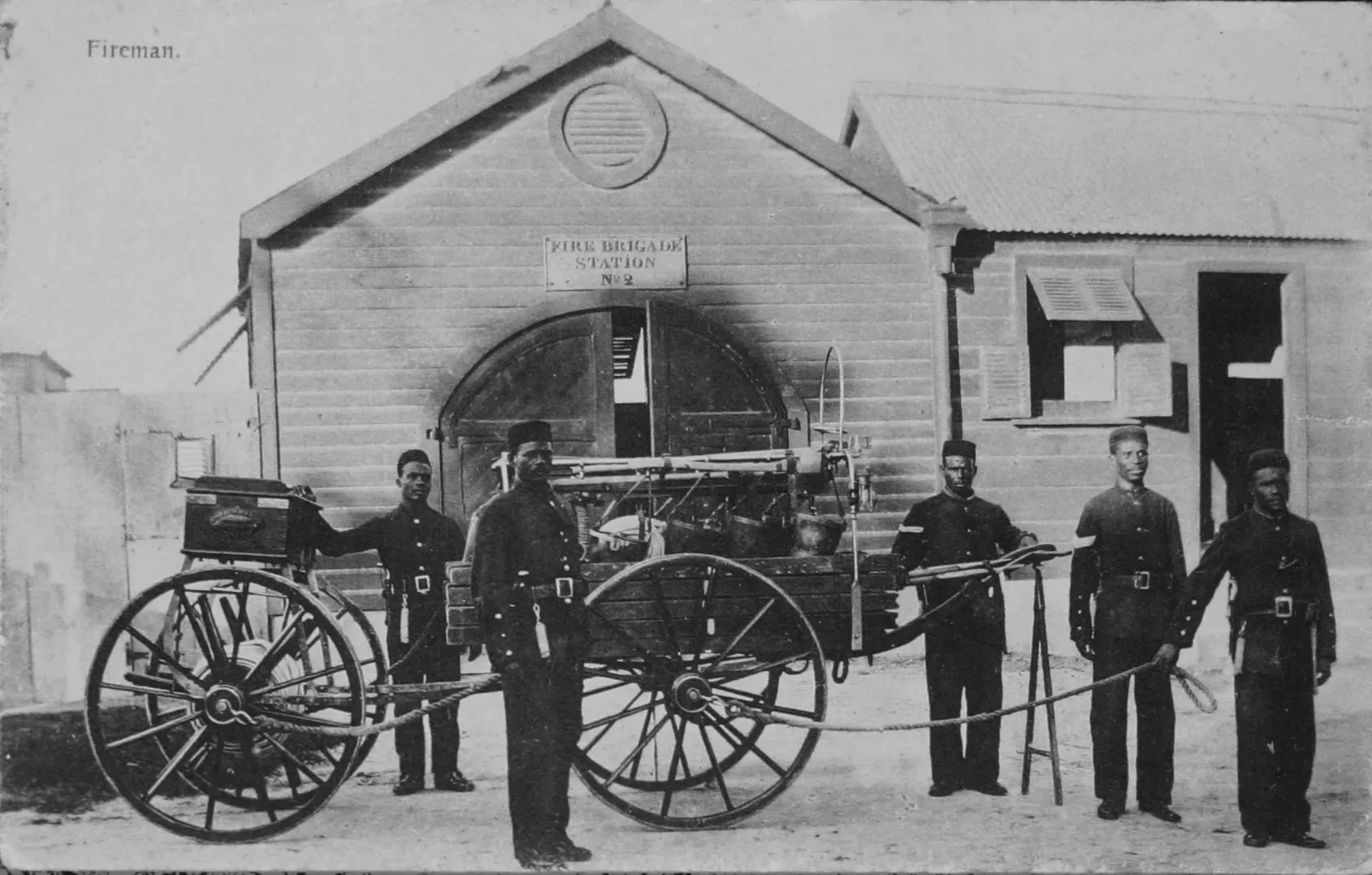
The main Fire Station in Barbados was located at the corner of James and Coleridge Streets in a complex of abandoned old buildings that are thought to date from the 17th century. Fire carts were drawn by one or two horses or by men. Hand-drawn carts were manned by four men, with two on either side. They were fitted with steam pumps that pumped water to douse fires. The carts were also fitted with a buggy bell. Motorized vehicles were later introduced in the 1920’s.
The Central Fire Brigade House was founded as part of the Police Force in 1858. By 1900, there were 6 fire stations around the city. The original one remained part of the Police Department, and in 1955 became the home of the Weights and Measures Section when the Barbados Fire Service became autonomous and moved over to Probyn Street.
The buildings fell into disrepair, used only recently as a carpentry repair shop for the Police headquarters. The ‘adaptive reuse’ proposals in the 2016 restoration for the Fire Brigade Station comprised the following elements:
- A museum illustrating the history of the Barbados Fire Service in Bridgetown
- A small café to provide snacks & refreshments in the adjacent building
- An art gallery located in the former Weights and Measures building
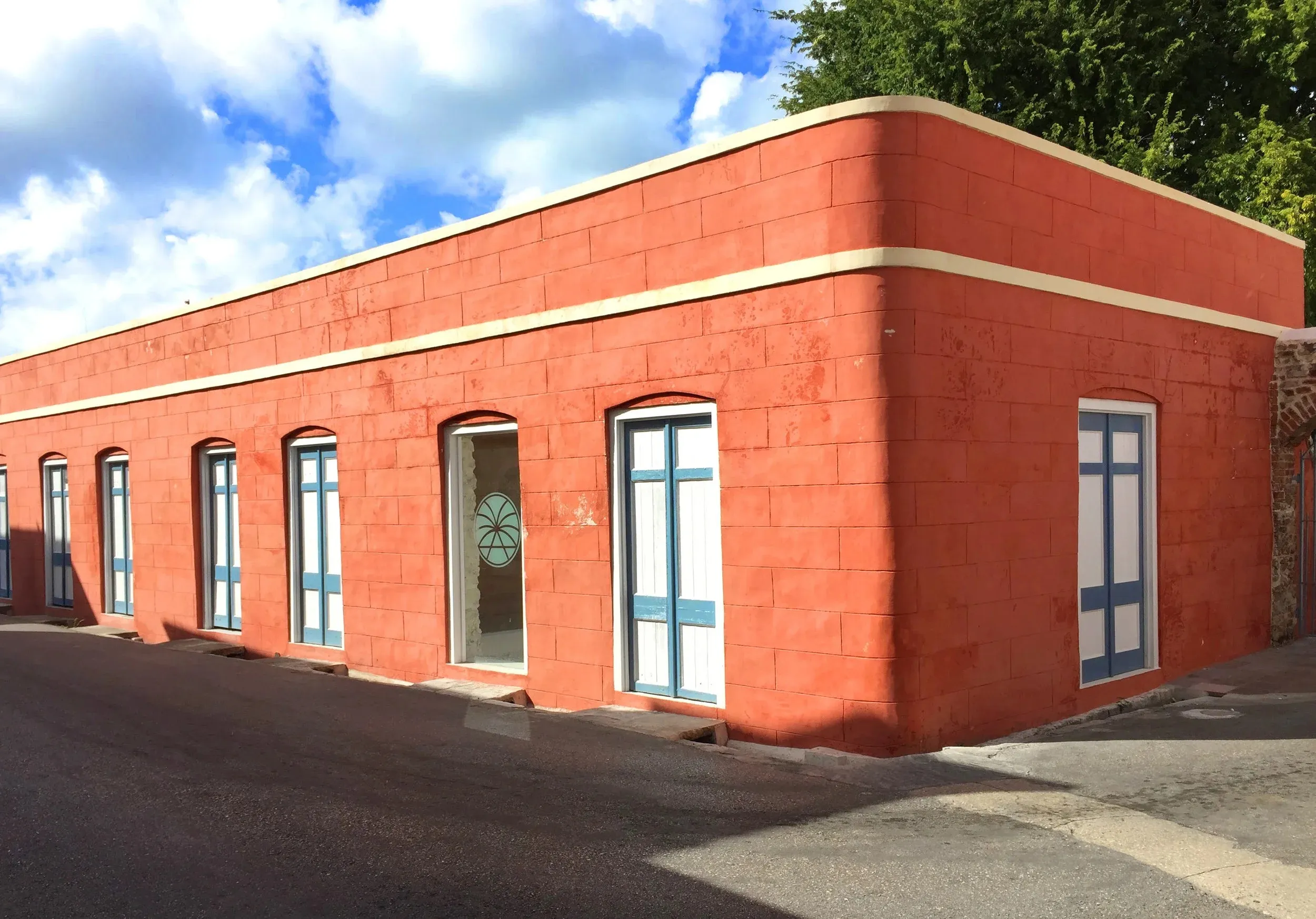
Often referred to as the old shoemaker’s shops, a building was constructed in 1869 in a section of the Jewish burial grounds that was used for members that were denied full ritual burials. In recent times, the building had fallen into major disrepair. The redevelopment scheme of what we now refer to as the new Artisan’s Workshops retained the outer wall on James Street with its original doors, and improved street access for pedestrians. Four new artisans workshops, including a shoemaker shop, have been designed in the building.
During the course of restoration, 17 gravestones were uncovered. Several gravestone fragments that were probably shattered during the construction process in 1869 were also exposed. The discovery of the gravestones under the foundation of the Artisan’s Workshops did not come as a surprise to local historian, Karl Watson: