Exchange Museum
Three floors. Three centuries. One mystery.
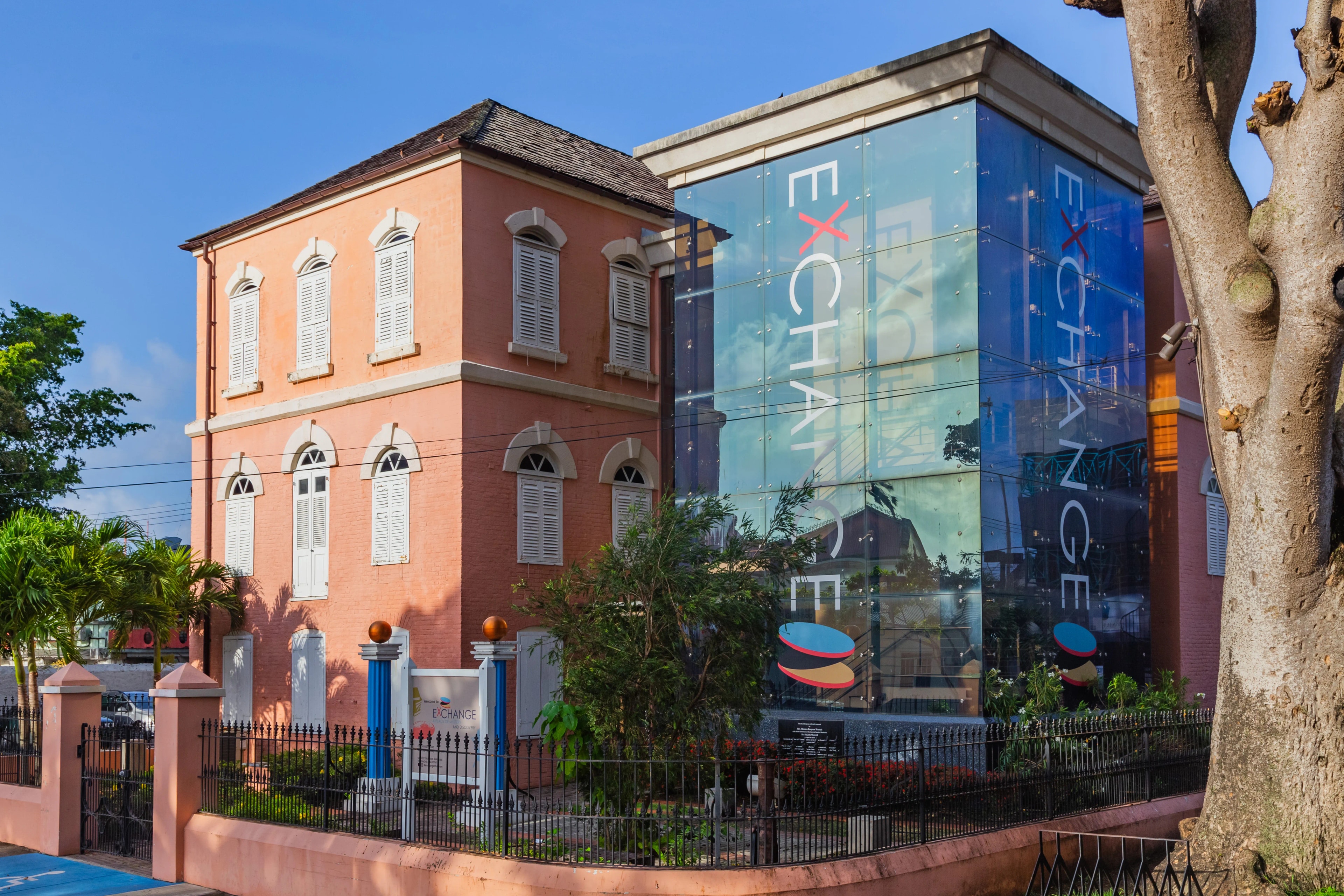
The Exchange Museum occupies a building on Spry Street where 18th-century pink coral stone and shuttered windows meet a glass-and-steel modern addition; the two blue columns of Boaz and Jachin stand at the entrance between them.
A school, a Masonic lodge, and now a museum: nearly 300 years of Bridgetown history told across exhibitions covering the commerce and currency of its port, the story of Harrison's Free School, and the Caribbean's only permanent Freemasonry collection.
Harrison's Free School
The building opened in 1745 as Harrison's Free School, founded by Bridgetown merchant Thomas Harrison to provide education for boys who could not afford schooling overseas.
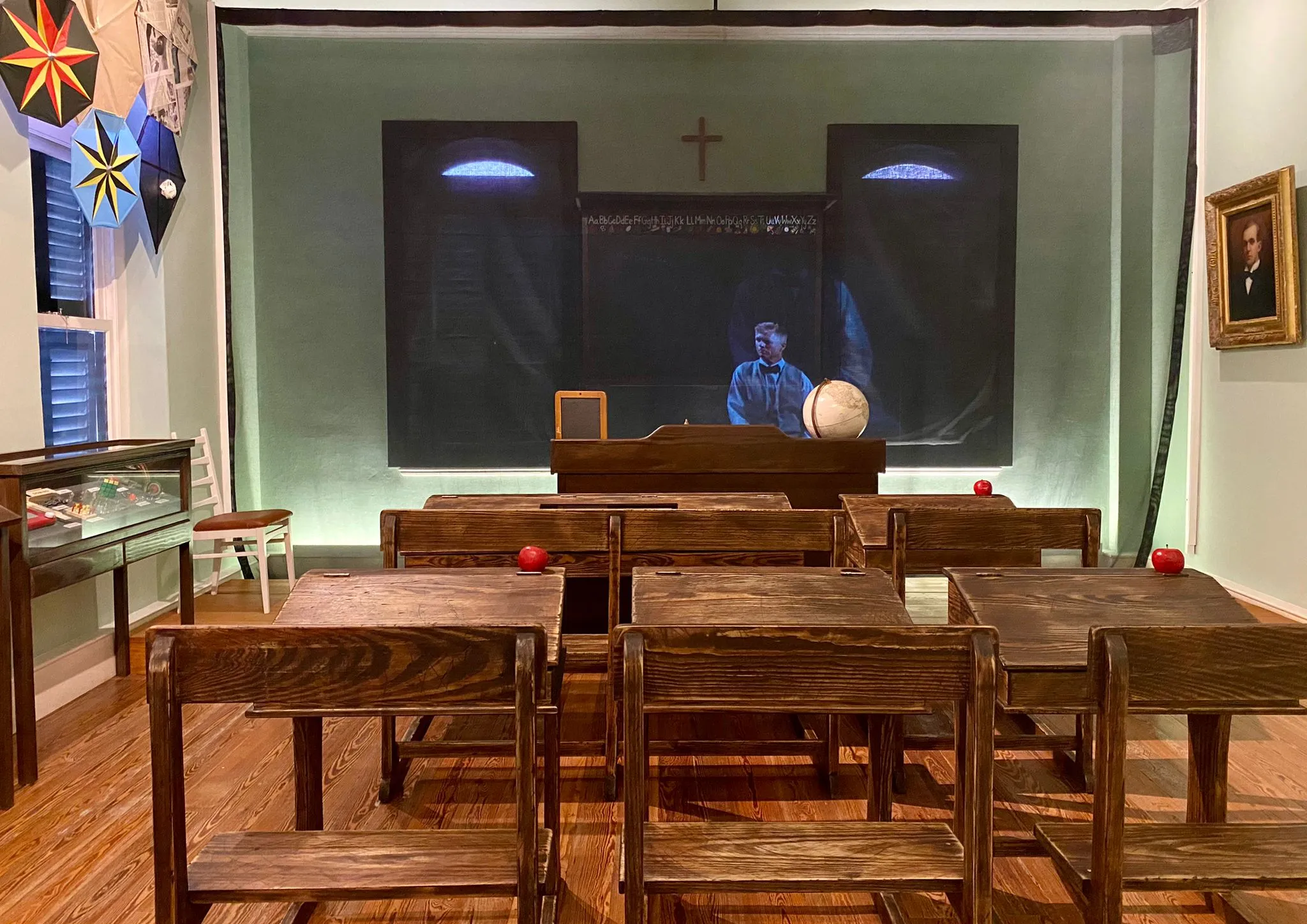
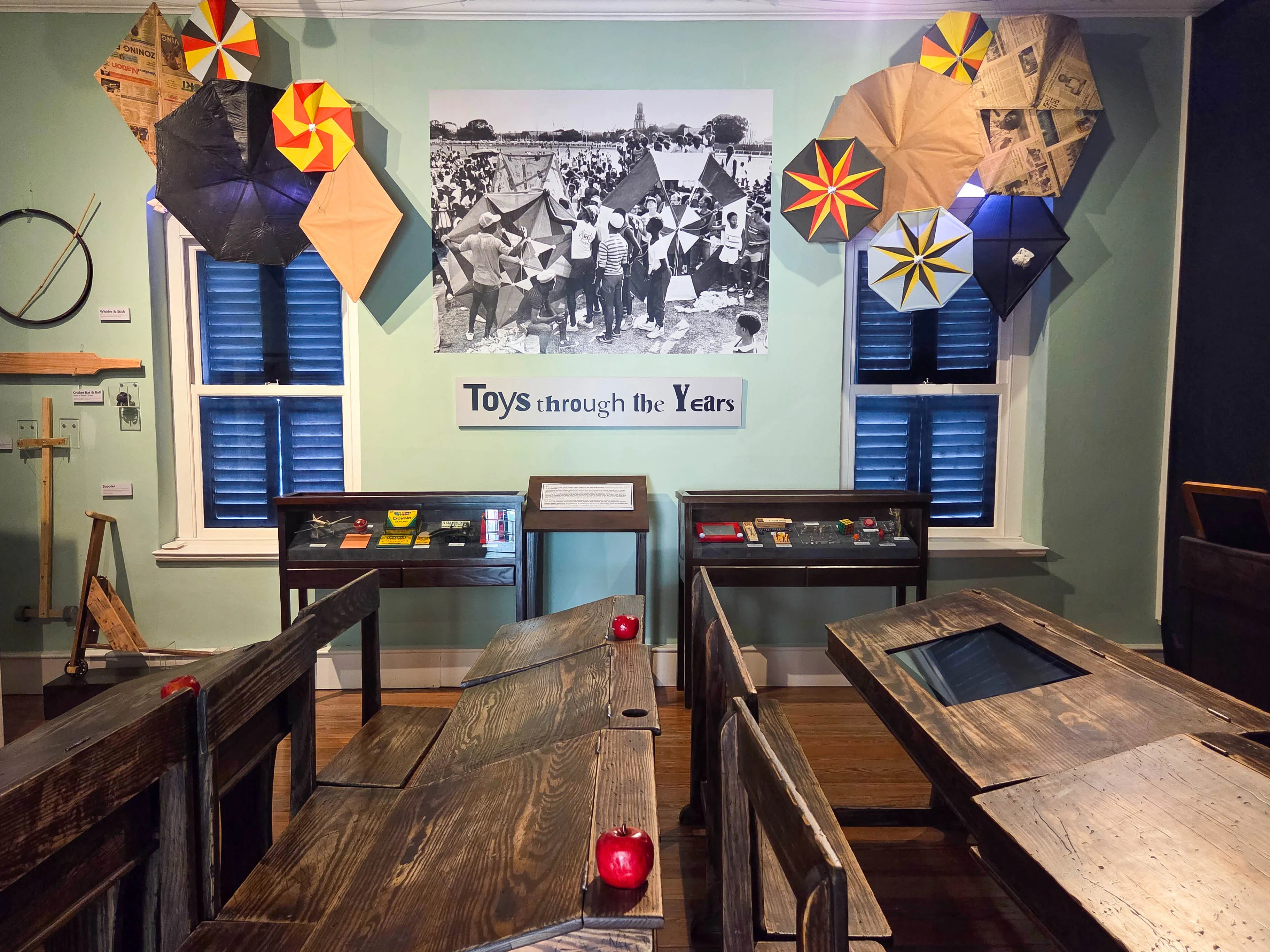
The museum recreates the Victorian schoolroom as it would have appeared: rows of period wooden desks, inkwells, and colorful kites on the wall. The school outgrew the building by 1870 and relocated to Roebuck Street, where Harrison College stands today.
The Masonic Lodge
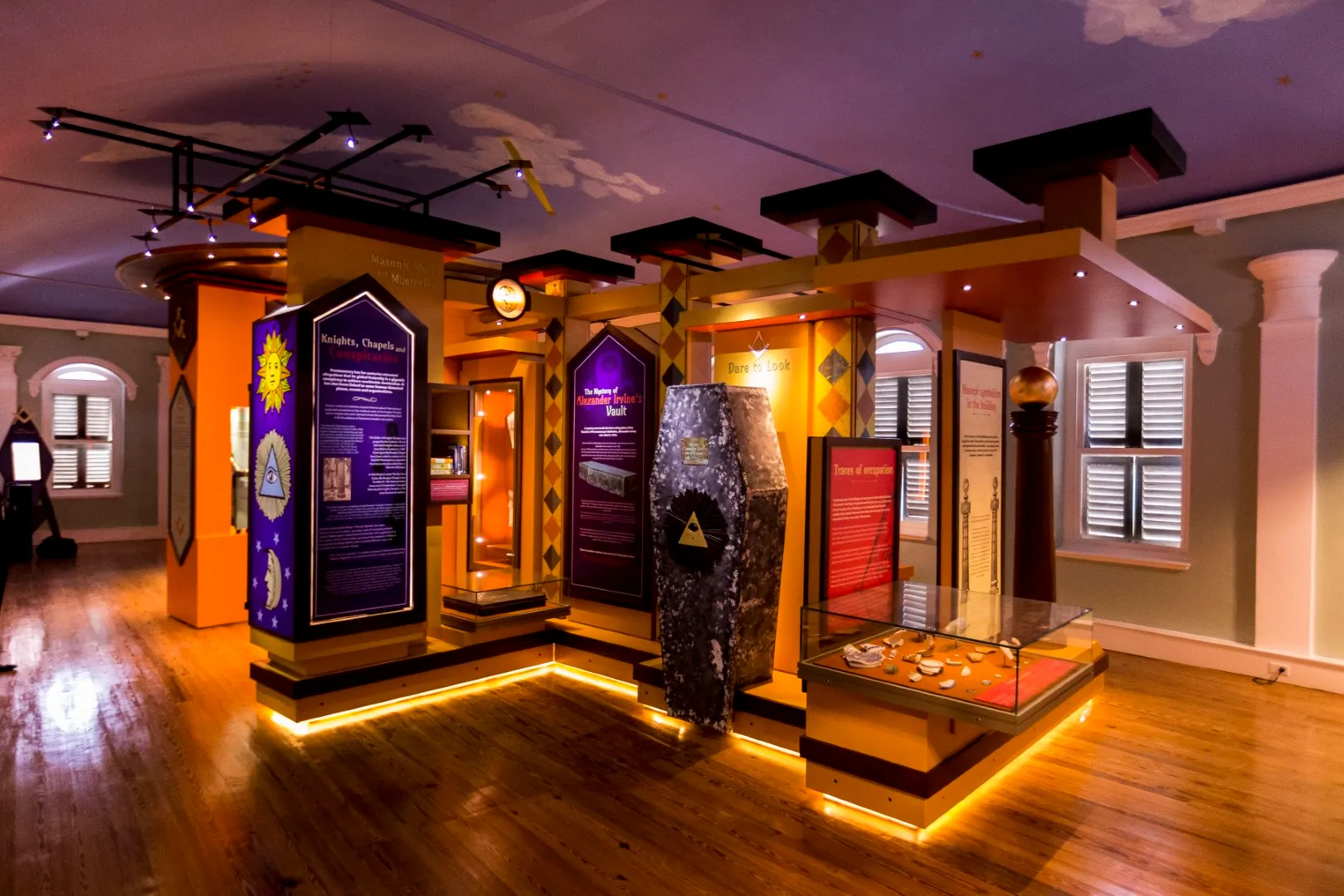
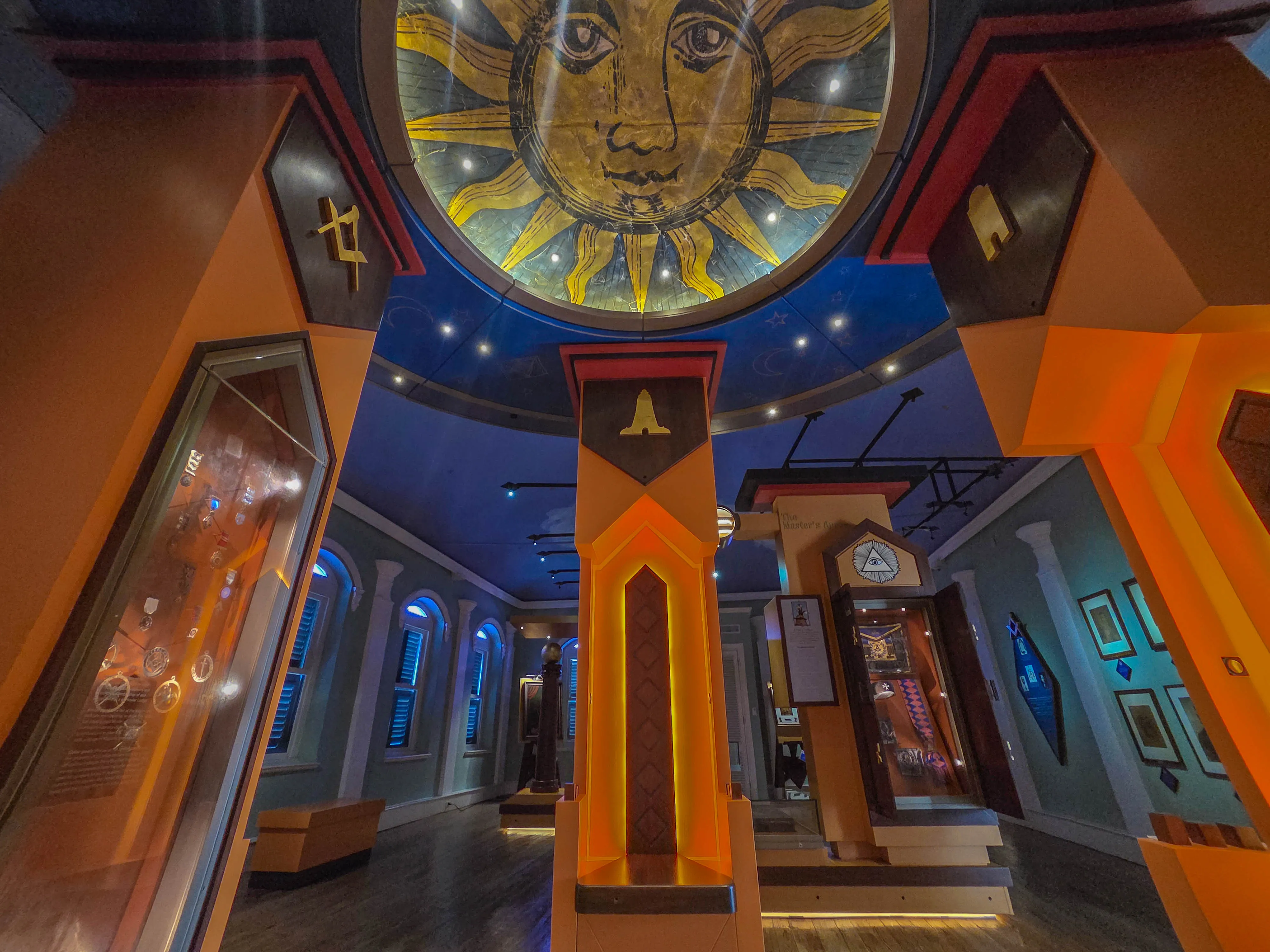
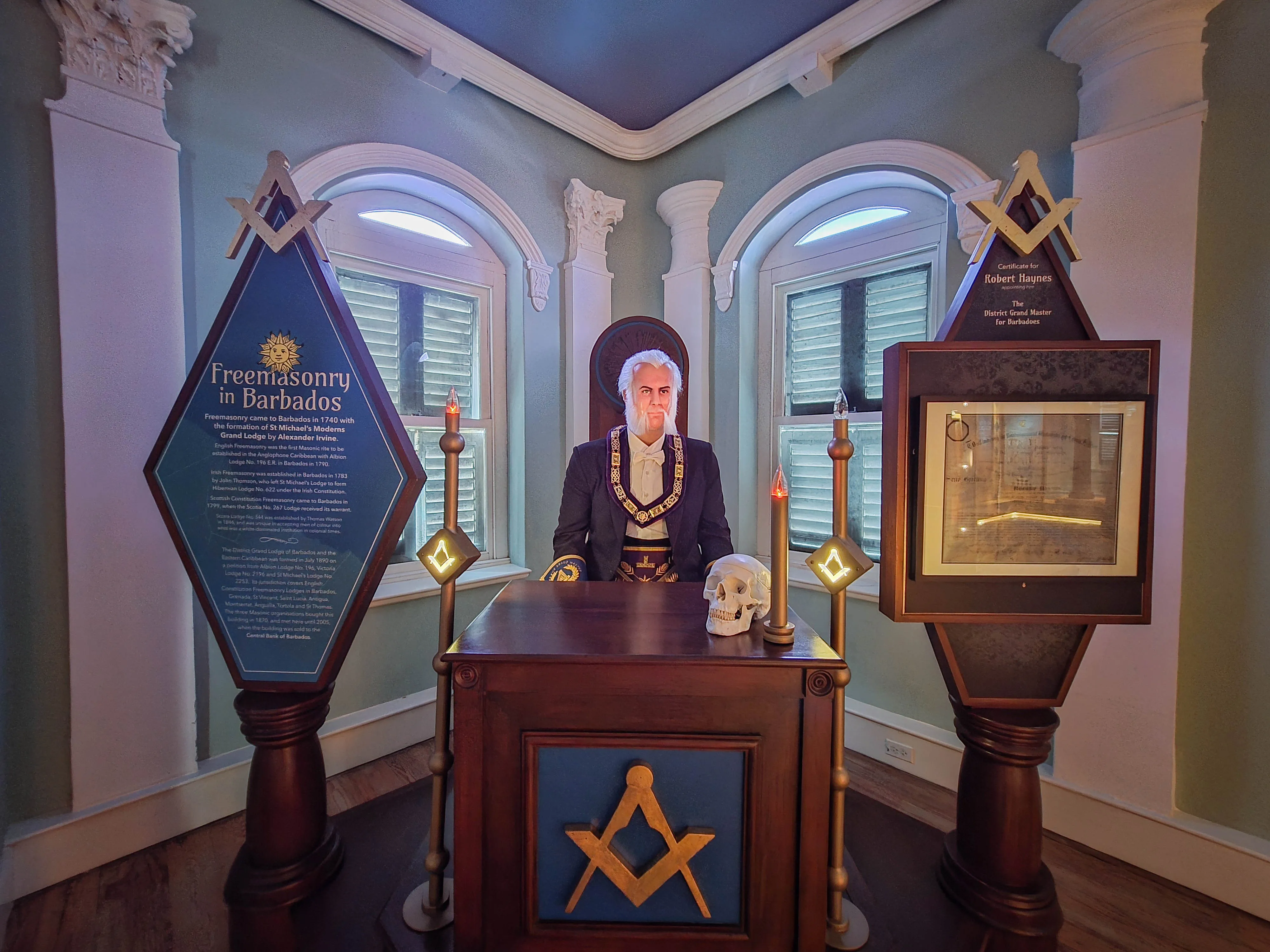
The second floor holds the Masonic exhibition. A recreation of the Lodge meeting room sits beneath a canopy of heaven ceiling, painted deep navy blue with a great golden sun at its center; figures in Masonic robes stand at the edges. At the far end, the District Grand Master, a wax figure made by Frances and Art at the Caribbean Wax Museum, sits at his desk between two candles, a skull in front of him.
For most visitors, the exhibition does something unexpected: it lifts the shroud. The rituals, the symbols, the regalia, the hierarchy — all of it is explained with enough depth and clarity that the assumptions most people carry about Freemasonry don't survive the second floor intact. Tucked at the end: the Mystery of Alexander Irvine's Vault. Irvine founded Freemasonry in Barbados in 1740, died three years later, and where exactly he came to rest has never been established.
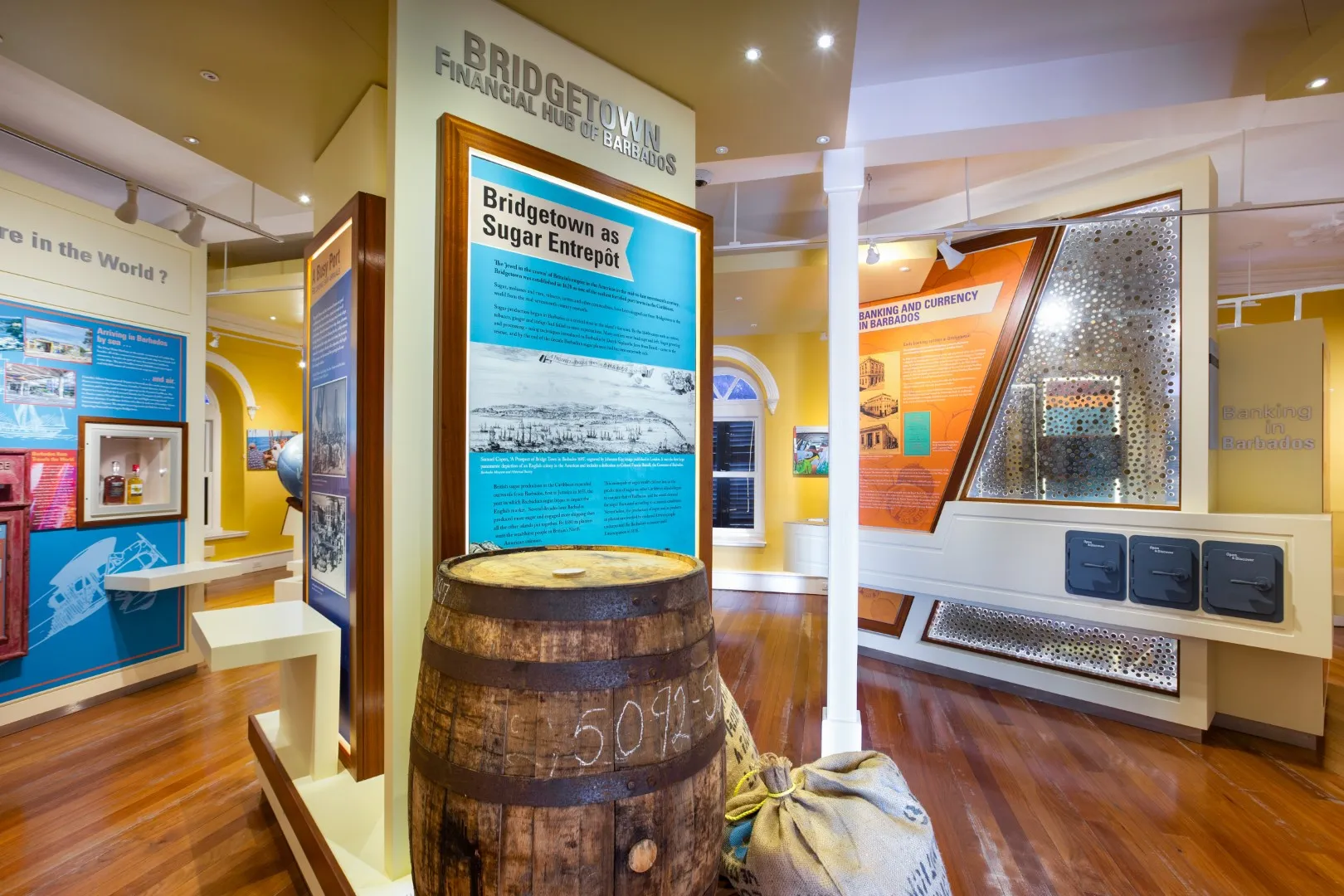
Commerce and Currency
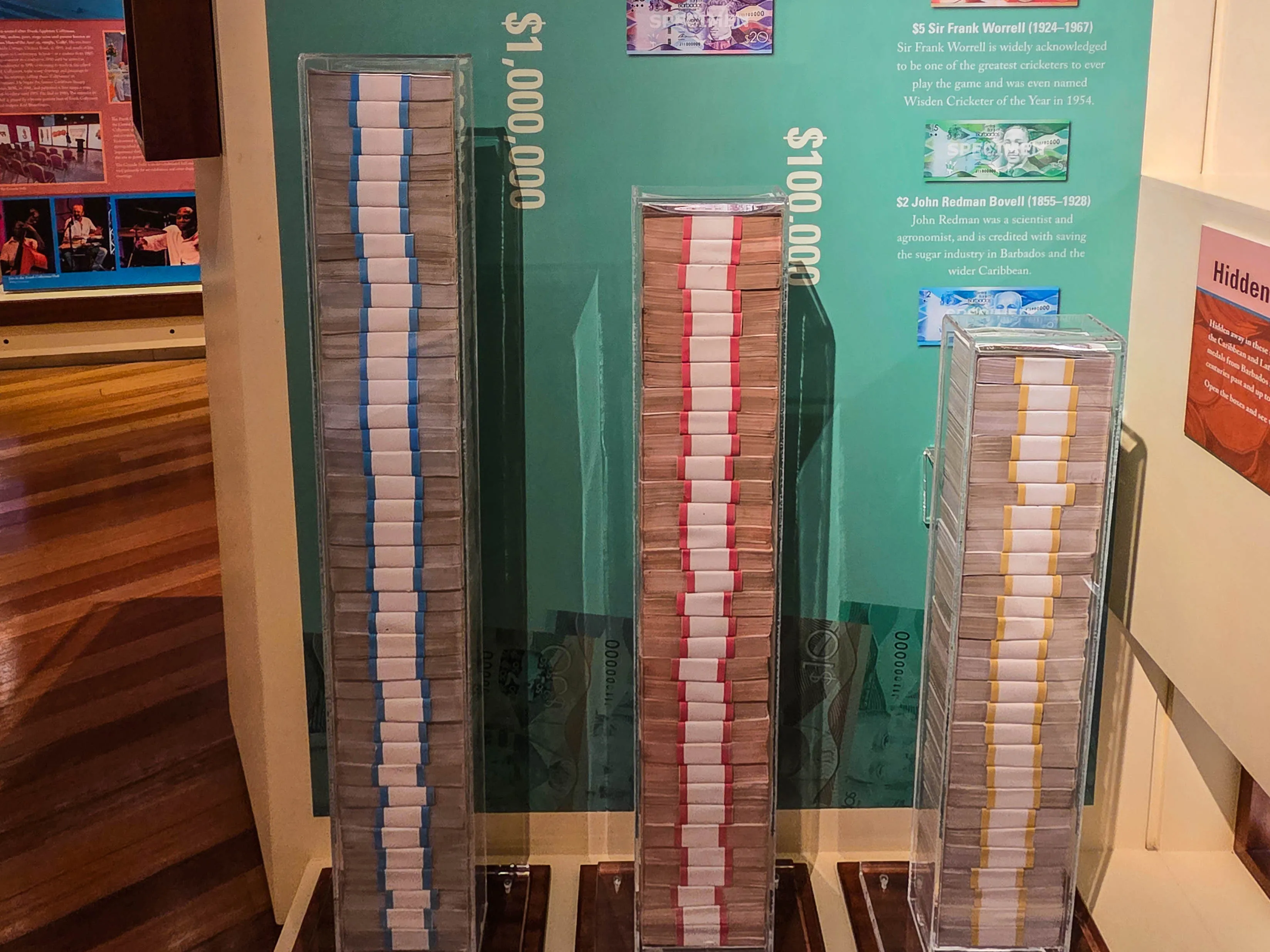
Bridgetown was one of the busiest Atlantic harbours from 1628 onward. Because the British were forbidden to mint their own coins in the colonies, Spanish, Portuguese, Dutch, and French currency all circulated freely; pieces of eight, doubloons, and shillings in the display cases are the physical evidence. The hand-cranked coin press lets visitors stamp their own dollar and choose the design: the Exchange Museum, the Masonic Lodge, or the school.
The floor also tells the stories of those who shaped Bridgetown's economy. Rachel Pringle, a free woman of color born to an enslaved mother, ran the Royal Navy Hotel in the 1780s with enough confidence to invoice the future King William IV for damages, and collect; the museum notes that she also enslaved others. London Bourne, born into slavery and later one of Bridgetown's wealthiest merchants, is commemorated here too.
Monday–Friday: 9am–5pm
Closed: Saturday–Sunday and public holidays