Stade's Rum Distillery
By Rekke Editorial
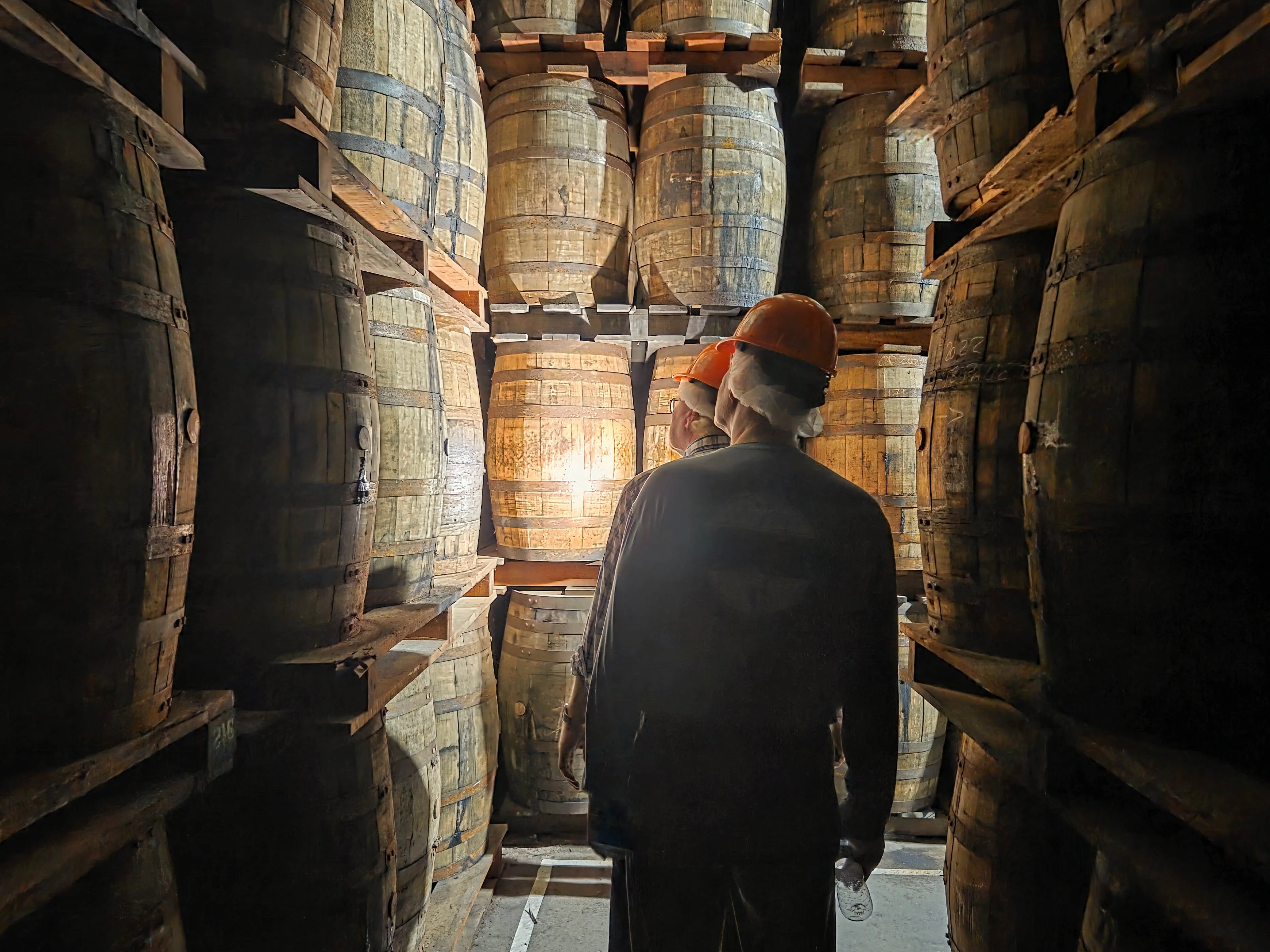
Follow my voice. The instruction comes from somewhere in the darkness ahead. There is no electricity near the ageing barrels, and the warehouse is so dark that you can barely make out the person in front of you. What you can smell is rum: sweet, woody, faintly acidic, rising off more than 5,000 barrels stacked on either side. "Do not lick the alcohol coming off them," says Asha, guide, rum authority, and at this point your only point of reference in the dark. "Some people call that the devil's cup."
You are, at this moment, inside a warehouse that has been ageing rum since 1893. You are also, improbably, just steps from the Caribbean Sea.
From Refinery to Rum
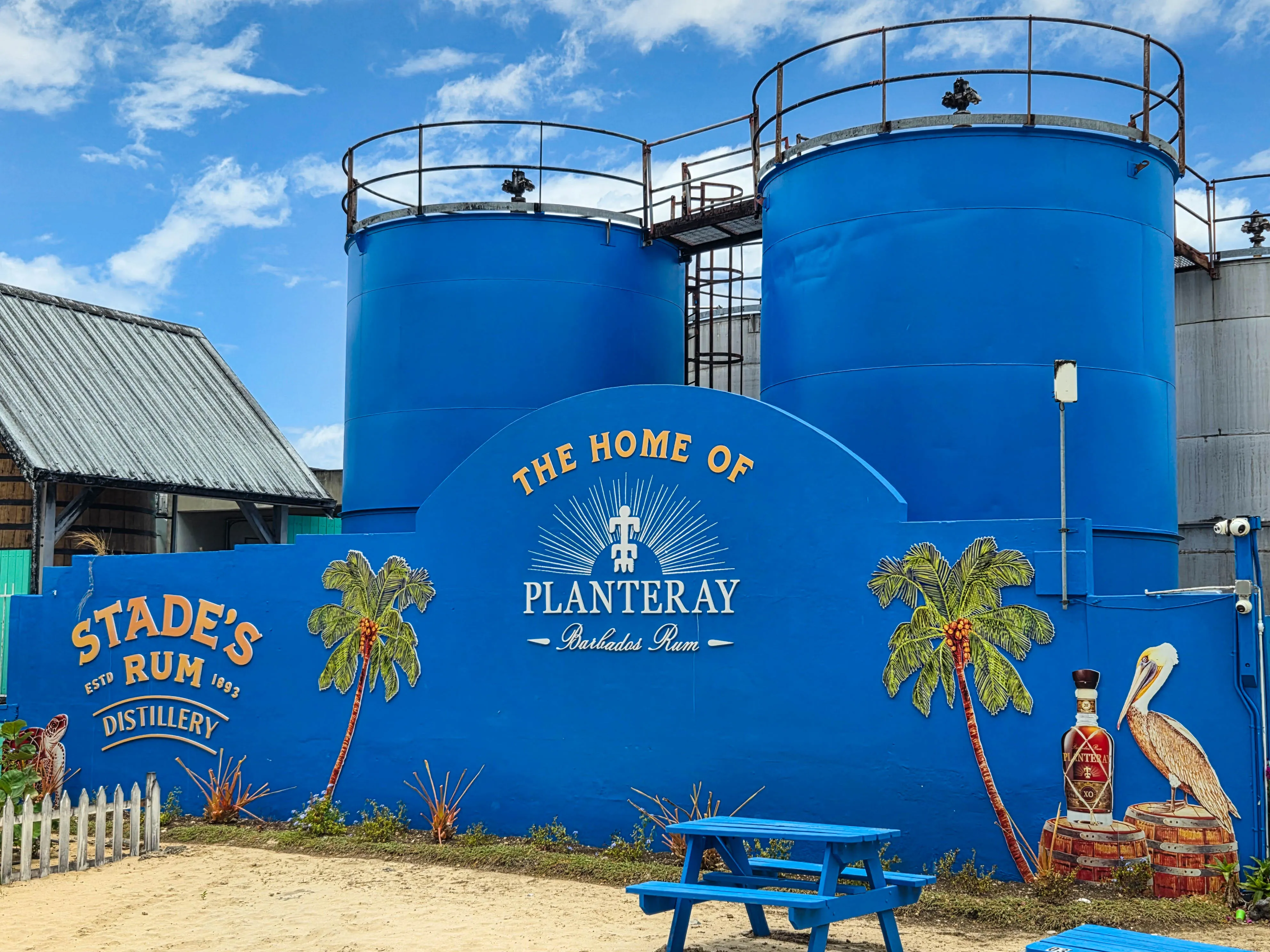
George Stade, a German engineer, founded the West India Rum Refinery on Brighton Beach in 1893 with a plan to modernise Barbados's rum industry, not to make his own brand. His column still, the first on the island, produced a purer, higher-volume spirit than the old batch method could manage. The distillery grew to become, by some distance, the largest operating one on the island, as well as Barbados’ second oldest.
In 2017, French entrepreneur Alexandre Gabriel, who had spent two decades building his Planteray brand by ageing Barbadian rum in cognac casks in France, bought the distillery outright. He also created a second brand: Stade's Rum, made in the traditional style, without the French influence, and named for the man who started it all.
The Tour
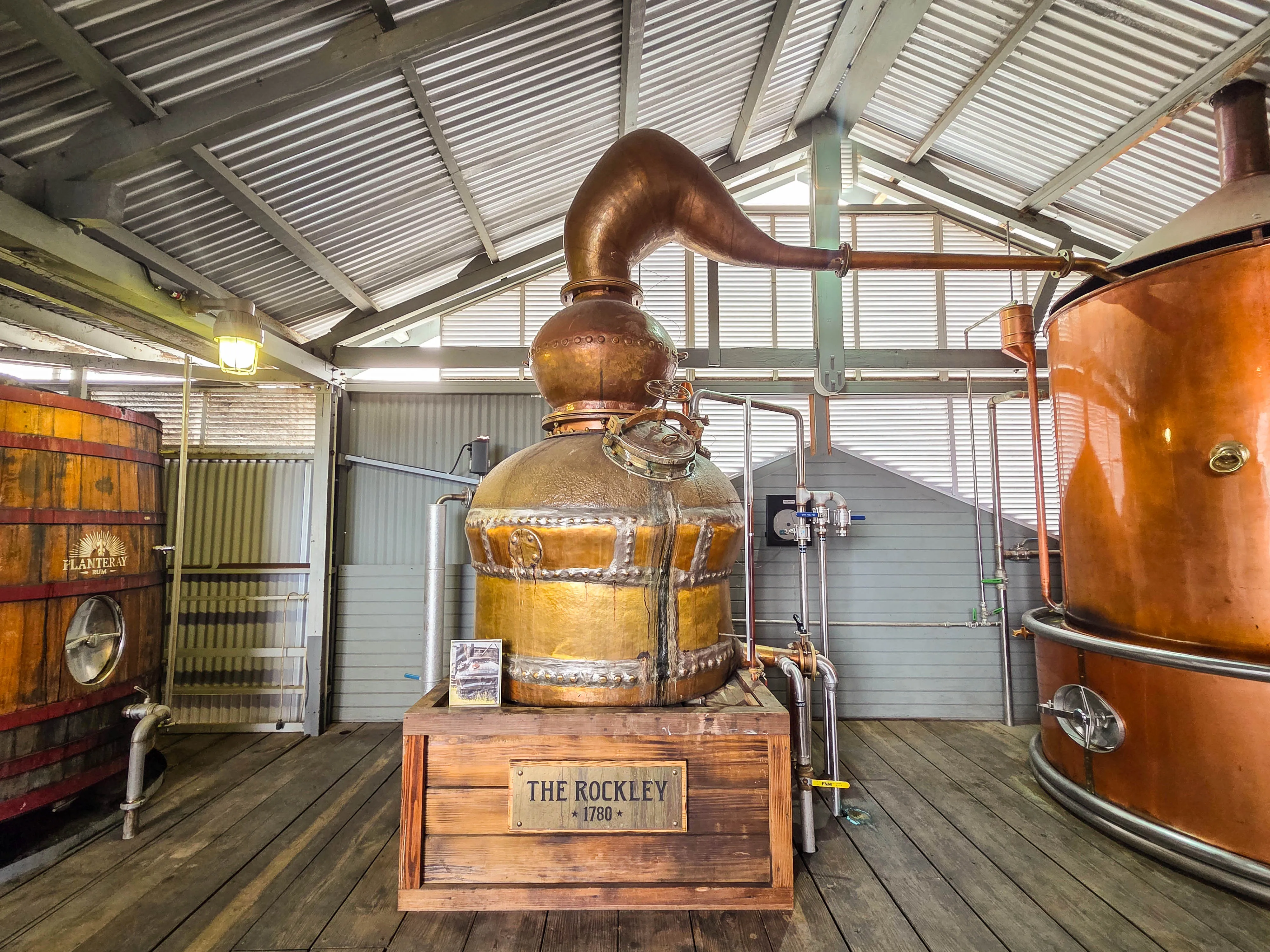
Asha has been guiding visitors long enough to have a well-practised answer for everything, and the timing of a stand-up comedian. She leads the group past the column stills and into Pot Still Alley, a collection of historic copper stills that includes the world's oldest rum-producing pot still currently in operation. The still was made here in Barbados, taken to France for expert restoration by coppersmiths who spent over 2,000 hours on it by hand, and brought back. Prime Minister Mia Mottley was on hand for the first sample. The rum was 90% alcohol. It was before 10am. "I have not seen her since," says Asha in her deadpan voice.
In the open fermentation room the smell shifts from sweet to faintly vinegary: the vats ferment for up to three weeks, and the little flies above them are doing useful work, generating the esters that become the floral, sweet notes in a heavier rum. Salt air drifts in naturally from the sea and finds its way into the open vats, becoming, quietly, part of what ends up in the glass. In Barbados' heat, the barrels lose between seven and ten percent of their contents to evaporation every year, what distillers call the angel's share, and what makes ageing here faster and different from anywhere cooler.
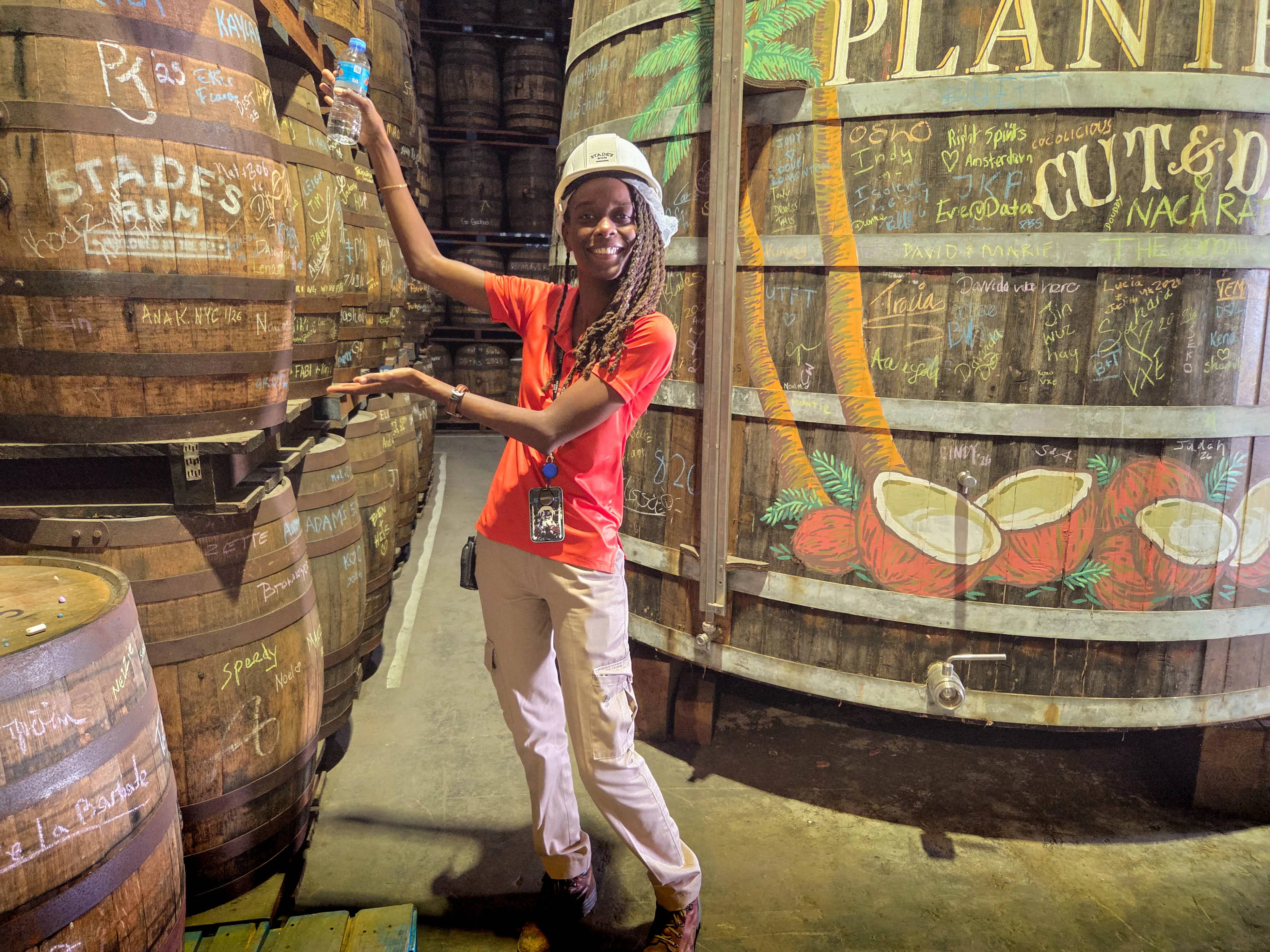
Deeper into the tour comes the barrel maze: the ageing bond in near-total darkness, the air thick with the sweetness and woodiness of thousands of casks on either side. Somewhere in the middle of it, Asha pours a rum straight from the barrel: 65% alcohol, barrel strength, and because it came from a column still, every note of flavour you're tasting came entirely from the cognac cask it has been sitting in since 2018. She recommends three sips: each one opens it up a little more, your own saliva doing the work. A single drop of water on the last sip does the rest. Before leaving, everyone writes their name on a barrel.
At the Deck
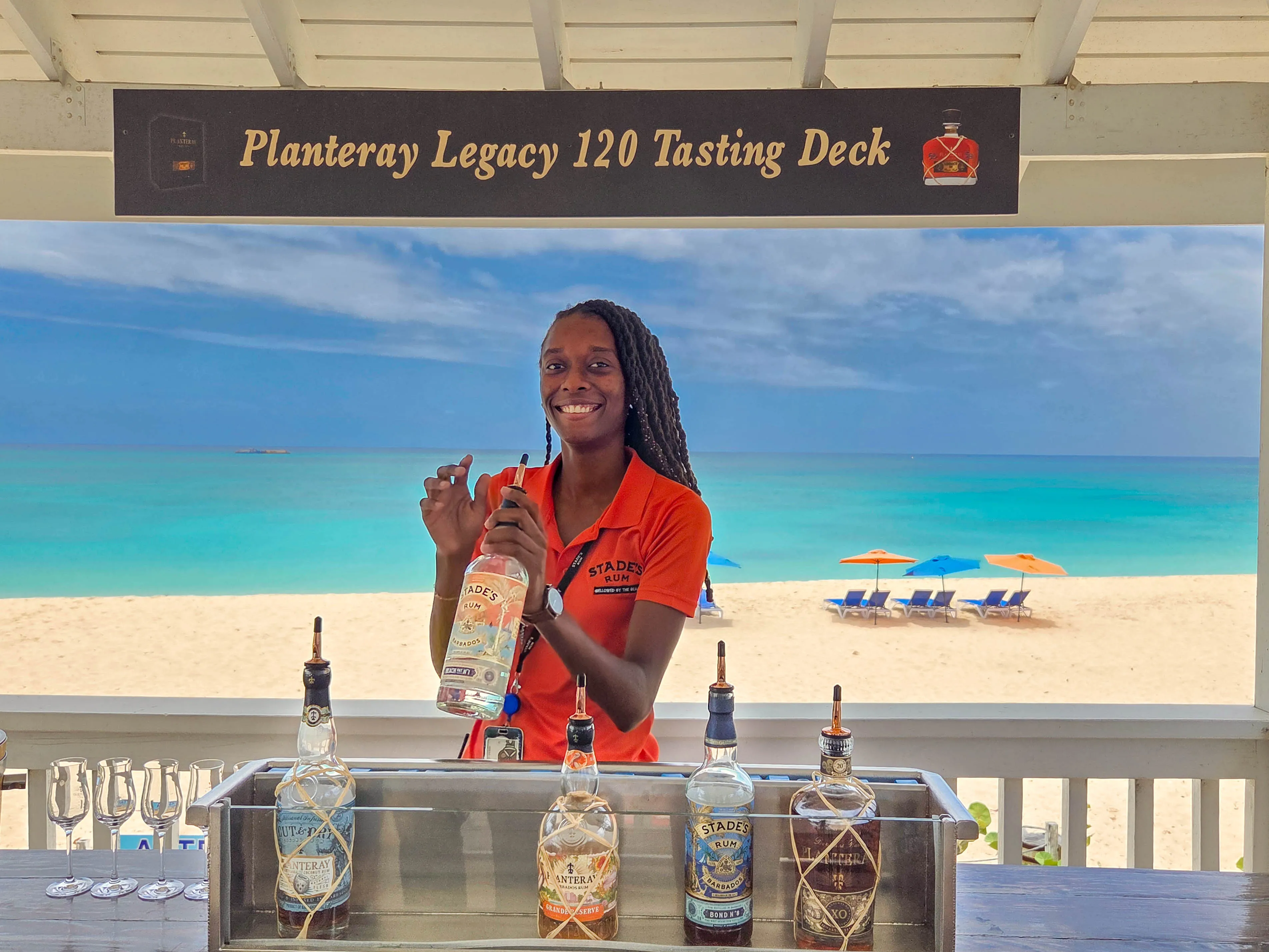
The tasting takes place on the Brighton Beach Lookout Deck, the turquoise Caribbean Sea directly behind the guide. Asha works through five rums across the Stade's and Planteray ranges: Bond Number Eight, woody and smoky from its time in bourbon barrels; the Gran Reserva, built for rum punch, with Asha reciting the traditional Barbadian recipe, "one sour, two sweet, three strong, four weak," with the gravity of a legal notice; and the XO, whose oldest component has been ageing for 15 years. "Go to a bar and order XO and Coca-Cola," she says. "Security will kick you out."
The last rum is Cut and Dry, the coconut rum, made with one real coconut per litre. On this one, Asha has a practical warning: "You don't think you're drunk, and then you're on the floor."
Both experiences include beach club access for the rest of the day: loungers, showers, and the Brighton Beach Bar, steps from the white sand. The distillery manager puts it plainly: "come for the rum, stay for the beach".
Good to Know
Two experiences are available: a tasting-only option and the full distillery tour. The tour is not suitable for those with mobility issues; wheelchair access is available to the merchandise shop and beach club. You must be 18 or older to take part in the tasting.
Helpful Hint
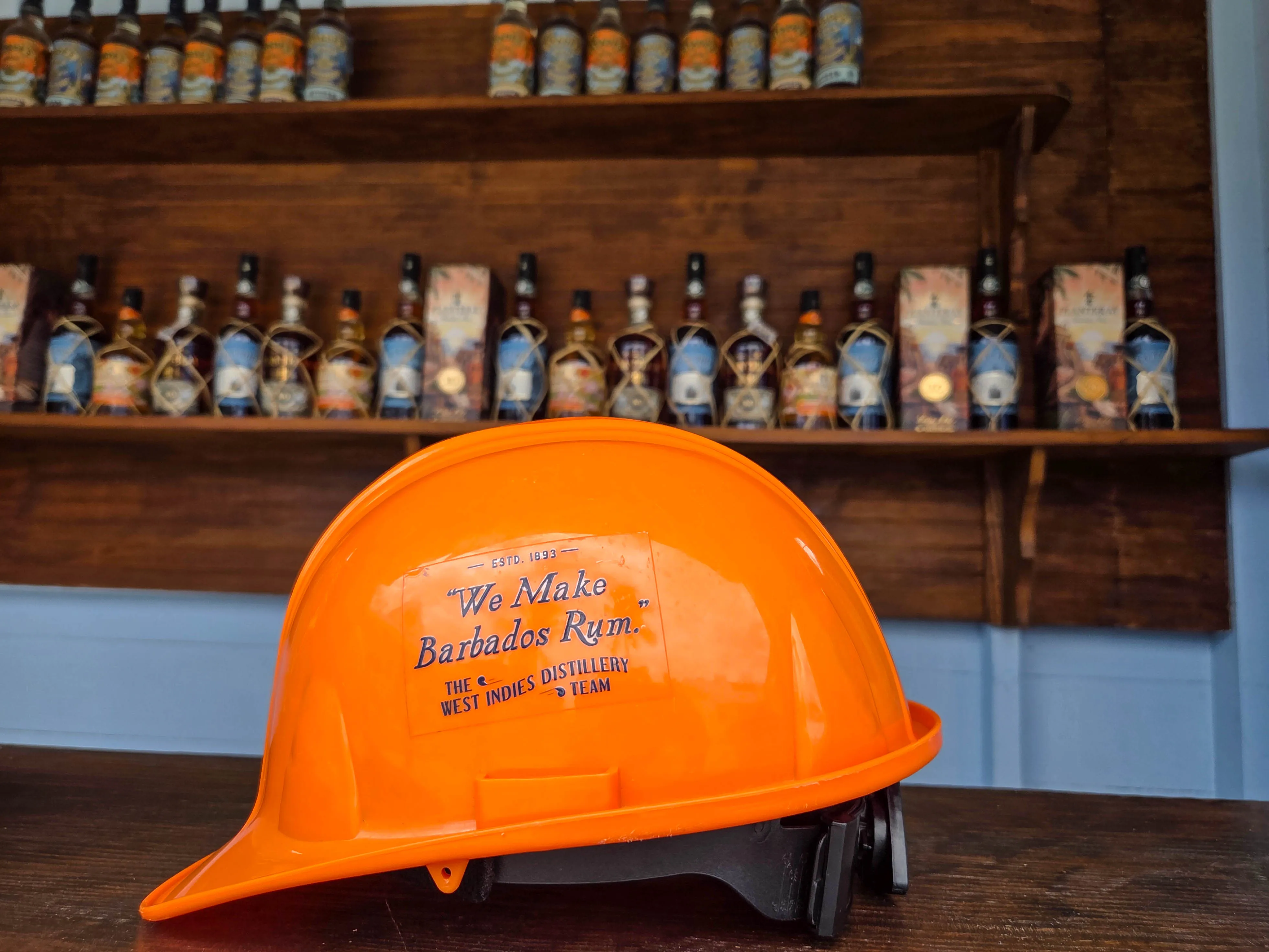
The dress code catches people out: long trousers, sleeved shirts (t-shirts are ok but not tank tops), and enclosed shoes are non-negotiable. You will also be given a hard hat, so plan your hair accordingly. Book a taxi: rum tasting followed by a beach club is not a day for driving.