Royal Barbados Cigars
By Rekke Editorial
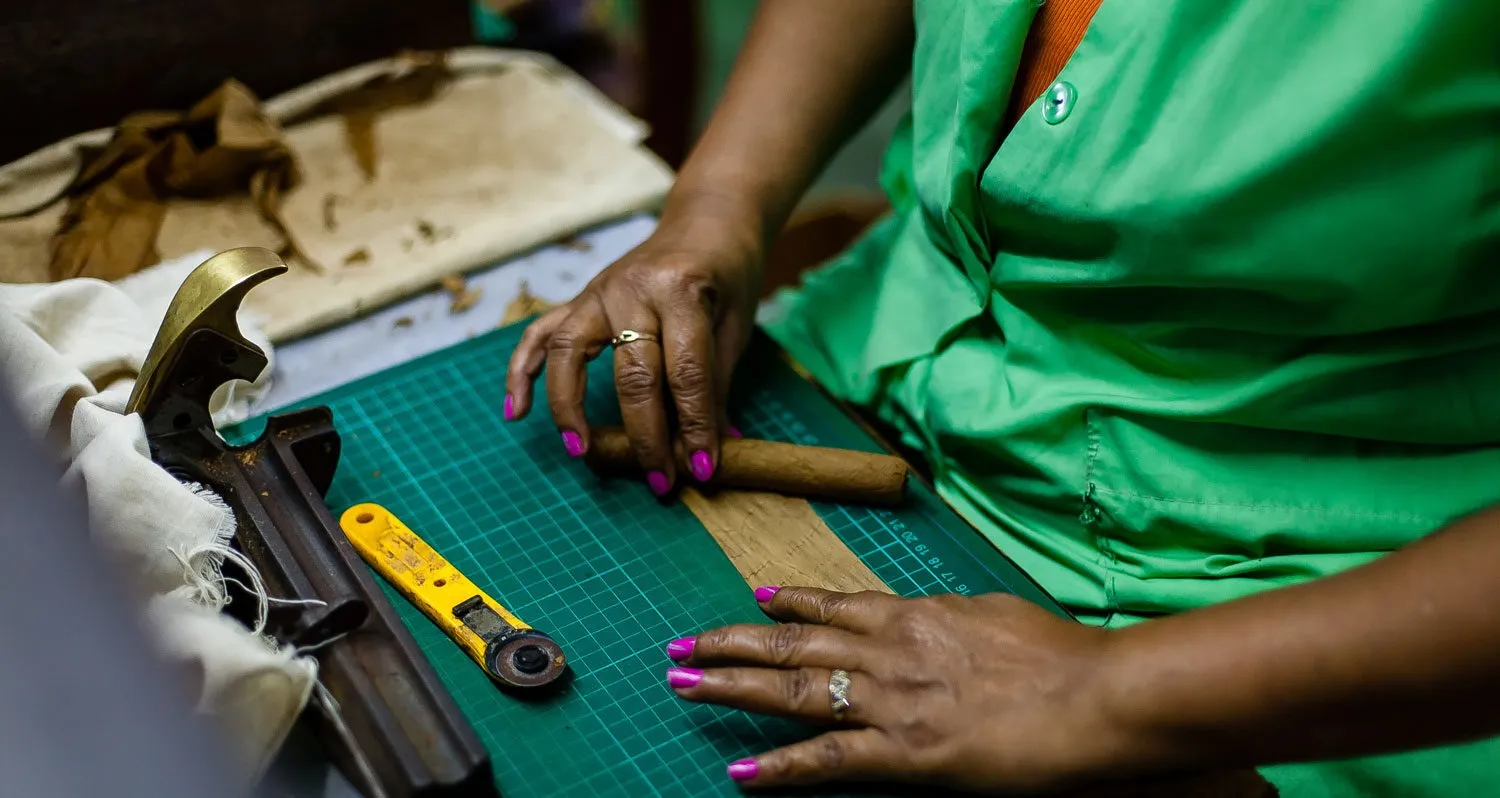
As soon as you walk up the stairs, the smell hits you: earthy, grassy, faintly sweet, the unmistakable smell of aged tobacco. Inside, the room is practical. Plastic bags full of tobacco sit on the surfaces, along with scissors, penknives, and wooden ring gauges, while offcuts of leaf litter the floor. A small team of women work at their stations without a glance at the door; the work was happening before you arrived and will continue after you leave. You are welcome to watch and they are genuinely happy to show you what they're doing and to be photographed. Just don't expect fancy. This is a working factory and the only one of its kind in Barbados.
From Germany to Barbados
The story of how this factory came to exist in Pelican Village in Bridgetown is worth telling. In 1987, a Danish-Canadian businessman who had been running a cigar operation in Toronto shipped his equipment to Barbados and set up here: rolling machines, cutting presses, and old wooden molds from Cuba that the current owner, Angelika Marshall, estimates are more than a century old. Six years later, in 1993, Angelika and her late husband Rudolph bought the business. Rudolph came from a German cigar-making family; his father and grandfather had both worked in the trade in southern Germany. The knowledge traveled: from Cuba to Toronto to Barbados, from one family's hands to another's. After Rudolph passed away, Angelika carried on. She has been here for more than thirty years. "It's a nice thing to do in the tropics," she says.
The Leaf
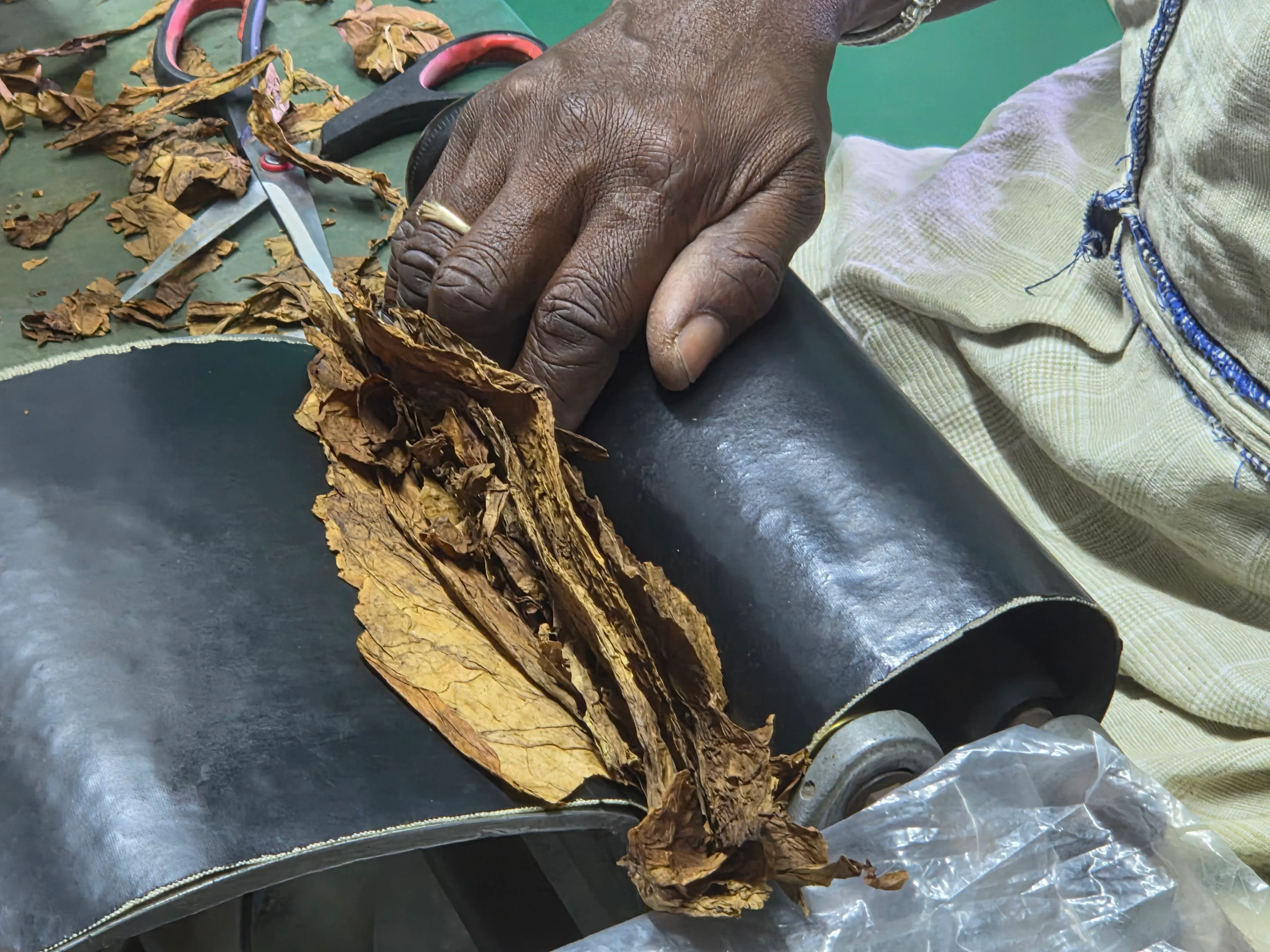
Everything starts at the first station, where Donna draws stems from a pile of tobacco leaves, one by one. Each stem must go: leave even a short piece inside and the cigar will smoke bitter. The leaf is long filler, grown from Cuban seed stock in Nicaragua's volcanic soil and aged for a few years before it arrives. Beside it, kept slightly damp, is the wrapper: a paler, thinner leaf from Ecuador, smooth to the touch, neutral in flavor; most of the character comes from the tobacco inside.
The Roll
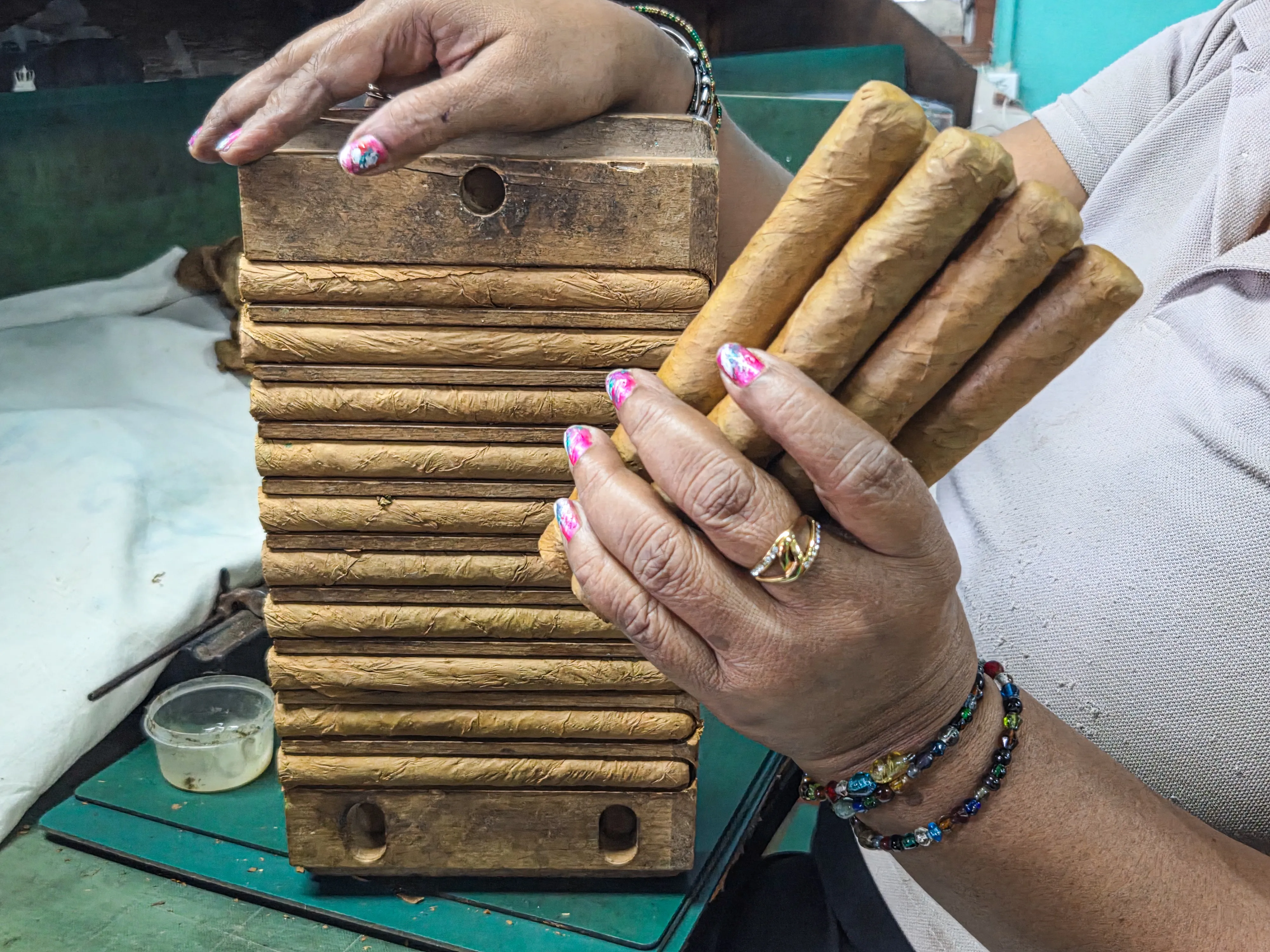
Sandra takes the prepared filler, packs it into a binder leaf, cuts it to size, and lays each cigar into one of the wooden molds. The raw cigars sit under a press overnight, slowly taking their shape. How much filler goes in? "It's more a question of experience," Angelika says. Too tight and the cigar won't draw; too loose and it burns through too fast. Sandra doesn't measure. Her hands know.
The pressed cigars then go to Divi who has been wrapping at this factory for 26 years. She winds the Ecuadorian leaf around each body at a precise angle, seals it with a dab of xanthan gum (the same gum used in baking and ice cream), and runs it through a small cutting press to finish the head. Every cigar is rolled and finished by hand. Around 120 leave the factory each day.
Five Sizes, No Number Five
Royal Barbados makes cigars in five sizes but no number 5: 1, 2, 3, 4, and 6. "5's a perfume," Angelika says. "We leave that to Chanel." Numbers 1 and 2 are the longest and heaviest, made for a slow hour or two after dinner. Number 6 is shorter, for those who want a briefer smoke. While the tobacco is the same across the range, the size affects the draw, burn, intensity, and how long it lasts.
With Rum, or With Coffee
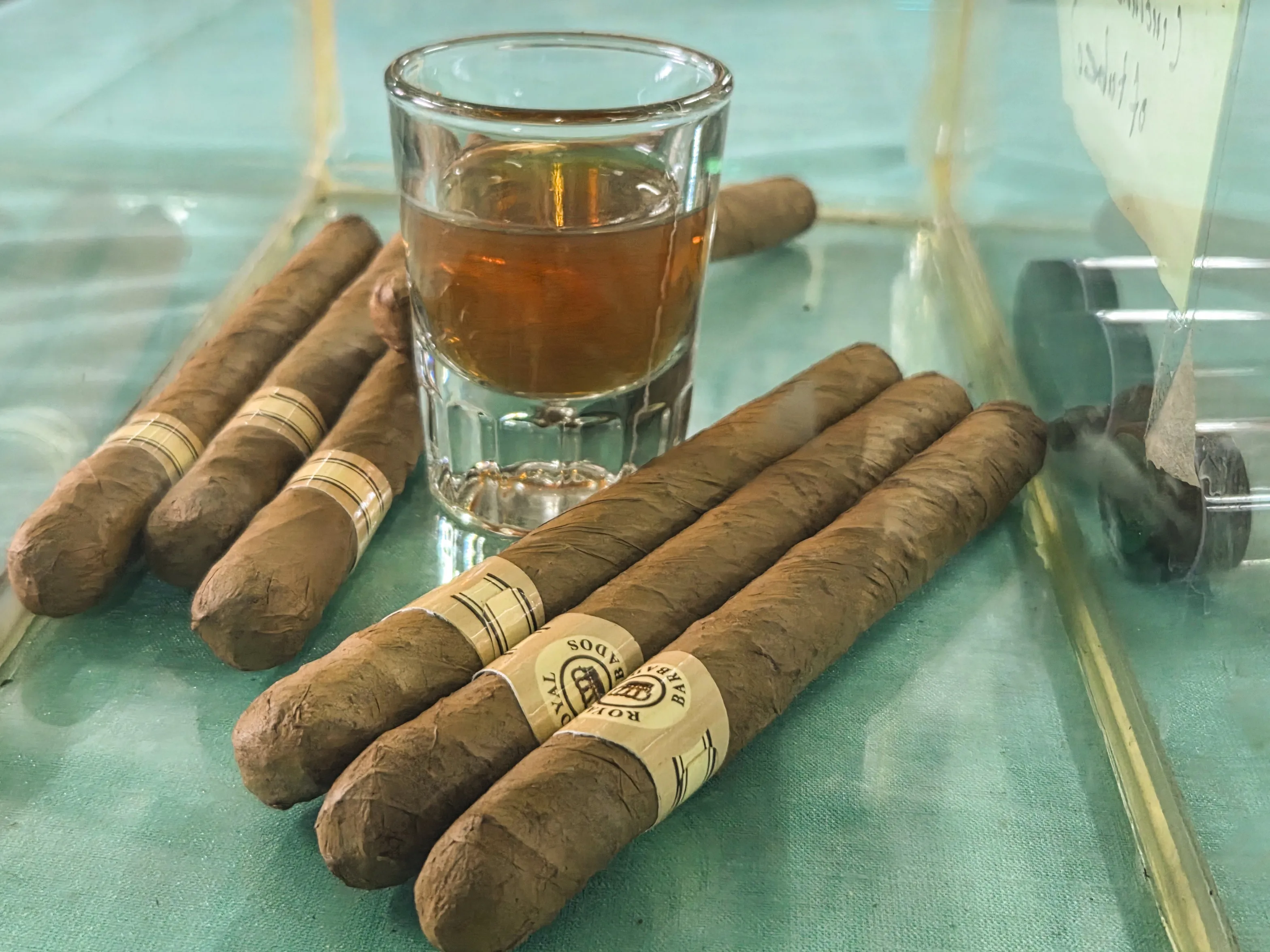
For something beyond the standard range, there are the infused cigars: Mount Gay Black Barrel and Eclipse rums, and locally roasted Wyndham's Dawn Patrol coffee. Each cigar spends ten to fourteen days sealed in a tube with a small flask of the spirit or coffee, absorbing the aroma by proximity alone, with no direct contact. The rum version is sweet, warm and rounded. The coffee version stops you cold: you can smell its fruitiness the moment the tube opens.
Visits are informal and free, and walk-ins are welcome; there’s no need to book ahead. The women will walk you through the sizes, let you smell the infused options, and show you how to cut the head before you light up. Or not. "You don't have to use the cutter," Angelika says. "It's just if you want to be sophisticated."
Helpful Hint
Pelican Village is in Bridgetown, close to the deep-water harbor, well-signposted with plenty of parking. Royal Barbados is upstairs; take the stairs to the left of Native Caribbean Fragrance, worth a browse on the way through.
Visit Royal Barbados Caribbean Cigar Company